

“The idea of the ‘aesthetic of play’ isn’t about neat spaces or visual perfection. It’s the beauty in chaos, the poetry of half-built cubby houses and scattered loose parts. It’s the potential of a space to be something else. Adults often see mess; but in that mess, children see possibility, agency, and belonging.”
— Daniel Burton
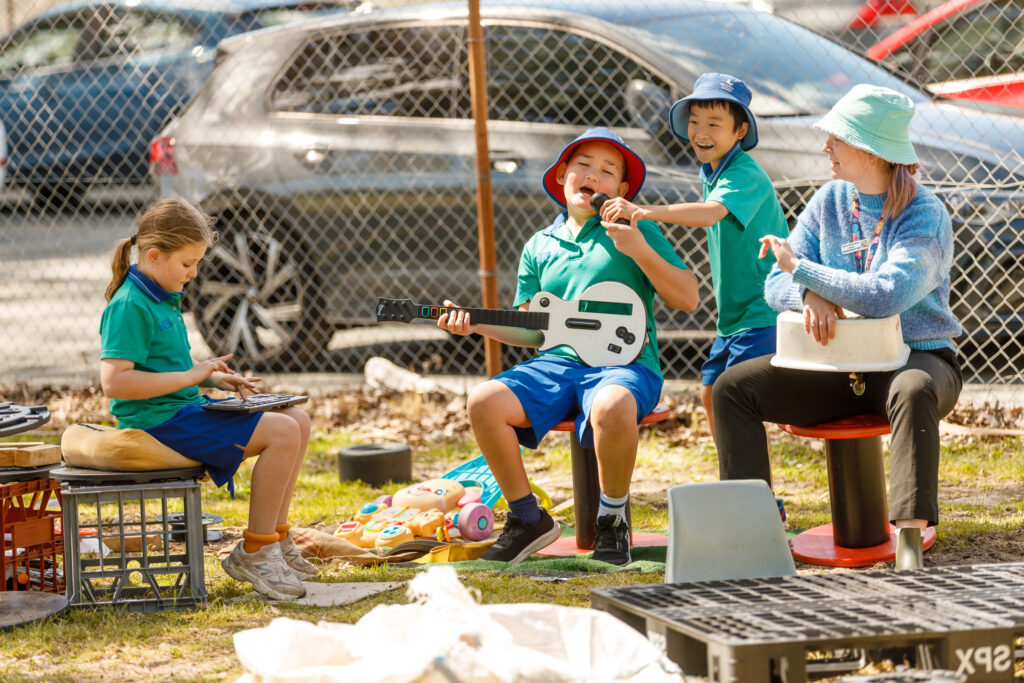
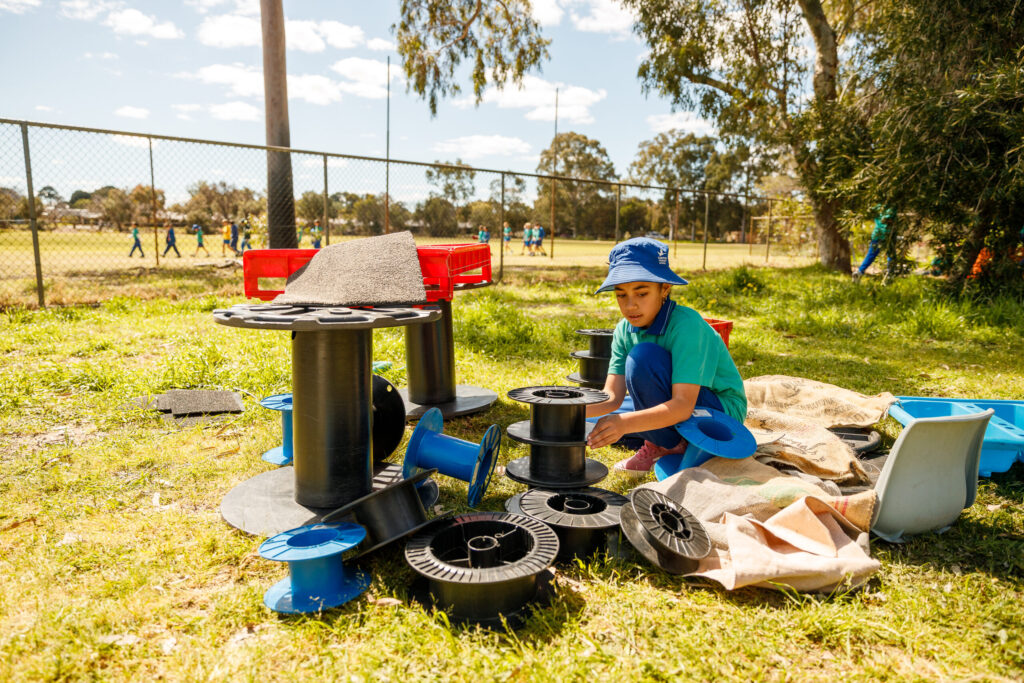
Walk into any space where children have truly been given the freedom to play, and chances are you’ll encounter what looks, at first glance, like disarray. Blankets draped over logs. Tarps flapping in the wind. Ropes trailing from trees. Sticks strewn across the ground. To some adults, it might look like something needs tidying. But to a child, it’s a kingdom mid-construction. A stage being set. A portal left wide open.
The aesthetic of play is not one of symmetry and polish. It is raw, organic, and incomplete by design. And in a world that increasingly values control, productivity, and appearances, this aesthetic is quietly under threat.
Play has an aesthetic – but not one you can curate.
It isn’t found in matching tubs, muted colour palettes, or a perfectly staged “invitation” laid out like a magazine spread. The aesthetic of play is not a look; it’s a feeling. It’s the sense of something mid-becoming. A space alive with possibility. A half-built cubby house that might become a ship, then a shop, then a hideout, all before lunch. Adults often see mess; but in that mess, children see agency, belonging, and the thrilling permission to begin.
This matters, because if we take children seriously, then we have to take play seriously – not as a reward, not as an “extra,” not as something that happens only when everything else is done.
The United Nations Convention on the Rights of the Child makes this explicit. Article 31 recognises children’s right to rest, leisure, play, and participation in cultural and creative life. It does not frame play as a privilege to be earned, but as a fundamental part of childhood. Which means the real question is not, do we allow play? The question becomes, do our conditions protect it?
And those conditions are not just about time.
They are about environment. Atmosphere. Materials. Permission.
Because environments speak.
A room can say, come in and make yourself at home. Or it can say, be careful – don’t disturb. Even the most beautifully styled space can carry a subtle warning: everything has its place, and everything is meant to stay looking a certain way. Pulling things apart might feel like doing something wrong. Leaving a trace might feel like breaking the spell.
Even when adults say, “Yes, you can play,” the environment might whisper, “But not like that.”
Children are extraordinary readers of these messages. They learn quickly what is celebrated and what is corrected. Which spaces belong to them, and which spaces they are merely permitted to occupy. What kinds of play are welcome – and what kinds of play become a problem.
This is where the question sharpens.
Who is this for?
It’s deceptively simple, but it cuts through everything. When we reset a room, when we decide what stays out and what gets packed away, when we judge what is “acceptable” evidence of children’s activity, we are always answering this question – whether we realise it or not. Whose comfort is being centred? Whose eyes are we designing for?
Sometimes, if we’re honest, the answer isn’t children.
It’s adults. It’s the first impression. The polished look. The reassurance that everything is under control.
School tours make this especially visible.
There’s often a quiet performance that takes place when prospective parents walk through a centre or a school. Spaces are tidied. Displays straightened. Activity areas staged to look calm and intentional. The environment becomes a promise: look how organised we are, look how beautiful this is, look how “good” it feels.
But what if we offered a different promise?
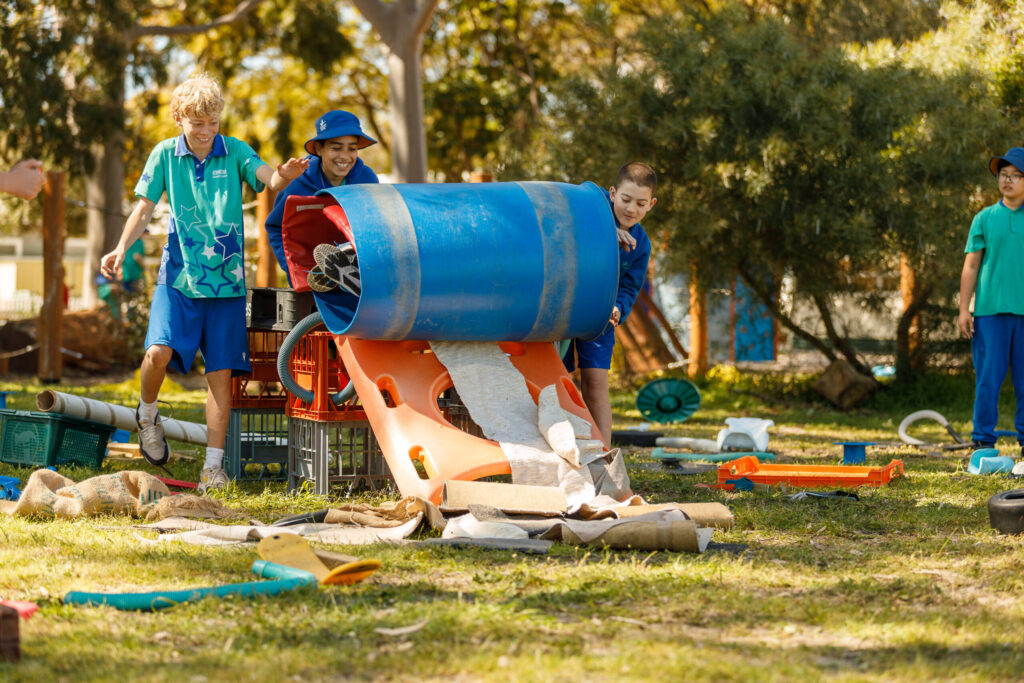
What if, instead of pristine rooms, families saw spaces that looked truly lived in? Places where children’s thinking had left a mark. Where a half-built structure was still standing because the story wasn’t finished. Where the messy block area didn’t signal a lack of learning, but deep engagement. Where paint jars sat out not because adults were careless, but because children were returning to something they were still making sense of. Where loose parts weren’t packed away because the play was still in motion.
What if we helped families understand that mess is not failure – it is evidence?
Evidence of children creating, negotiating, persisting. Evidence of ideas being tested through hands and bodies. Evidence of relationships being shaped in real time as children collaborate, disagree, repair, and try again. A pristine environment might be impressive, but it can also be a performance – an adult aesthetic staged for adult approval. And when adult approval becomes the priority, environments can slowly drift away from children’s rights and towards adult reassurance.
This drift is not new.
The aesthetic of play has long been defended by play theorists and practitioners. Carl Theodor Sørensen’s junk playgrounds of mid-century Europe offered children access to scrap materials, tools, and open-ended environments where nothing was finished and everything was possible. The materials were messy, but the play was rich.
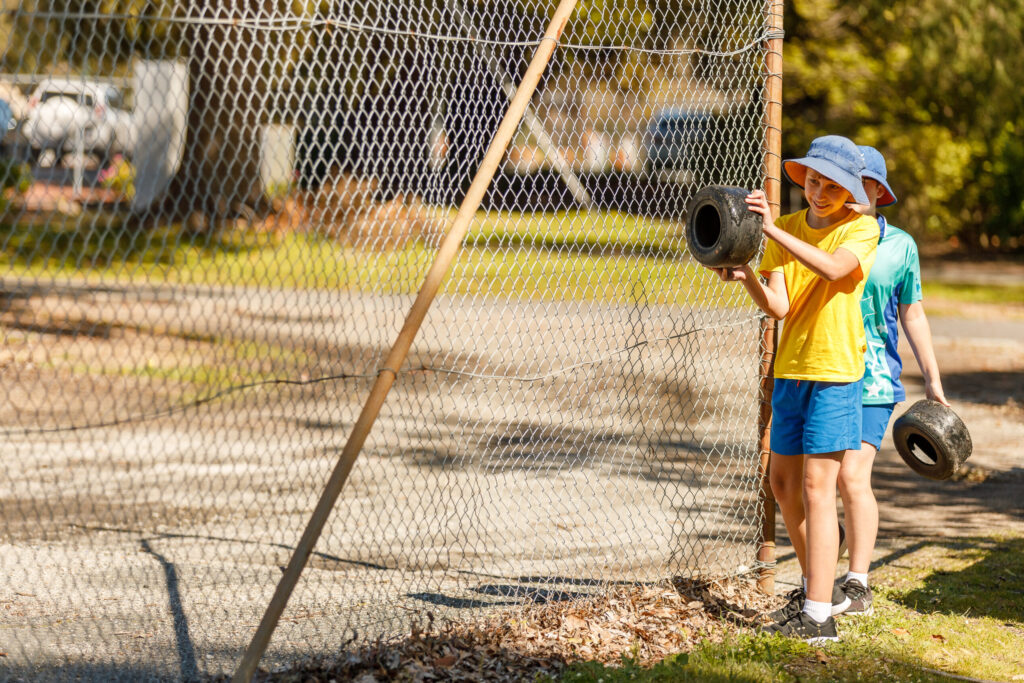
Simon Nicholson’s Theory of Loose Parts reinforced this idea: the more variables children have access to – sticks, tyres, crates, water, mud – the more creative, collaborative, and exploratory their play becomes. To the untrained eye, this richness can look chaotic. But within it lies learning, meaning, and beauty.
More recently, designers like Adam Bienenstock have continued this lineage, advocating for play environments that prioritise spontaneity and social collaboration over pre-designed perfection. His work champions landscapes that are “just challenging enough” – spaces where children are co-creators, not passive participants. Environments that are meant to be changed, not preserved.
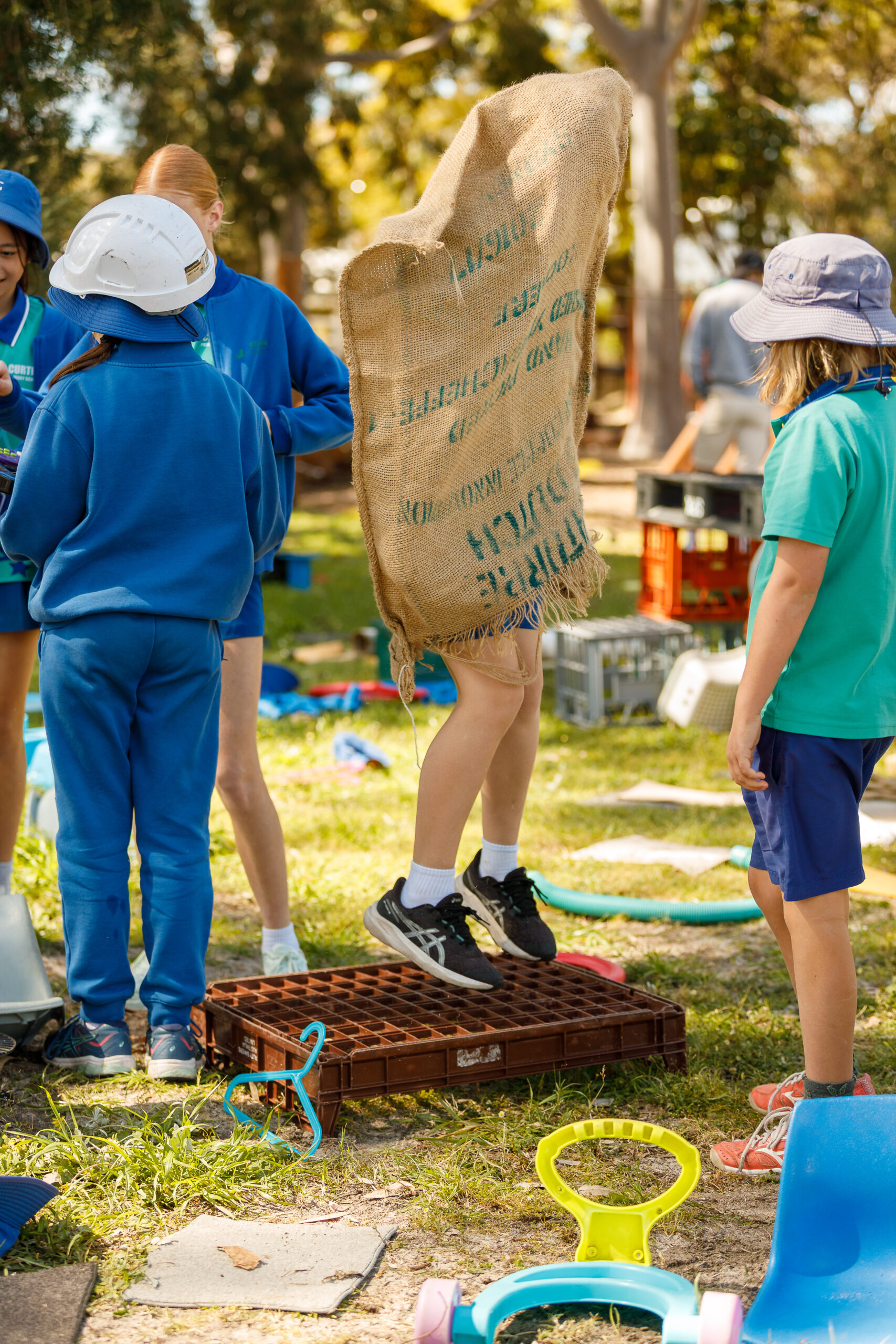
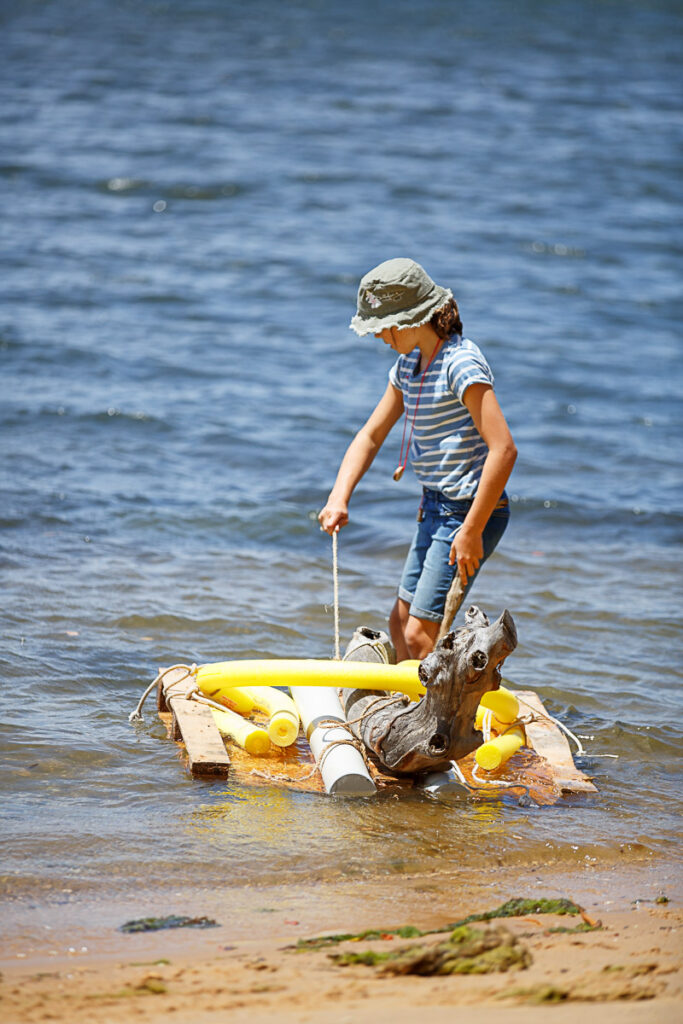
At Educated by Nature, we see this aesthetic of play come to life every day.
In our Self-Build Play Space with Year 7 students at Guildford Grammar, ramshackle towers, multi-level forts, and winding ramps emerge and collapse over time. Not because they’re poorly built, but because they’re constantly evolving. Students experience ownership, trial and error, and the quiet pride of making something from nothing.
While we have been supporting Moerlina School, with the activation of a tinkering space, students worked with saws, ropes, pallets, and tyres. The site hums with movement and imagination as children explore not only engineering and design, but communication, cooperation, and stewardship.
At KIN Village, play flows effortlessly between story and structure. Rafts are built to sail the Swan River. Group cubbies become places of refuge. Signs appear: keep out, only five people allowed. The forms change, but the invitation remains. The space holds it.
These environments remind us that unfinished does not mean unimportant. It means alive.
Playwork theory helps us understand why. It teaches us that the adult role is not to shape the outcome of play, but to create the conditions for it to emerge – and then to step back. Even, and especially, when those conditions look like chaos.
Nature pedagogy echoes this truth. Nature does not offer neat edges or predictable patterns. It offers dirt, water, wind, decay, and growth. It invites flexibility, patience, and wonder. Yet within that wildness, nature also offers pattern: spirals in shells, lines in bark, rhythms in waves, symmetry in leaves. Children respond to both. They dig and smear and stomp – and then they collect, arrange, and create patterns that feel grounding and meaningful.
Nature doesn’t ask children to choose between chaos and order. It holds both.
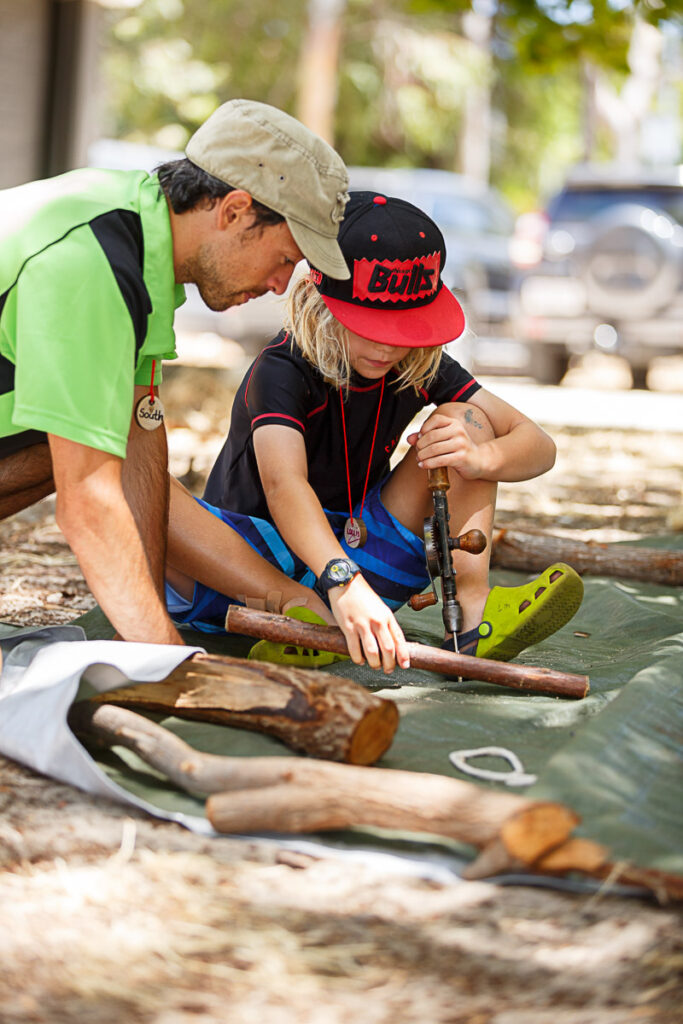

Teenagers need this too.
At the International Day of Play – Play Summit in Perth, young people spoke candidly about how rare it is for teenagers to be given space to play without judgement or surveillance. One teen shared simply, “We want places where we’re not being watched every second. Where we can just be.”
Teen play becomes quieter, riskier, and more complex. But the need for loose parts, wild spaces, and freedom does not disappear. If anything, it deepens. In our work with adolescents, we see play return when it is held gently. When trust replaces control. When we resist the urge to sanitise their experience.
To champion the aesthetic of play, adults must do some quiet, courageous work.
We must trust that children know what they’re doing. Protect time for deep, unhurried engagement. Advocate within schools and communities for wild spaces, loose parts, and children’s play rights. And perhaps most challengingly, let go of our need to manage, finish, and tidy the play.
It isn’t always easy – especially in systems driven by outcomes and productivity. But play asks us to slow down and see differently.
The aesthetic of play isn’t just beautiful. It’s essential.
It teaches children that they are creators, not consumers. That their ideas matter. That the world is full of potential – even in discarded things. To honour the aesthetic of play is to trust children, to let them lead, and to hold the line when the world tries to clean up too quickly.
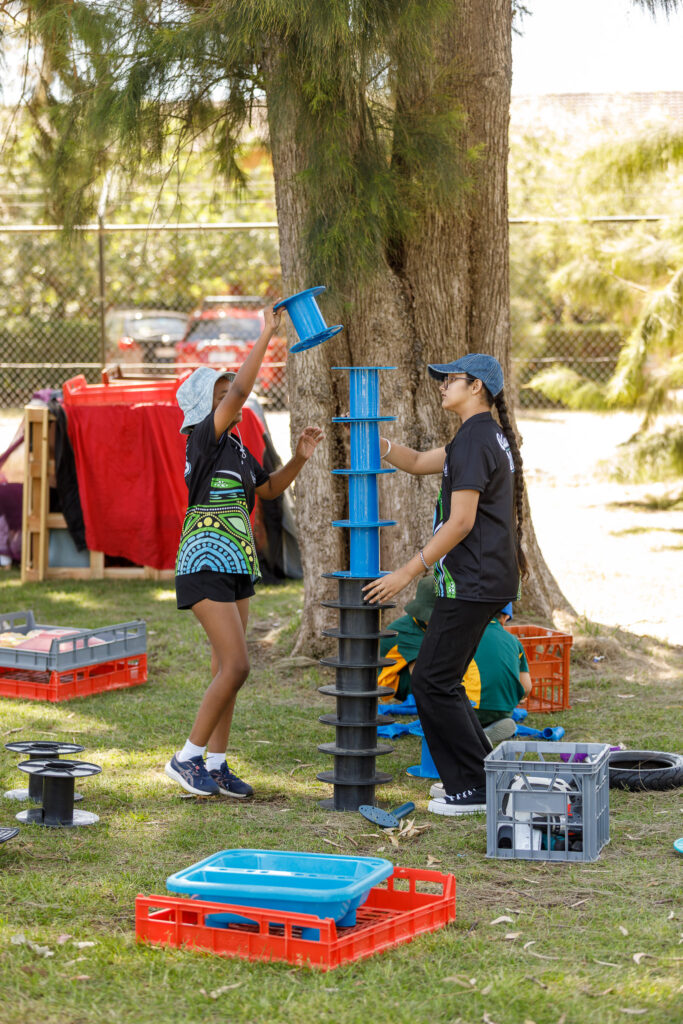
Because every environment is a statement. It highlights what we value.
Are we highlighting control and adult visual appeal? Or are we highlighting agency, creativity, collaboration, and deep play?
Maybe the goal isn’t to make our spaces look better. Maybe the goal is to make them more playable. More changeable. More honest. More reflective of childhood as it actually is.
Because play looks messy. That is not an unfortunate side effect.
It is the aesthetic of childhood.
And in a world increasingly obsessed with polish, childhood deserves places that remain gloriously unfinished.