

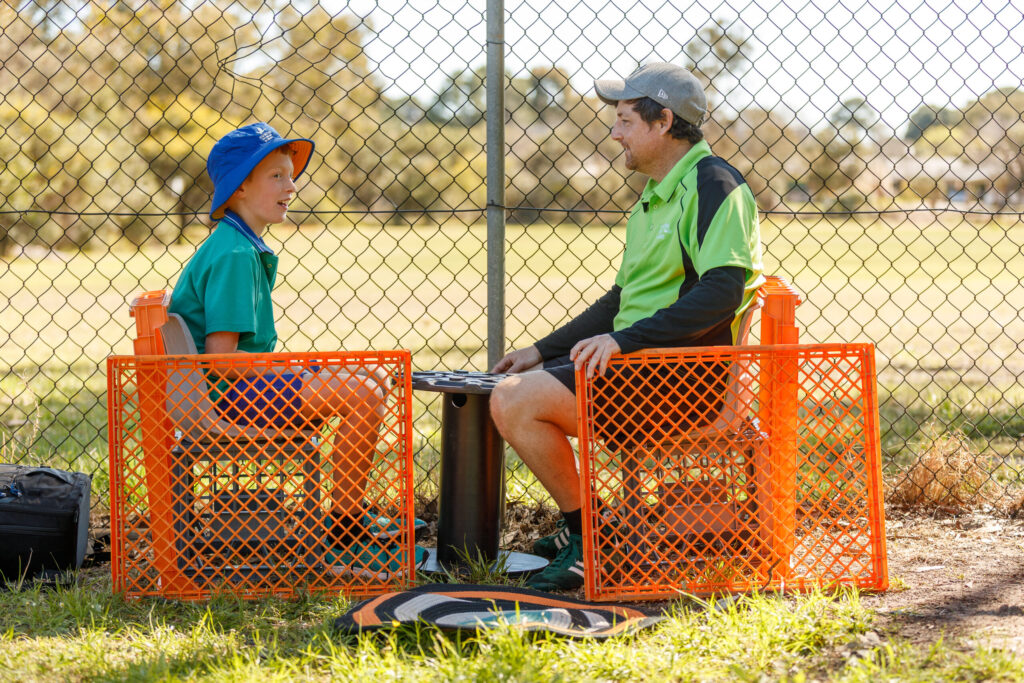
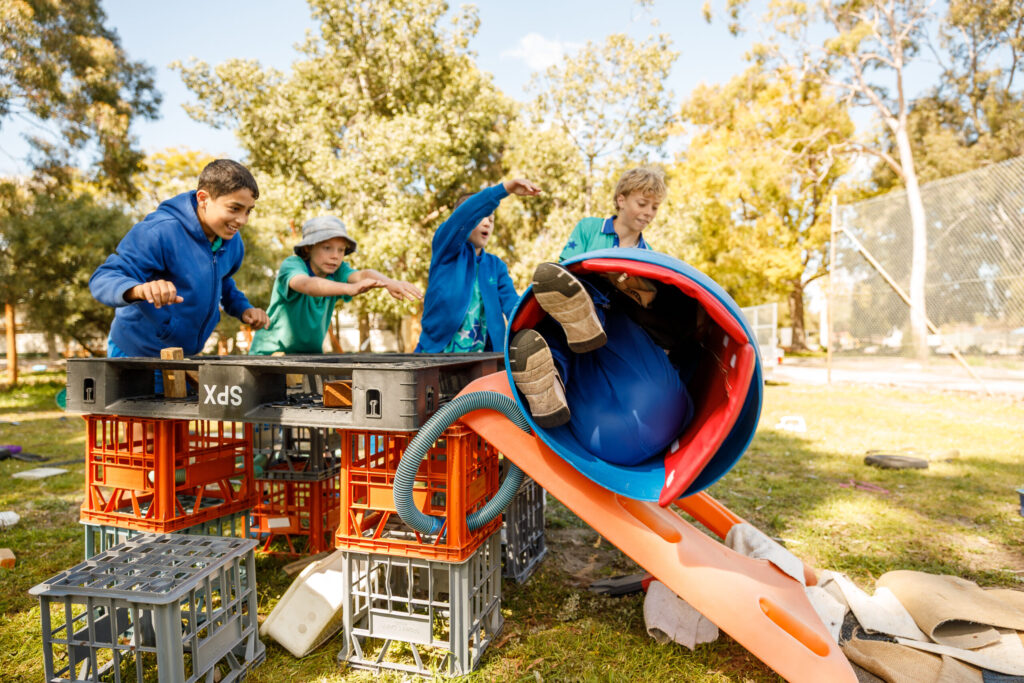
A new milestone was reached recently when Educated by Nature (ExN) delivered our first Loose Parts program. Loose parts are versatile, open-ended materials that despite being originally intended for other purposes, have lots of play value. Tyres, tubes, crates, spools and barrels make excellent resources for children’s play. As do novel resources such as computer keyboards, telephones and inoperative power tools.
Over the years, I have built up a rich repertoire of resources through generous donations and a fair bit of ‘scrounging’. This approach also carries a strong element of sustainability, giving new purpose to items that might otherwise be destined for landfill.
Loose parts theory
Loose parts are also a staple of playwork provision. Playwork is a profession that developed alongside the staffed Adventure Playground movement in Europe toward the end of the Second World War.
The theory of loose parts was developed in 1971 by architect Simon Nicholson, who stated that:
“In any environment, both the degree of inventiveness and creativity, and the possibility of discovery, are directly proportional to the number and kind of variables in it.” (Nicholson, 1971, p. 30)
These sentiments still ring true today as the quality and quantity of affordances (natural and manmade) available to children, influence their play opportunities.
Permissive attitudes
Playworkers define play as a process that is “freely chosen, personally directed and intrinsically motivated” (Playwork Principles Scrutiny Group (PPSG), 2005). At the heart of playwork is the desire to co-create spaces with children where they are free to play. As well as providing physical resources, playworkers bring a permissive and supportive attitude, helping to foster autonomy, creativity, and exploration.
Adopting a playwork approach enables ExN to afford children the freedom to make their own choices and decisions and play for intrinsic reasons. Play is considered an outcome in and of itself. Of course, other outcomes are natural by-products of the play process, such as physical activity, creativity, communication, problem-solving, and conflict resolution.
Observation and intervention
Another aspect of the playwork mindset is the concept of reflexiveness; or the ability to reflect on personal intuitions and decisions, and adapt one’s responses accordingly (Shier, 2018).
Knowing when to be involved, and when not to be, is a delicate skill. Stepping in unnecessarily to redirect or lead play, or to correct children’s choices, can disrupt or even harm the process.
Much of the time, playworkers observe from a distance, carefully balancing risk with the developmental benefits of play (PPSG, 2005). Intervention is usually subtle and purposeful, only occurring when truly necessary.
Play opportunities
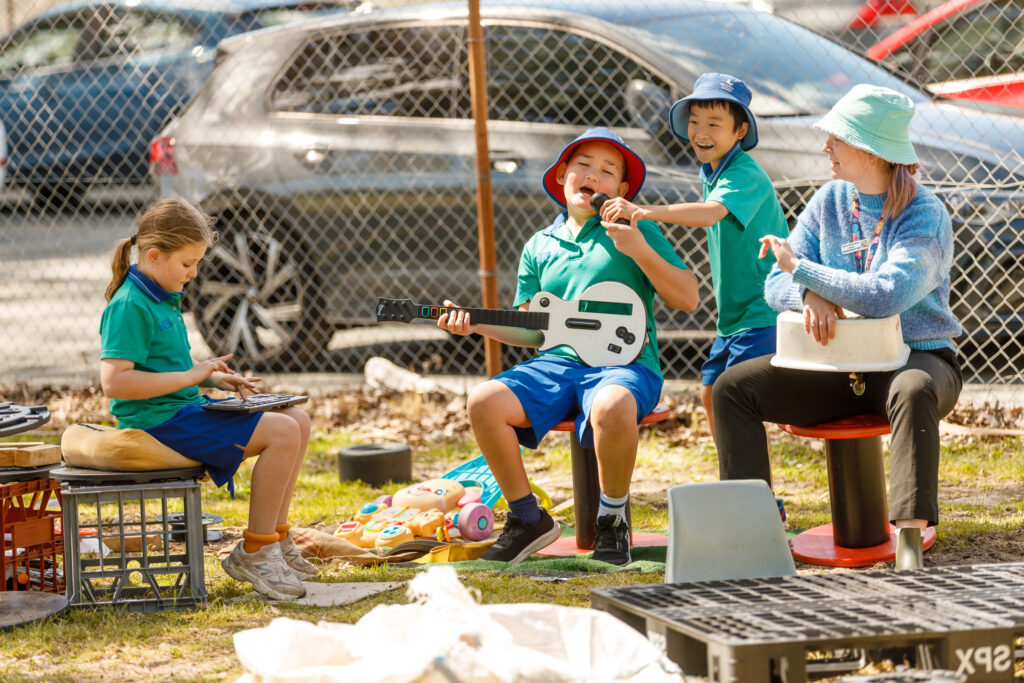
Hughes (2002) identified 16 play types that playworkers subscribe to. At one time or another, all of these are observed during play with loose parts. Below are just some of the highlights of our first session:
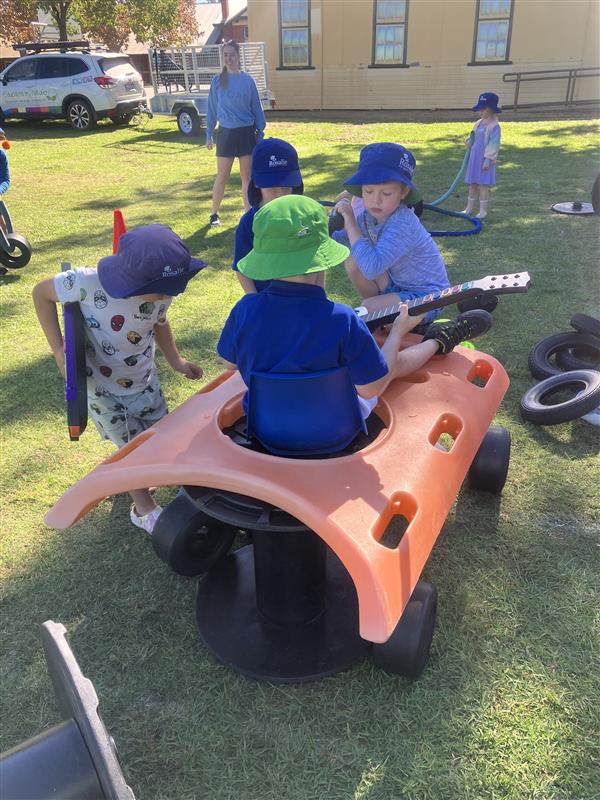
Rock ‘n’ roll car
Here you can see several potential imaginary play types, along with elements of social and creative play.
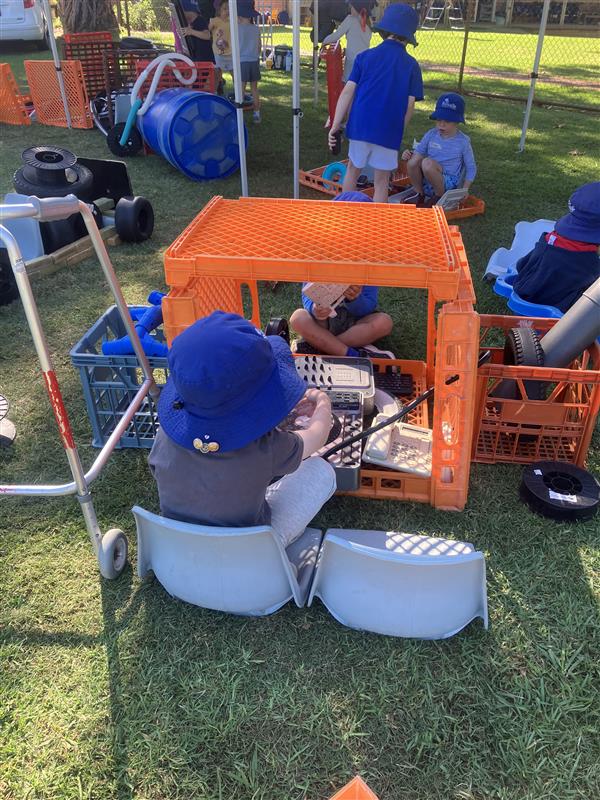
Cubbies
Shelters are clear examples of recapitulative play. There always seem to be two kinds of children involved in this: those who constantly adapt, refine, and tinker with their creation, and those who build a space and then proceed to play inside it.
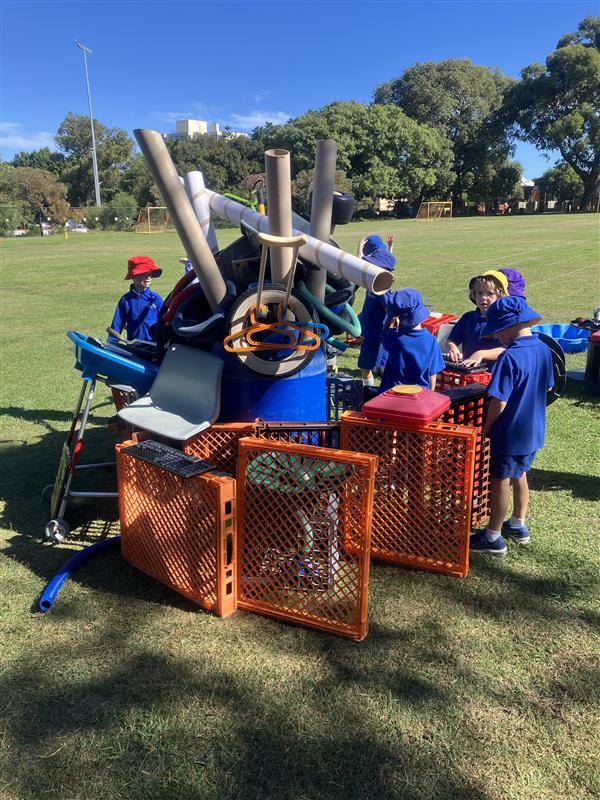
Junk sculpture
A great example of creative play, although in this instance, it wasn’t the final design or product that mattered, but the process of continually adding materials.
Closing thoughts
The launch of our Loose Parts external program is a reminder of the richness and diversity of play when children are given time, space, and permission. Watching the joy and creativity it brought, affirmed our belief in supporting children’s autonomy and capacity for invention. As we continue to grow this program, we look forward to seeing what other extraordinary moments unfold.
Let us demonstrate how loose parts could work in your space.
Our incursions are designed as both an enriching session for children, and a roadmap for educators. For a longer collaboration, we also offer tailored consultation for schools, early learning centres and community groups.