

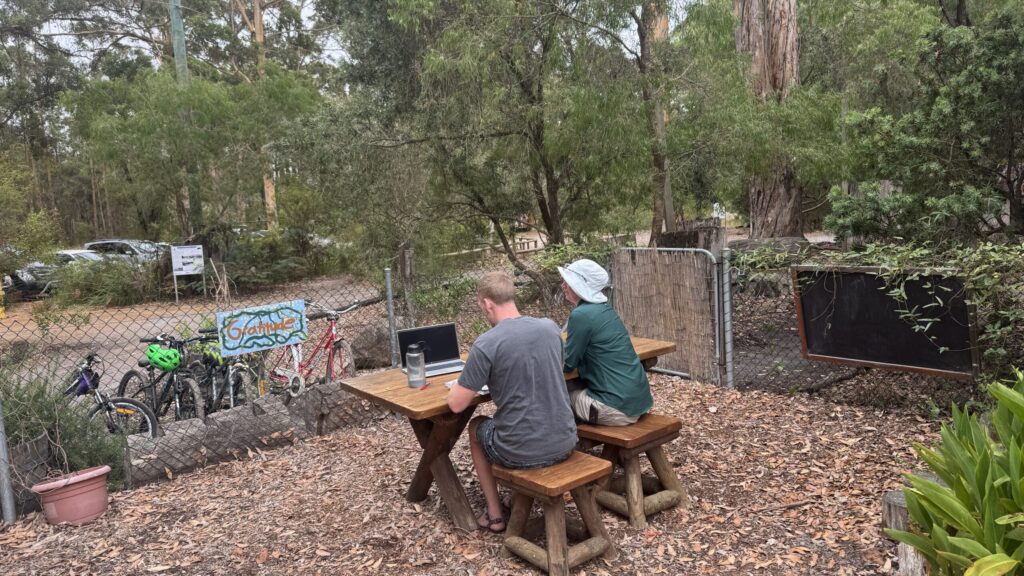
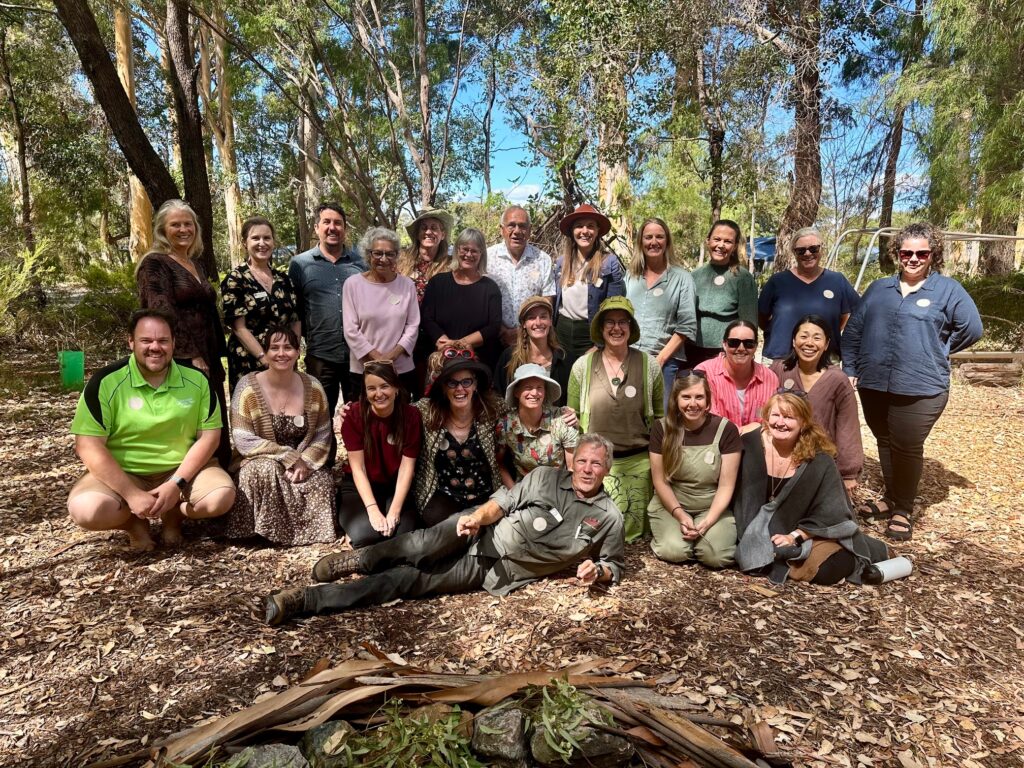
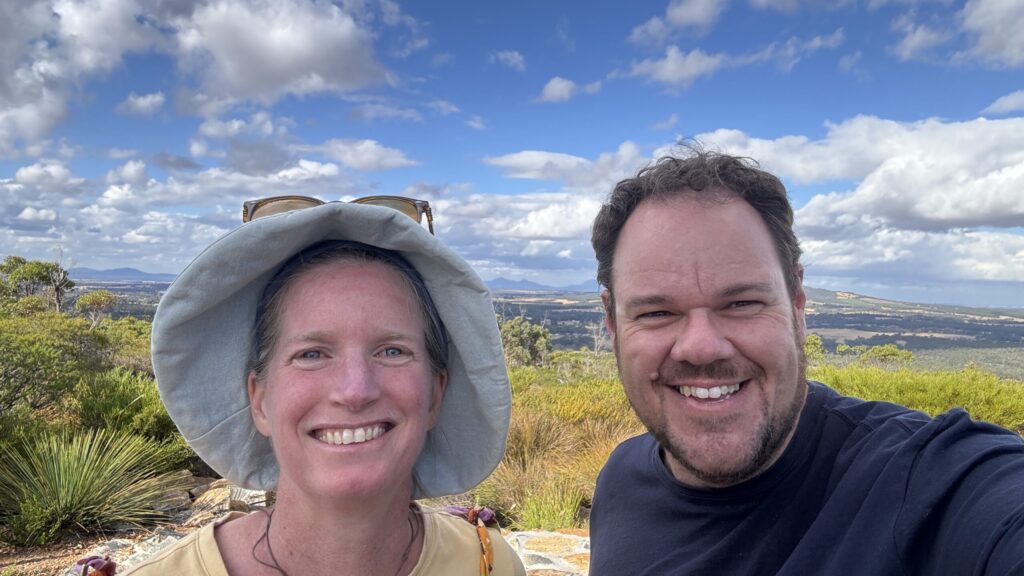
Recently, Daniel and Trudi spent just over a week in Denmark, Western Australia, working alongside the staff and students at Kwoorabup Nature School.
We didn’t arrive with a checklist or a program to deliver. We arrived with time, curiosity, and a willingness to listen. What unfolded over those days was shaped less by plans and more by relationships – by conversations, shared experiences, and being present long enough for trust to grow.
This is a reflection on that time.
Beginning with Listening
Our first day in Denmark began in the best way it could – by listening.
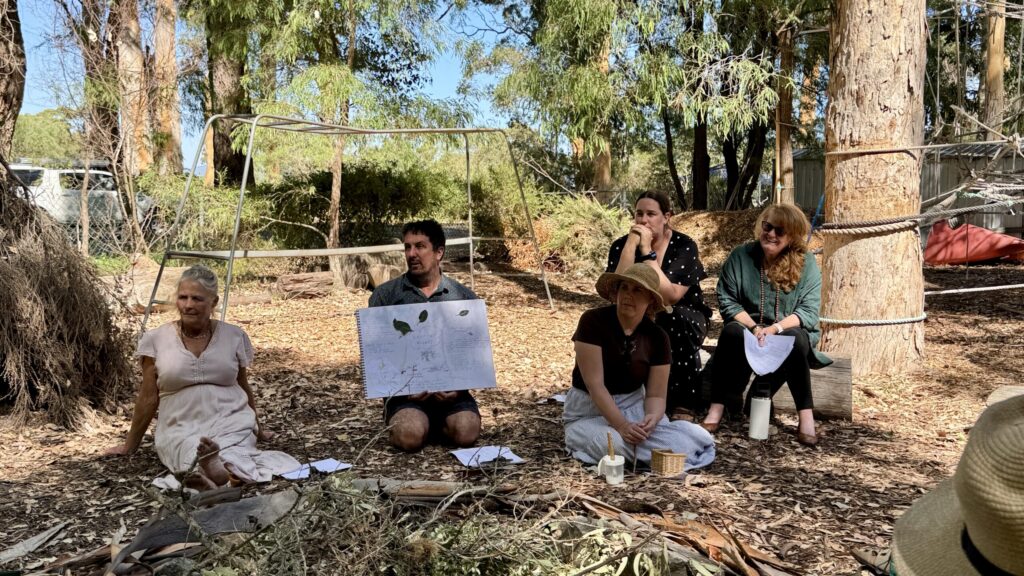
Kwoorabup Nature School, alongside other local schools, gathered for a Cultural Connections Day supported by AISWA. Elders from Menang Country shared stories of growing up in this place. Stories of land and water, family and work, hardship and humour. Stories that were offered generously and without rush.
What stayed with us wasn’t just what was said, but how it was shared. There was a clear reminder that story moves at its own pace. It doesn’t always fit neatly into timetables or session plans, and it doesn’t need to.
One reflection that emerged from the day was the importance of allowing story to lead – rather than being driven by schedules or outcomes. That way of listening felt like the right way to begin a school year, and it quietly shaped everything that followed.
Arriving Well
When we work with schools, we pay a lot of attention to how people arrive.
The first session with staff was intentionally simple. We spent time grounding, sharing gratitude, playing together, and setting intentions for the week and the year ahead. Gratitude is already a regular practice at Kwoorabup (with both the staff and students), and the depth with which staff shared reflected a strong sense of trust within the community. People were comfortable taking time, being honest, and listening to one another.
We then invited educators to reflect on what they were carrying into the year. Using the metaphor of glass balls and rubber balls, staff considered what really needs protecting – wellbeing, family, students, relationships – and what can sometimes be dropped, to let bounce, when things feel full.
Those reflections were later gathered and shared back with leadership as a collective piece of writing. What struck the leadership team was the care and integrity behind the intentions. The words were thoughtful, generous, and deeply aligned with the values of the school. They were placed on the staff fridge – a quiet reminder of what matters when the year starts to speed up.
One educator reflected that in just 45 minutes she cried, laughed, moved her body, felt grateful, set intentions, and felt deeply connected to her colleagues. That comment stayed with us. It said a lot about the power of slowing down and holding space well as well as the importance of the container we use to hold this space – the Natural Cycle.
Time Changes the Work
Spending more than a week at Kwoorabup mattered.
Time changes the quality of conversations. It allows you to return to ideas, notice patterns, and build trust beyond first impressions. It meant we could work with staff, leadership, and students – not just run workshops and move on.
Kwoorabup Nature School is often described as a Lighthouse School, and being immersed in the community made it clear why. There is a strong sense of coherence across the school. Learning from Kindy to Year 6 is connected through shared language, shared values, and a clear commitment to inquiry and nature connection.
There is also a willingness to sit with complexity. Staff openly name the tensions between explicit teaching and inquiry, structure and flexibility, planning and responsiveness. Rather than trying to resolve these tensions quickly, the school works to hold them thoughtfully.
Our role was to walk alongside, listen carefully, and reflect back what we were seeing, finding ways to embed new ideas in a sustainable and integrated way.
Supporting Inquiry and Confidence
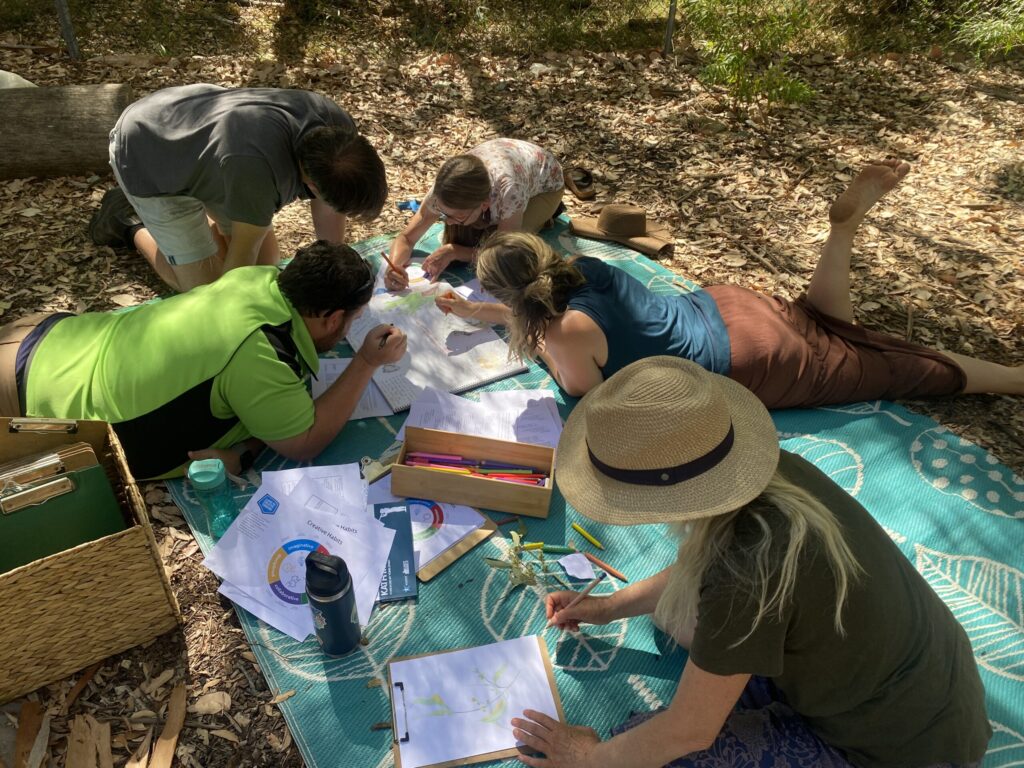
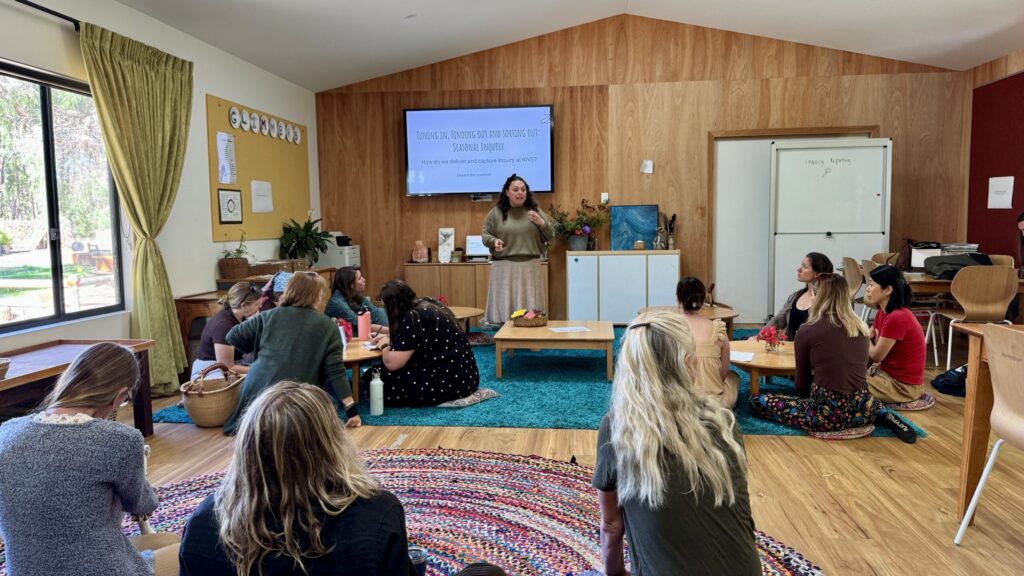
Part of our time was spent supporting the school’s pedagogy leader as she facilitated sessions on Kath Murdoch’s inquiry process. These sessions were shaped with care, using movement, reflection, and varied activities to support adult learning, following the Natural Cycle we use.
Much of our role here was quiet reassurance – helping read the energy in the room, knowing when to shift an activity, and trusting the learning process rather than sticking rigidly to plans. Confidence grows when people feel supported to trust their instincts.
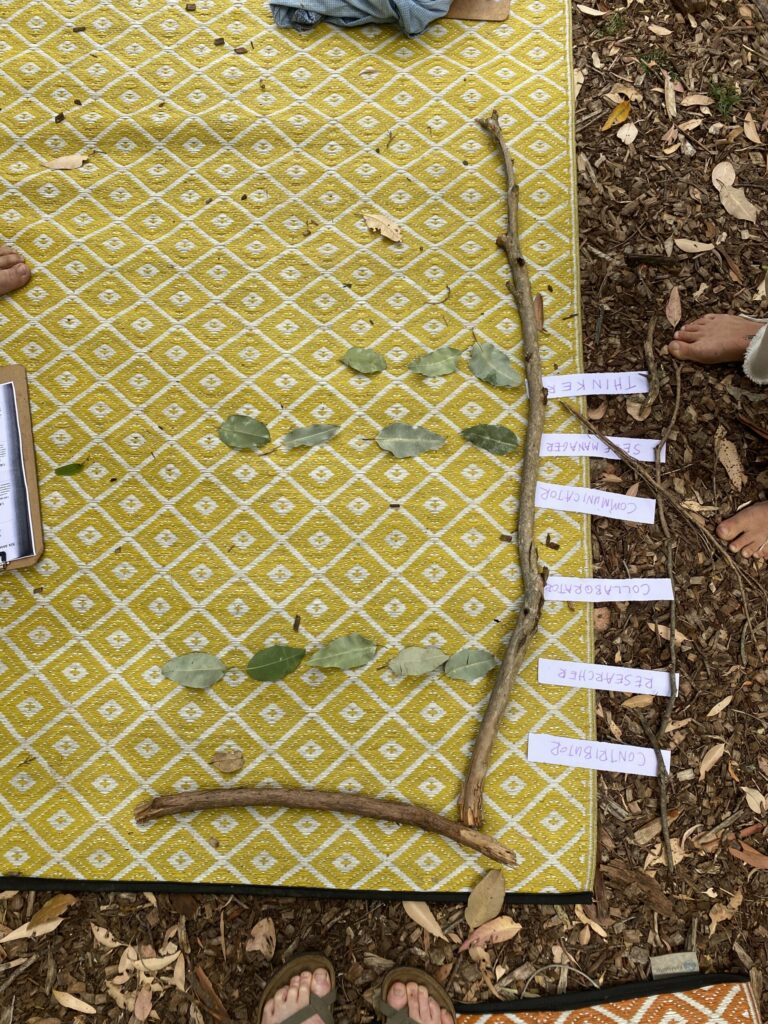
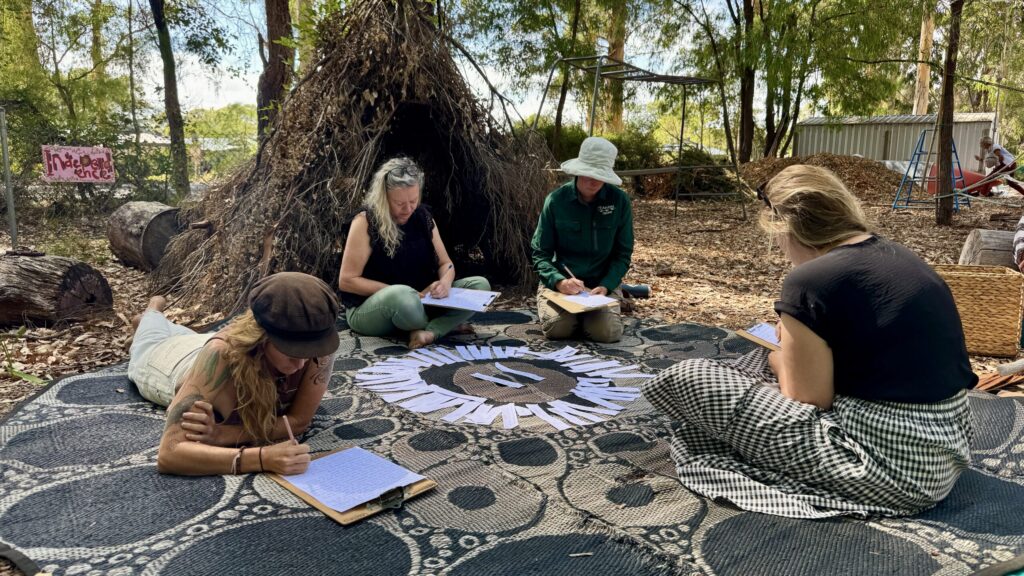
We followed these sessions with work around learning assets and creative habits of mind. Educators explored how shared language can support students to reflect on how they learn, set intentions, and recognise growth over time. Nature metaphors helped bring these ideas to life, and journalling became a practical way to capture learning without flattening it.
Learning Outdoors
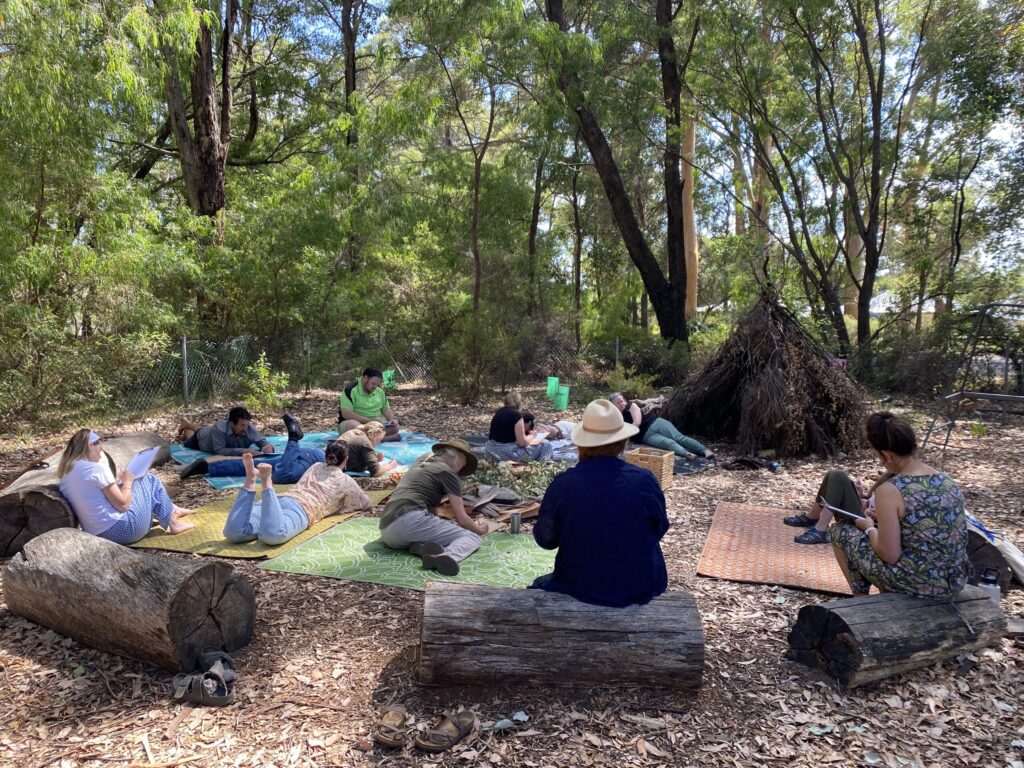
Much of the professional learning took place outdoors, on Boodja.
Educators worked as learners in the same environments they ask children to learn in – sitting on the ground, noticing birds, smelling peppermint trees, and spending extended time outside. There was joy in this, and there was discomfort too.
Naming that discomfort mattered. Experiencing it as adults builds empathy for students and supports more thoughtful planning for outdoor learning. Staff reflected on how activities need adapting across age groups, and how concepts like reflection and metacognition look different from Kindergarten through to Year 6.
Making Space for What’s Hard
As the week unfolded, new initiatives and projects brought up feelings of grief and uncertainty for some staff. This was anticipated, and when it emerged, we paused.
We acknowledged the tension, invited reflection, and created space for educators to share what they were feeling. Those reflections were held carefully and later shared back with leadership as synthesis – not as complaint, but as insight.
Being heard allowed staff to let go of some of the weight they were carrying and re-enter the learning with more presence. It also reassured leadership that the emotional landscape of the community was being held with care.
Creativity, Senses, and Students
Later sessions focused on creativity and sensory learning. Educators activated their senses through nature connection routines and then explored vocabulary, writing, art, and performance.
The depth of engagement was obvious, and the quality of the work reflected what happens when learning is embodied and meaningful. These ideas didn’t stay in workshops – they moved straight into classrooms.
One Year 5/6 teacher invited us to run the same sessions with her class. The students responded with enthusiasm and rich language. That teacher is now planning a term-long sequence using each sense to deepen narrative writing linked to season, place, and curriculum.
We also worked with the LOTE teacher teaching Noongar language. Together, we explored playful, outdoor ways to introduce seasonal language through games, movement, and soundscapes – offering a meaningful way to begin each season.
Seeing the Educator Role Clearly
One workshop stood out for the school principal. During this session, the role of the educator was clearly modelled – observing learners, noticing learning assets in action, and offering specific, strengths-based feedback.
Staff experienced what it feels like to have their learning noticed and named. The pride that emerged helped educators imagine what is possible for their students when feedback is grounded in care and attention.
Nourishment Matters
Alongside the work, we were grateful for the chance to nourish ourselves as facilitators. Time spent swimming, snorkelling, walking, sharing meals, and being in nature mattered.
This work asks a lot of us. Presence is essential, and presence is sustained by care – for ourselves, each other, and the places we work.
Leaving with Gratitude
As we left Denmark, we felt deeply grateful.
Grateful for the trust of the Kwoorabup community. For time spent learning on Boodja. For honest conversations, shared laughter, and moments of quiet reflection.
This work is relational. Being welcomed into a community over time is a privilege we don’t take lightly.
Thank you, Kwoorabup Nature School, for walking alongside us.
We want to work with your school.
Educated by Nature offers consultation – bespoke ongoing sessions that reimagine learning.