

In September 2025, Educated by Nature joined the Djilba Wildflower Festival in Kepa Kurl – the Noongar name for Esperance. In Noongar culture, Djilba marks the season of growth and change, a time when wildflowers bloom, food sources shift, and Country calls for attentive care. It felt fitting that this festival unfolded slowly, with room to notice and deepen, rather than rush and skim.
We work with big festivals and community events often, and we know how much effort goes into them. Organisers invest time, energy and heart into creating experiences that will draw a crowd. Their hopes are often pinned on high attendance – long queues, packed workshops and stations full of bustling hands. These numbers are how success is measured and reported back to funders, sponsors and boards.
And yet, when rain on the Saturday thinned the crowd and Sunday remained gentle and quiet, something more profound emerged: a chance to work slowly, to listen deeply, and to create relationships with those who came.
A Space for Mentoring and Wonder
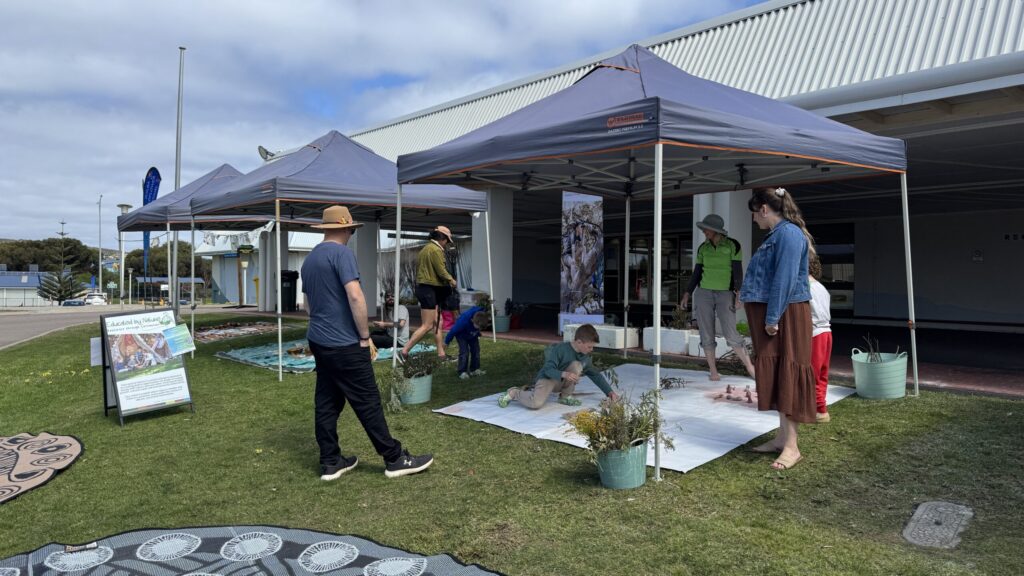
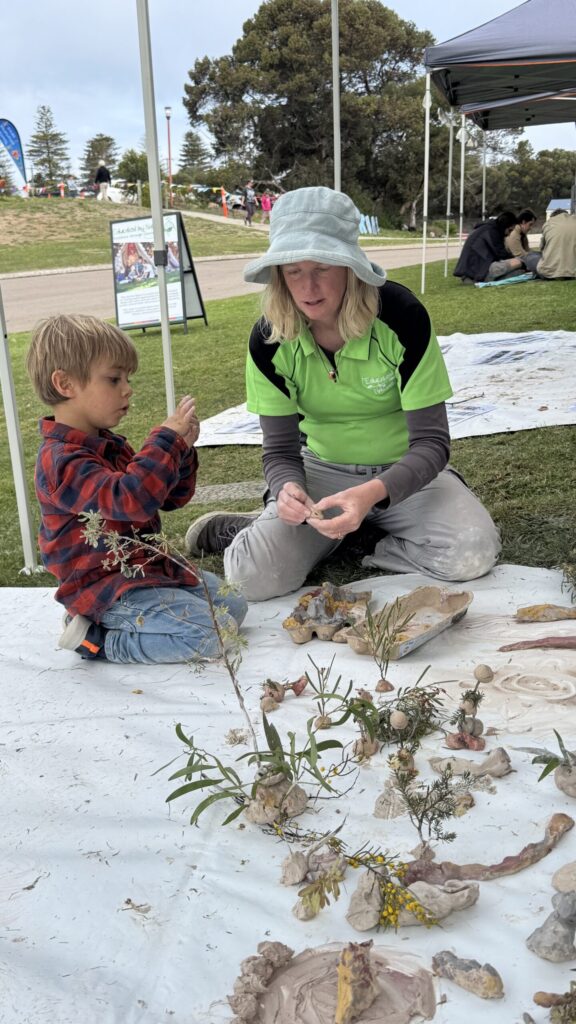
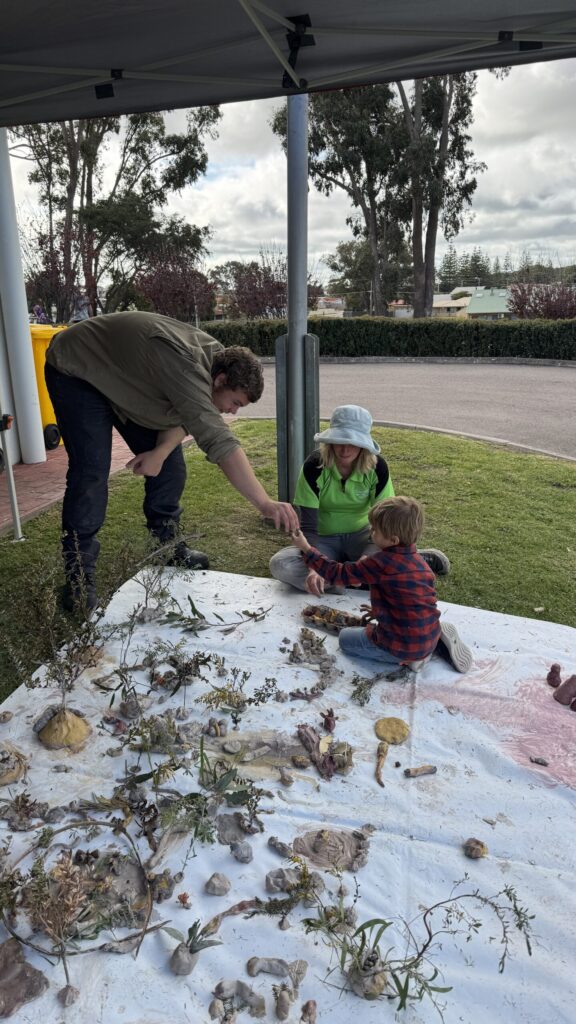
At our activity spaces, fewer people meant more time. We could sit with each child or adult and explore their ideas in detail – why they chose particular colours of clay, how they imagined their animal’s habitat, which plants or shelters it would need to survive. One boy spent 20 minutes shaping a mudlark’s nest from clay, carefully pressing each twig mark into the surface. We asked: “Where will your bird hide from predators? What does it eat? Does it need water close by?” He responded with theories about wetlands and salt lakes, drawing from his own observations on Country.
Isaak and John, our co-facilitators (Tjaltjraak Rangers), became on-the-spot naturalists. They helped participants identify animal tracks, discuss feeding habits, and compare the arid zone to the coastal wetlands. Children pored over our printed animal cards, cross-checking with their sculptures and building miniature habitats out of natural materials. Conversations stretched beyond naming and classification, into ethics, ecosystems, and belonging.
Adults Reclaiming Creative Space
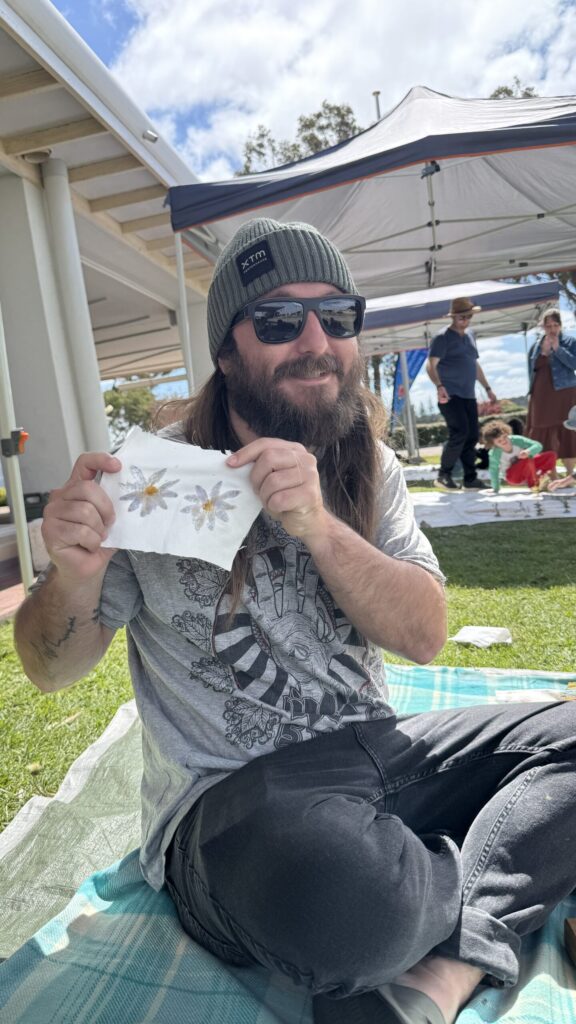
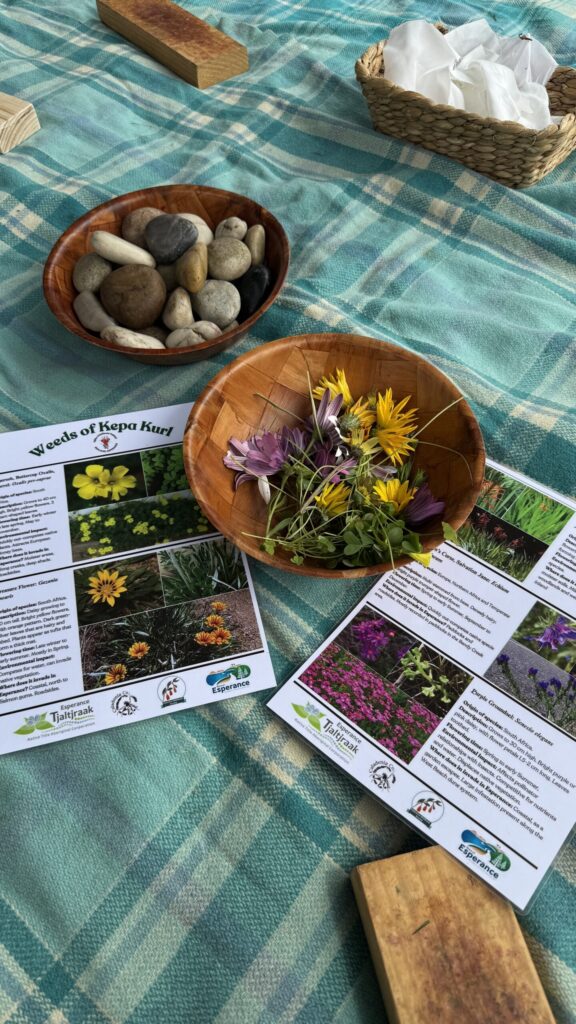
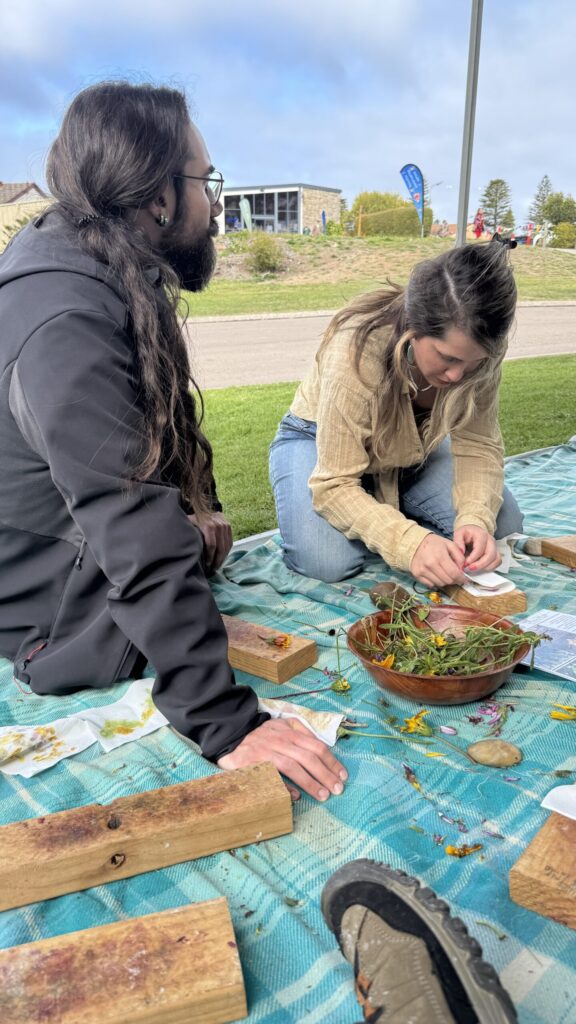
A quieter festival also created unexpected permission for adults. Around the Happa Zome space, parents and grandparents lingered longer, chatting with us and with each other. One woman reflected, “I used to pick flowers from my grandma’s garden and make potions. I’d get in trouble. Now here I am, making beautiful artwork from the petals of flowers.” These moments wove memories and present experience together, allowing adults to reconnect with the creative, playful parts of themselves often left dormant.
We saw fathers kneeling beside their children to co-build small shelters, aunties painting wildflower designs inspired by childhood walks, grandparents recalling how they’d camped in similar landscapes decades ago. These were not surface-level interactions. They were acts of collective remembering, of bringing family and landscape back into dialogue.
Guided by Aboriginal Rangers
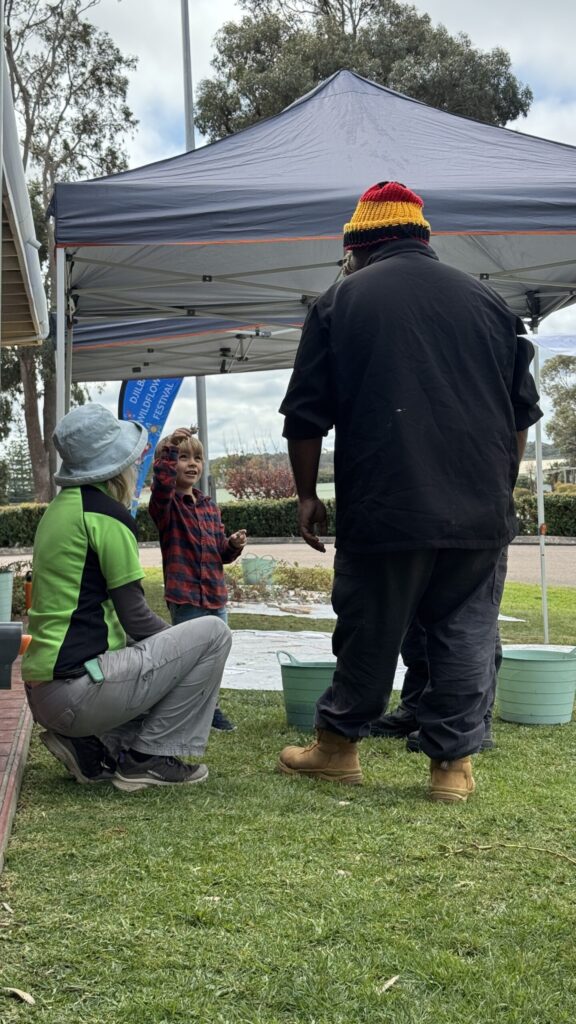
Central to this depth were the Aboriginal Rangers who partnered with the festival. Their presence grounded the experience in living culture. They shared stories of Kepa Kurl, of the salt lakes and wetlands, of traditional gathering places and symbols. They helped us and the children trace the connections between the arid goldfields, the ocean, and the inland ecosystems.
Their guidance meant that our clay creatures and wildflower artworks were not just decorative, but connected to Country – to real animals, habitats, and ongoing custodianship. This partnership helped children see beyond the festival tent, into the living systems that support us all. Conversations with the Rangers sparked questions about caring for these ecosystems, understanding seasonal shifts, and respecting the knowledge embedded in local landscapes.
Small Numbers, Big Impact
We came to the Djilba Wildflower Festival expecting to meet hundreds. Instead, we met dozens – and in those dozens, we went deep. The mentoring was one-on-one, the discussions expansive, the learning grounded. The quieter pace allowed every child’s question to be heard, every adult’s story to surface, and every clay creature to be carefully shaped and discussed.
At Educated by Nature, we know that less can be more. Small numbers allow for intimacy, for nuance, and for genuine connection. As the Djilba wildflowers bloom slowly across Kepa Kurl, our interactions too bloomed in their own time – conversations layered like petals, stories rooted like the plants themselves.
An Invitation to Slow Down
In a world obsessed with quantity, our time at the Djilba Wildflower Festival reminded us of another way. By slowing down, we create conditions for mentoring, creativity, and cross-cultural exchange. By honouring small numbers, we honour each person’s presence. By working alongside Aboriginal Rangers, we honour Country and the knowledge that sustains it.
This is the quiet power of small numbers: the chance to be fully present, to listen deeply, and to build connections that last well beyond a single weekend.
Over the following days, we did meet hundreds of people, with several school groups rotating through different stations. We saw over 700 students and educators, giving them a similar experience with time to pause and consider the natural materials in front of them and the natural landscape around Esperance.
We love creating spaces for deep connection.
If you would like to know more about how we can support you through our festival activities and school incursions, please reach out with an enquiry.