When Daniel took the visiting speakers into the Year 7 Self Build Play Space at Guildford Grammar School, there was an opportunity to connect the conversations of the previous days with a place we care deeply about. Here was work that had grown through students’ ideas, practical experimentation, relationships and the school’s willingness to support an evolving approach to play.
Wendy commented that the space reminded her of The Land Adventure Playground and Woodland Tribe, both significant inspirations for our work. Hearing that connection meant a great deal to us. It brought international perspectives into conversation with local experience, and gave us a chance to share what we have been exploring alongside students and educators.
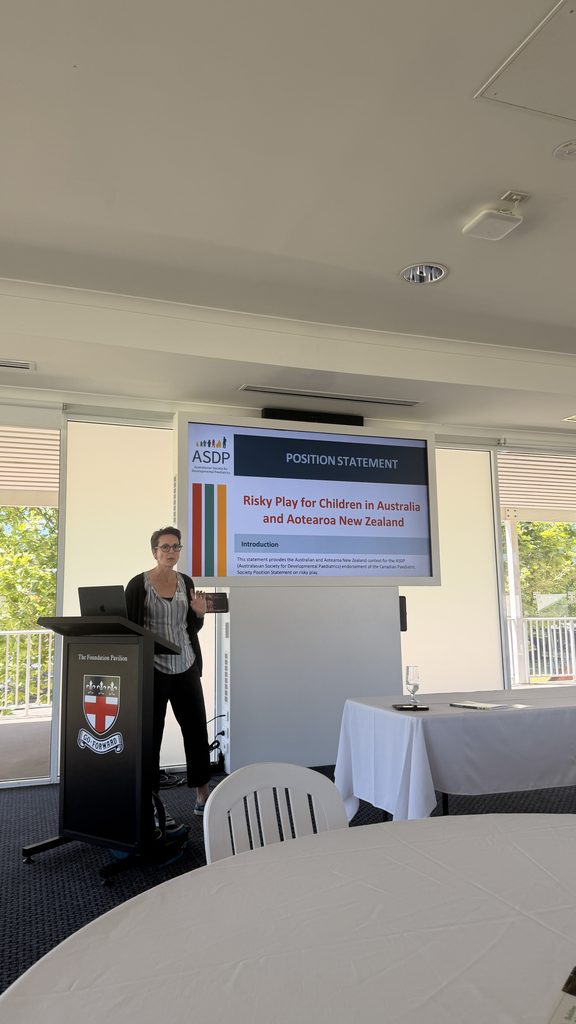
That exchange was one part of three days of Play Australia events in Perth, from 15 to 17 October. Members of the Educated by Nature team joined Dr Wendy Russell, Professor Mariana Brussoni, Dr Megan Zeni and Play Australia’s Robyn Monro Miller to explore play sufficiency, risk, children’s relationships with place, and the conditions that allow play to emerge.
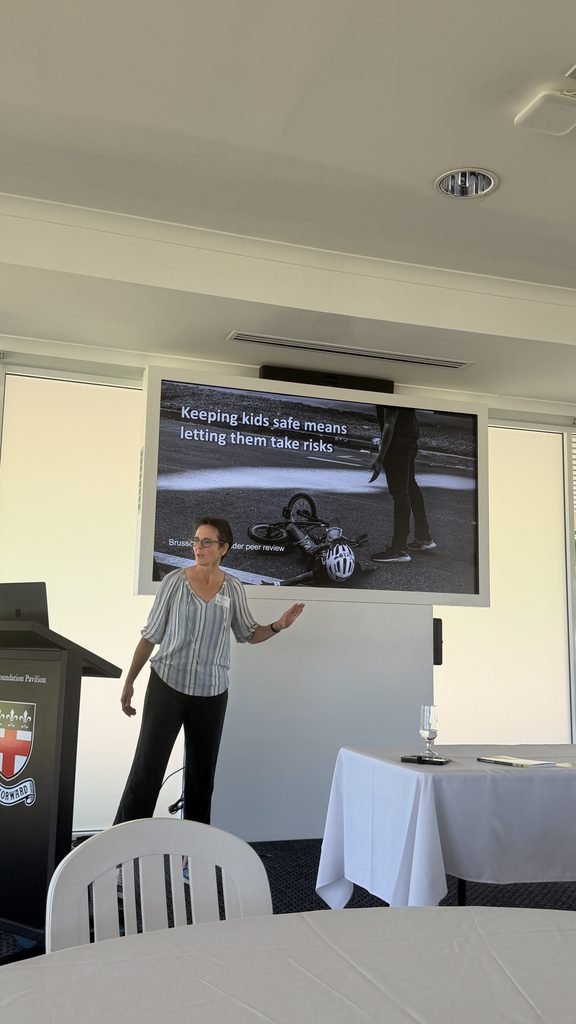
Daniel and Isaac attended the Play Summit with Wendy. Trudi joined Mariana and Megan’s Navigating Risky Play in School Settings masterclass at Catholic Education WA, while Daniel attended the Guildford Grammar School masterclass the following day. On Saturday, Daniel returned for the Festival of Playful Ideas (with became the Salon of Playful Enlightenment). Across these gatherings, we found connections with our work in Risk Management Frameworks, risky play types, loose parts and Self Build Play Spaces, alongside questions that invited us to look more closely at our own practice.
Looking at the life around a play space
Wendy’s exploration of play sufficiency drew our attention to the conditions of children’s everyday lives. A neighbourhood might have a playground, yet children may struggle to reach it because of busy roads. School grounds might be locked outside school hours. There may be little unscheduled time, or repeated messages that children’s noise, activity and presence are unwelcome. Each of these conditions shapes what is possible, and they need to be considered together.
We recognise this in our conversations with schools. A space can contain wonderful materials, but children’s opportunities to use them depend on the time available, the relationships around them and what adults are comfortable allowing to unfold. Before deciding what to add, there is value in noticing how the place already works: where children gather, what they return to, and which routines protect or interrupt their play.
Wendy’s relational approach also connected with how we understand nature play. Children encounter other people, materials, weather and living things within places that have their own routines, expectations and histories. Her work with Mike Barclay and Ben Tawil, Playing and being well, explores the relationships between play, wellbeing and the conditions of children’s lives. It offers a way to think about adult responsibility through the conditions we help create. Read Playing and being well.
For us, this invites careful attention before intervention. Children may already have found possibilities in a place that adults have overlooked. Recognising and protecting those possibilities can be a meaningful place to begin.
Making room for children’s judgement
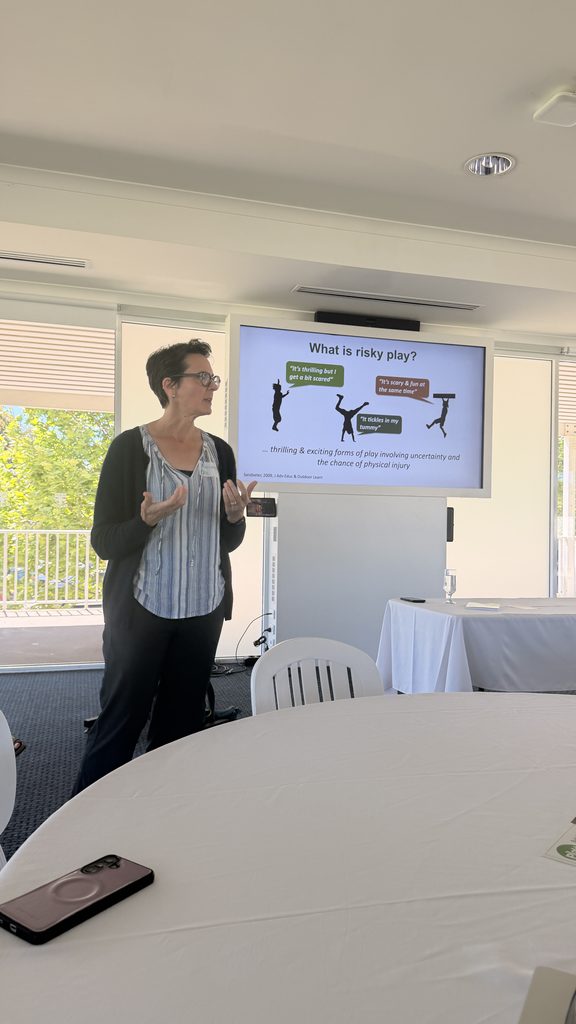
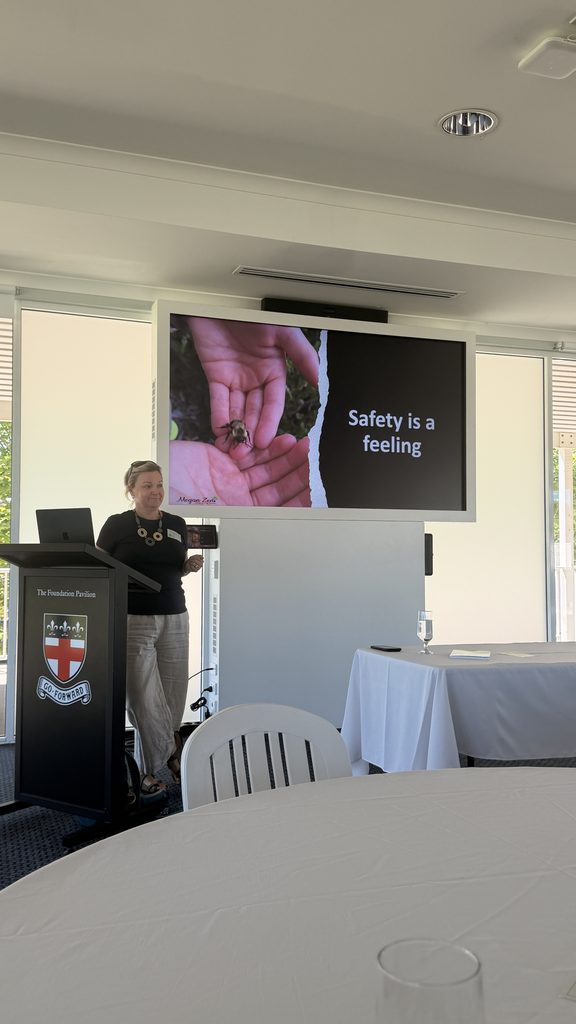
The masterclasses with Mariana and Megan brought these ideas into the practical realities of schools. Their discussion of risky play made room for uncertainty and individual experience. The same activity can feel familiar to one child and deeply challenging to another, while a child’s confidence and willingness may change from one day to the next.
This matters when we introduce risky play types. Categories such as height, speed, tools and rough and tumble can help adults recognise possibilities, but we also need to remain attentive to the child having the experience. Interest, choice and a child’s own sense of challenge matter. There is room to watch, hesitate, try something differently or decide that today is not the day.
These conversations connected strongly with our Risk Management Framework training. Adults have an active role in identifying hazards, considering benefits, establishing appropriate routines and responding when conditions change. Within that support, children need opportunities to notice what is happening, make decisions, adjust their actions and try again. Our judgement and theirs are both part of the experience.
At the festival, Mariana shared research using virtual reality to explore risk willingness in play and risk management in a street-crossing task. Greater willingness to engage with risk was associated with quicker risk assessment in the crossing task, without an increase in dangerous crossings. It was also associated with more falls in the virtual play scenario. These findings describe associations rather than proving cause and effect, and they give us reason to examine assumptions about the relationship between taking risks and learning to manage them. Read the virtual reality study.
In our work with educators, this returns us to observation. What is the child noticing? How are they responding? Where might adult support be useful, and where might there be room to wait? Frameworks help us approach these decisions thoughtfully, while the child and the situation ask us to keep paying attention.
Supporting the adults who support play
Megan also made room for the professional vulnerability educators can feel when supporting risky play with other people’s children. Concerns about injuries, family expectations, leadership decisions and how professional judgement will be understood are part of the reality of this work. Educators need opportunities to discuss those concerns and work through them with others.
A school’s play culture grows through relationships among adults as well as relationships with children. Shared language, supportive leadership, mentoring and ongoing staff conversations can help educators develop confidence together. Being able to discuss an uncertain moment, explain a decision or seek another perspective matters when practice is changing.
This is something we want to keep strengthening in our professional learning. Alongside practical examples and frameworks, we need to make room for educators’ questions and experiences. Working through real situations together can help build trust in their developing judgement and in the colleagues supporting them.
Allowing an idea to remain unfinished
The connections with loose parts and Self Build Play Spaces were especially strong. Timber, ropes, tyres and other movable materials offer many possible beginnings. Children can bring an idea, negotiate it with someone else, change direction or discover that their first attempt needs rethinking. The materials leave room for something that has not yet been decided.
Megan’s discussion of construction play highlighted the uncertainty involved in making without a prescribed solution. That openness can be exciting, and it may also feel unfamiliar to children accustomed to being shown the steps and an expected result. Relationships, familiarity with materials and time to return to an idea can help children become more comfortable with that uncertainty.
It asks something of the adults around the space, too. Materials need replenishing, structures need thoughtful assessment, and decisions need to be made about work in progress. Grounds teams, educators and school leaders all influence whether children can return to an unfinished idea. Sustaining a play space involves ongoing care for these relationships and practical conditions, as well as the materials themselves.
The visit to the Year 7 Self Build Play Space gave us a meaningful way to share this work with the visiting speakers. Their enthusiastic feedback was encouraging, particularly because the space reflects an approach that continues to develop through students’ ideas and the school community’s support.
Keeping our understanding of play open
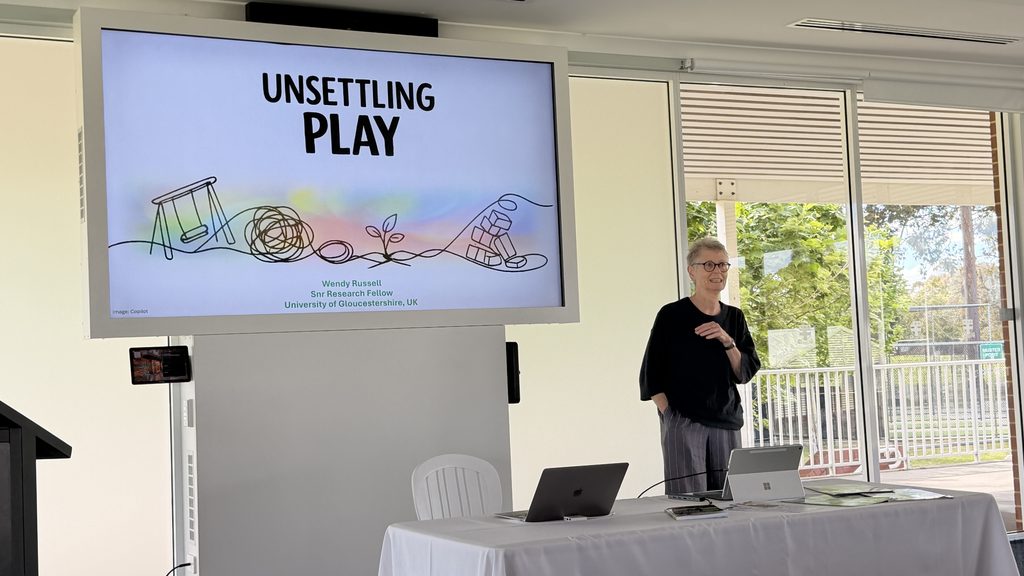
Saturday’s Salon of Playful Enlightement gave the conversations room to become more questioning. Robyn invited us to consider imagination, ambiguity and the different meanings people bring to play. Wendy challenged familiar definitions and encouraged us to think about whose knowledge shapes our understanding.
These discussions returned us to the value of play in children’s lives now. We often explain play through its contributions to learning, development and future capabilities. Alongside those conversations, we need language for the pleasure of making something, the satisfaction of a shared joke, the intensity of an invented game and the experience of belonging. These are meaningful parts of childhood in their own right.
Play can also contain disagreement, frustration, uncertainty and changing relationships. Attending to it means noticing who is participating, who is being excluded and when support is needed. There is complexity here that asks us to remain curious, even when we feel confident about the importance of play.
Across the three days, we kept returning to the relationships between children’s experiences and adult decisions. We want to bring children’s perspectives further into conversations about time, space and access; continue developing educators’ confidence with benefit-risk thinking; and support loose parts and Self Build Play Spaces as ongoing practices. We also want to keep the immediate value of play visible in the way we speak about our work.
These local questions connect with a wider conversation. Play Australia’s summits are contributing to the development of a National Plan for Play, bringing people across sectors together to consider children’s opportunities to play. Participating helps us connect what happens in a school play space with broader questions of equity, access and the conditions communities create for children. Learn about Play Australia’s National Plan for Play.
We are grateful to Play Australia and Robyn Monro Miller for bringing Wendy, Mariana and Megan to Perth, and for creating opportunities to think together. Thank you to the speakers for their generosity, to Guildford Grammar School and CEWA for hosting, and to everyone who shared questions, experiences and ideas.
We return to our work with these conversations still unfolding. They will accompany us as we listen to children, work alongside educators and notice what helps play continue. Sometimes that will involve introducing materials or reconsidering a routine. Sometimes it will involve recognising what children have already made possible, and giving it the time, space and care to grow.