

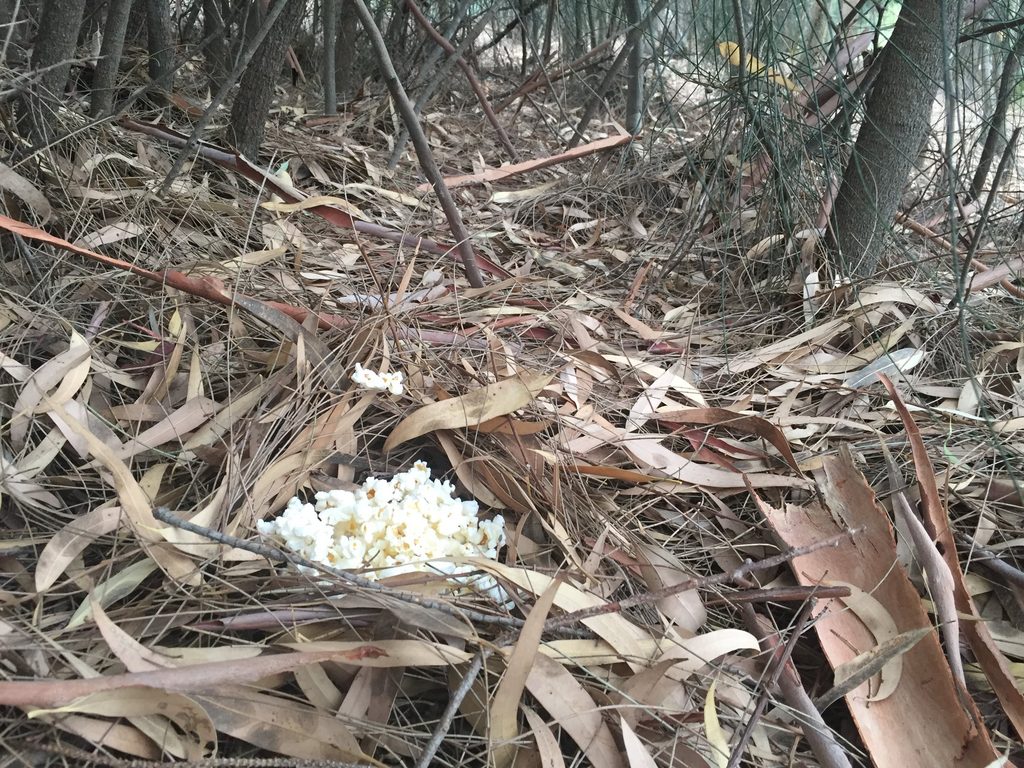
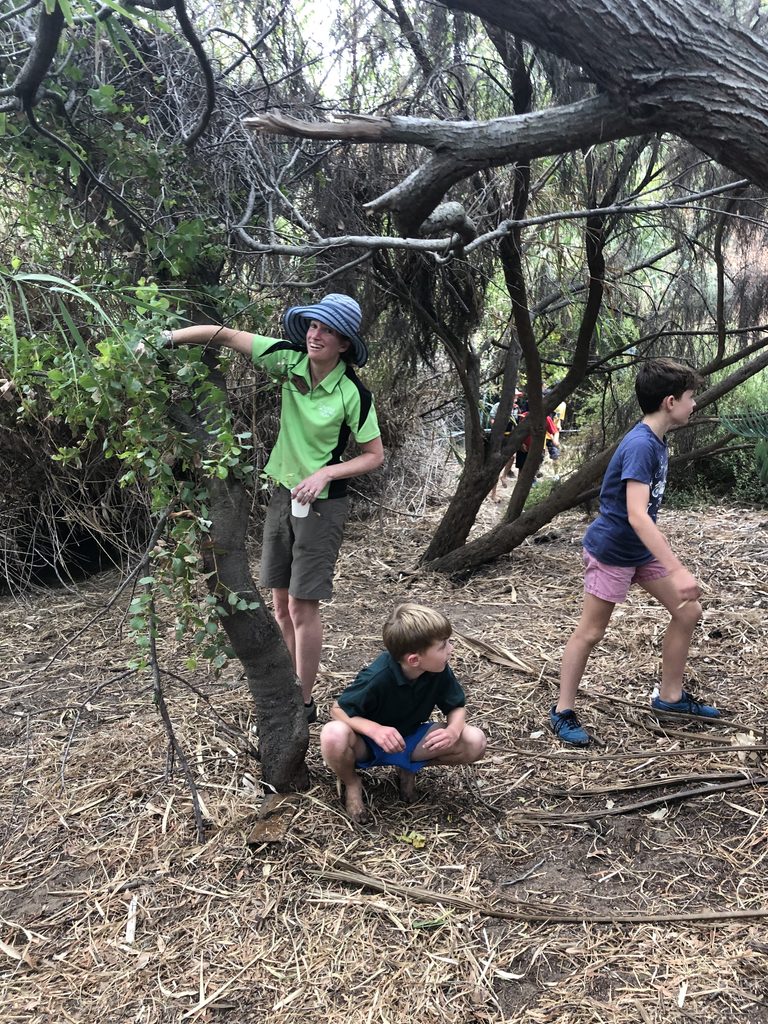
A pair of children crouch beneath a tree, gathering fallen grasses, leaves and pieces of bark. Their task is simple: with their partner, build a nest about the size of two cupped hands. Across the nature space, other pairs are doing the same. Some are carefully weaving materials together, while others seem more interested in choosing the perfect location. Soon a call begins travelling through the group. ‘Djiti-djiti.’ Somewhere nearby, a partner answers, ‘Djiti-djiti.’
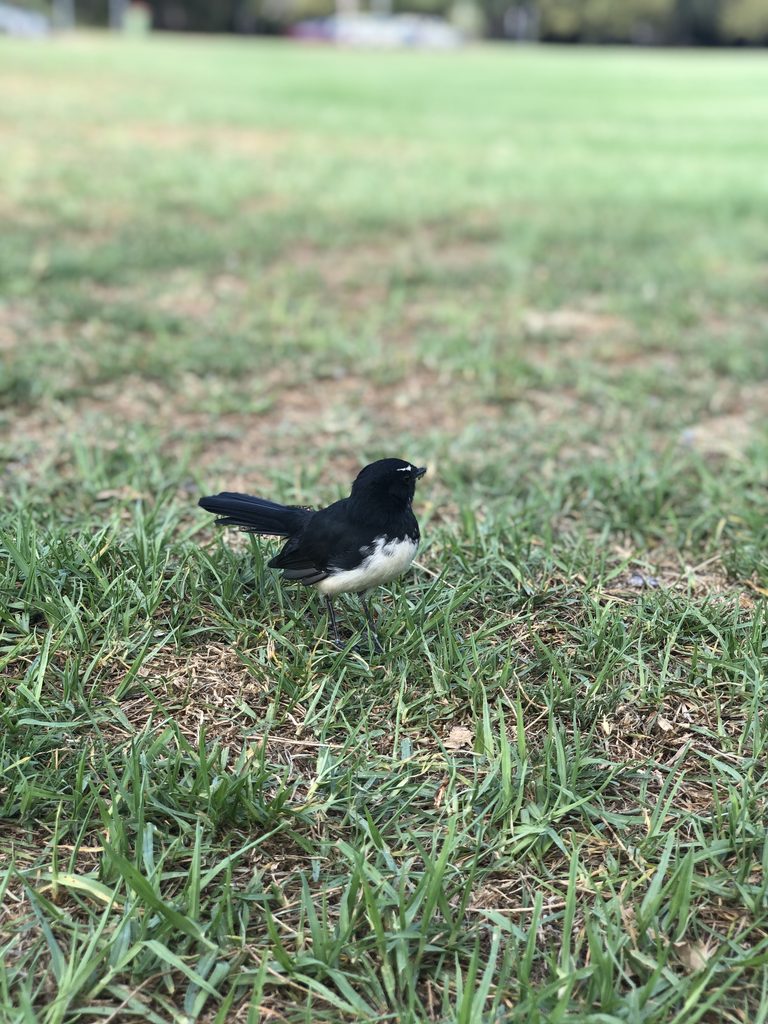
There are no predators yet and there is no food to collect. For now, the children are simply becoming Djiti Djiti, or willie wagtails, finding a place to build and learning to stay connected with their partner. Yet already there are things to notice. Why did one pair choose the shelter beneath a tree while another built in the open? Which materials worked well? How far have the birds travelled from one another, and how are they keeping track of their partner?
We have long been interested in what becomes possible when learning about nature happens through the body, through relationship and within a place. There are many ways to teach children about habitats, food webs, predators and the ways living things depend upon one another. Nature connection games offer one more way into these ideas, giving children an opportunity to move within an imagined ecological system and begin noticing its relationships for themselves.
Djiti Djiti and Wardong is one of these games.
Stepping inside a food web
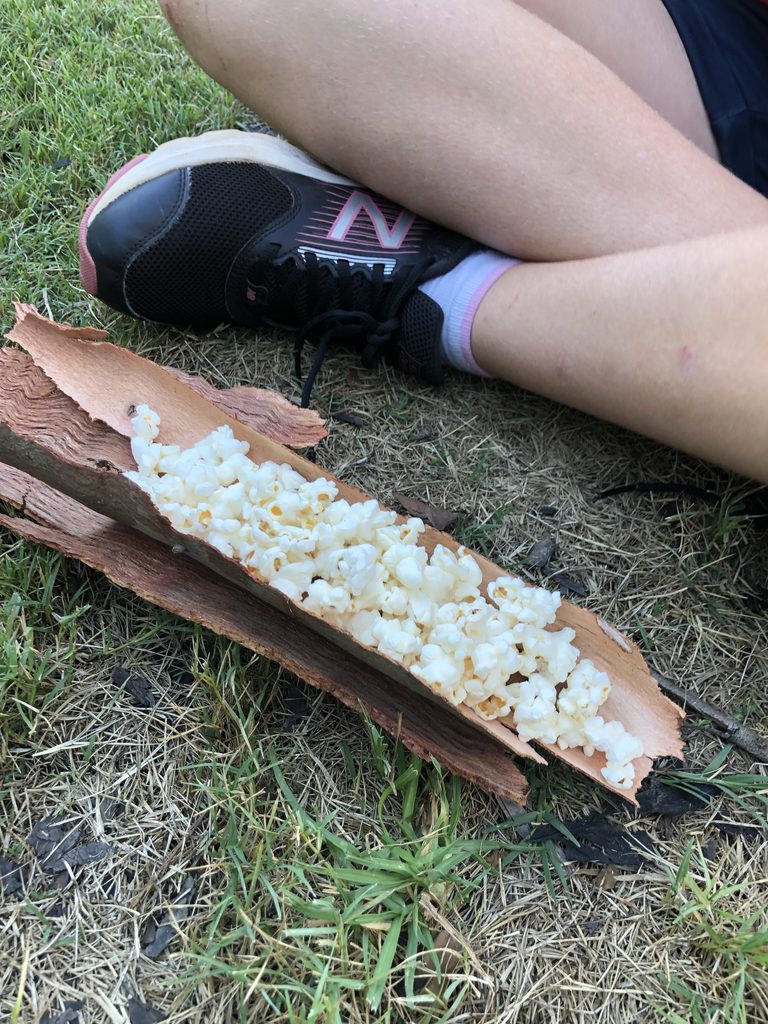
Once the nests are established, several food larders appear around the landscape. The Djiti Djiti can collect food, carrying one piece at a time back to their nest. The space quickly fills with movement as children discover the food sources and begin making journeys between their nests and the larders.
It is fascinating to observe the different strategies that emerge. Some pairs have built their nest conveniently close to food, while others have a considerable journey ahead of them. Some partners travel together. Others spread out. A few quickly discover efficient routes through the landscape. When the group gathers again, the questions are already sitting inside the experience. Did the location of your nest matter? Who collected plenty of food? What made gathering easier or harder?
At this stage, we could begin talking about habitat, resources and the needs of living things. We might explore how animals choose places to shelter or how the distribution of food can influence where animals move. Yet the children already have an experience to draw upon. Their nest had a location. Their food existed somewhere in relation to it. Distance, shelter and access to resources have become something they have felt through their own movement.
Then Wardong arrives, and the relationships within the game begin to shift.
Wardong, the raven, moves through this version of the game as a scavenger, watching for opportunities to take food from the nests of the Djiti Djiti. When both partners are home they can work together to scare Wardong away, but when only one bird remains, their stored food is vulnerable. Suddenly, the decision to collect another piece of food involves another question. Is it safe to leave?
We begin hearing conversations between partners. One child wants to keep gathering while another wants to guard the nest. Some pairs become cautious, while others take greater risks. Children begin watching Wardong as carefully as they watch the larders, adapting their strategy as the conditions around them change.
The food web is beginning to move.
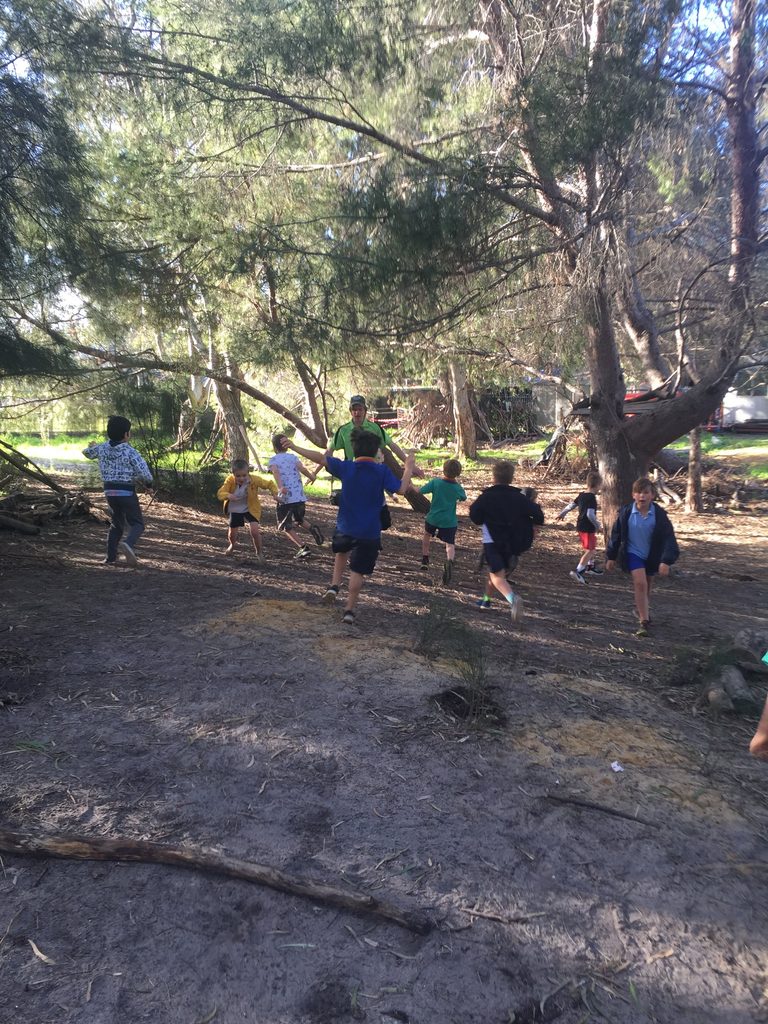
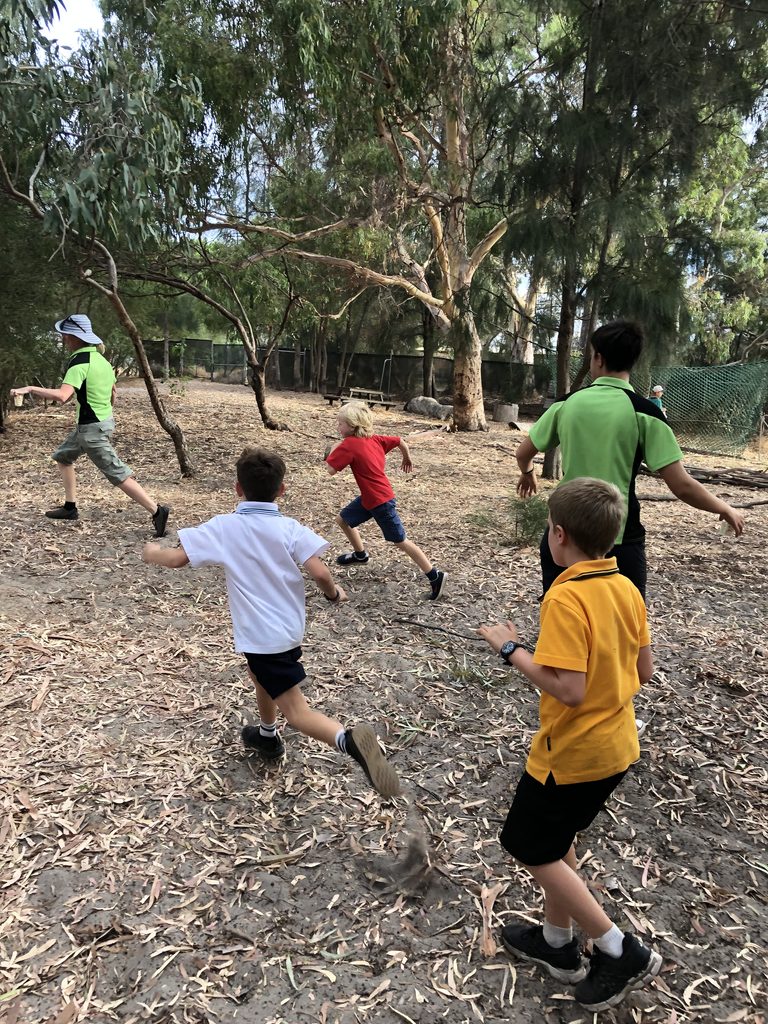
What happens when the system changes?
As children become familiar with the game, more layers can be introduced. An Eagle can enter as a predator, tagging Djiti Djiti and leaving them dependent on their partner for rescue. Four Djiti Djiti working together can scare an Eagle away, and we often notice the relationships beginning to expand. Children who had been focused on their own nest and partner start noticing what is happening to other pairs. Small groups form, birds travel together and the wider community begins to matter.
A Feral Cat can change the conditions again. Later rounds might include habitat loss, drought, overpopulation or human impacts such as roads and buildings. Children can also begin proposing conservation actions of their own, perhaps creating safe nesting areas, wildlife corridors or ways of reducing the pressure of introduced predators. These possibilities are built into the game resource so educators can add complexity gradually, responding to the age, interest and understanding of the group.
Each new layer offers another opportunity to notice relationships. What happens when there is less food available? How does the behaviour of one species influence another? What happens to animals when habitat is removed? How might human choices change the conditions within a landscape? There is rich Science and HASS learning here, with ideas about food webs, habitat, introduced species, resource availability, land use and conservation emerging from a shared experience.
One of the things we value about games like this is that these concepts remain connected to story, movement and place. Habitat loss is no longer only an idea to define. The children remember the moment part of their playing area disappeared. Food scarcity has a feeling attached to it because they remember reaching a larder and finding very little left. Predators alter the food web because the arrival of an Eagle or Feral Cat changed where everybody moved and what they paid attention to.
Nature connection within the learning
There is another possibility within the game that interests us just as much as the curriculum content.
For a period of time, the children have imagined themselves as birds. They have built nests, searched for food, listened for a partner and watched the landscape for other creatures. This kind of imaginative play can create a different starting point for noticing the animals who actually share the places where children live and learn.
A willie wagtail encountered after the game may now hold a question. Where is its nest? What is it eating? Why does it move that way? What does its call sound like? A raven moving overhead may draw attention too. Perhaps a child begins wondering what it is watching, where it finds its food or what relationships it has with the other animals in that place.
For us, this is where nature pedagogy and nature connection can sit comfortably alongside curriculum learning. Children can develop knowledge about ecosystems while also developing curiosity about the particular living world around them. Knowledge can give children more to notice, and noticing can create new reasons to keep learning.
This reflects a thread that runs through much of our work at Educated by Nature. We often describe ourselves as trackers of children, play and community, paying attention to patterns before deciding how we might respond. Games can invite children into a similar practice. They begin scanning the landscape, listening, remembering, watching others and adjusting their choices according to what they notice. Learning becomes relational because the nest, the partner, the food, the predator and the place all influence what happens next.
Language, story and origins
The names at the heart of this game also connect it to place. Djiti Djiti is a Noongar name for the willie wagtail, and Wardong is a Noongar name for the raven. The words and spellings used in this resource come from the Noongar Language Dictionary, compiled by Sharon Gregory of Koort-Kadak Consultancy. The game itself has travelled through another lineage. Our version has been adapted for Australia by Educated by Nature and is inspired by Jays and Juncos, a wilderness awareness game shared through nature connection mentoring traditions. We acknowledge both of these threads as part of the story of the game: the Noongar language that helps us name and notice the birds of this place, and the nature connection mentoring traditions through which the original game has been shared.
Where could the learning travel?
After the game, an educator has many possible threads to follow. A class might map the food web they have just experienced, investigate the real diets and habitats of the animals within the game, or collect data about food gathered and lost during different rounds. Older children might explore habitat clearing, introduced species, conservation planning or the competing ways people use and care for land.
The experience could also travel into English through storytelling from the perspective of one of the animals, into Mathematics through mapping and data, or back outside through observing the birds that actually inhabit the school grounds. The final game guide includes suggestions for these curriculum extensions across Science, English, Mathematics and HASS.
Our hope is that educators see the game as a starting point rather than a complete lesson. The play creates a shared experience. From there, the questions children ask, the patterns they notice and the curriculum intentions of the educator can help determine where the learning travels next.
Try Djiti Djiti and Wardong
We have created a downloadable Djiti Djiti and Wardong: A Game of Ecological Balance resource for educators who would like to explore this approach with their own students. The guide takes you through the game gradually, beginning with nests and food before introducing Wardong and additional predators. It also includes facilitator language, reflection questions, ecological extensions and adaptations for different ages, group sizes and participation needs.
https://educatedbynature.com/wp-content/uploads/2026/09/Djiti-Djiti-and-Wardong.pdf
Begin with a patch of nature and a group of children. Invite them to become Djiti Djiti, find a partner and build a nest. Give them somewhere to find food and allow some time for the relationships within the game to emerge. When they have begun to understand the landscape, invite Wardong in and notice what changes.
From there, the food web has somewhere to go.