

There are some conferences where you leave with a notebook full of strategies, ideas, and resources that eventually find their way onto shelves or into folders on your computer. And then there are conferences that stay with you in a different way entirely. The kind that continue echoing around your mind long after you’ve boarded the plane home. The kind that don’t just add to your thinking, but subtly shift it.
The 2026 Outdoor Learning Conference in Banff felt like that for me.
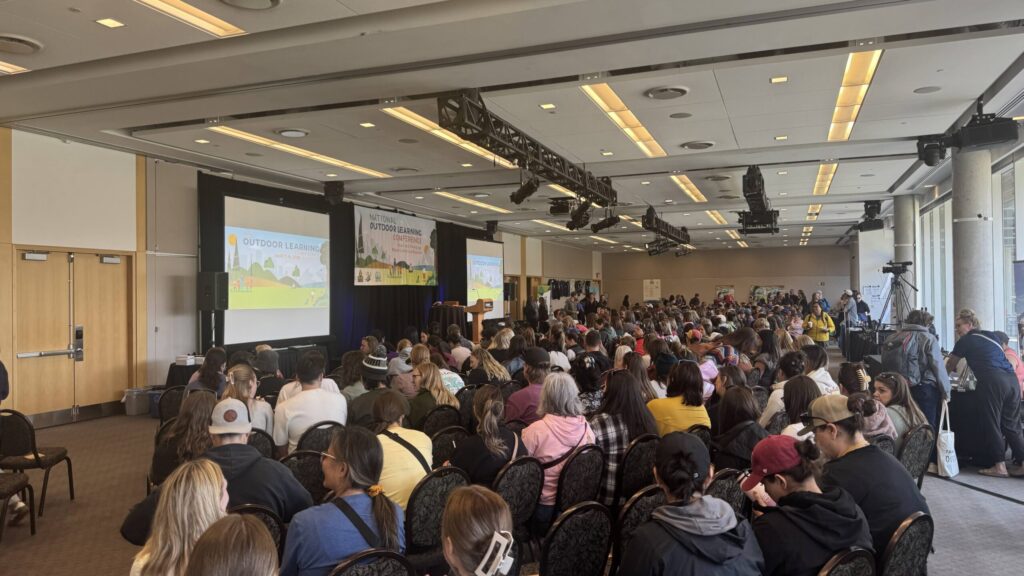
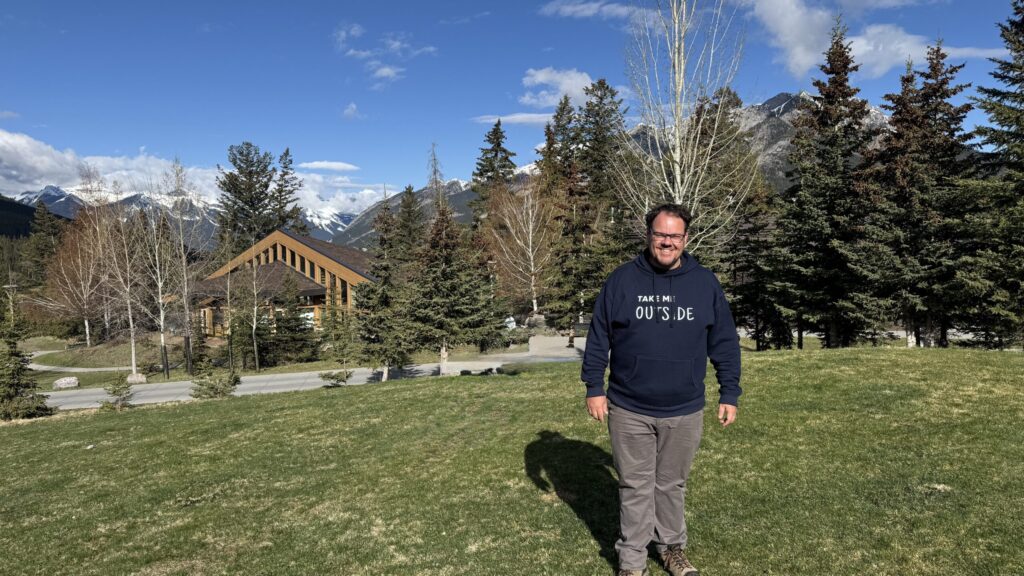
Held at the Banff Centre beneath towering mountains and surrounded by forests, rivers, and changing weather, the conference gathered educators, researchers, artists, environmental advocates, early childhood professionals, outdoor practitioners, and Indigenous leaders around the theme Place and Pedagogy: Where Learning Happens. Yet from the very beginning, it became clear that this wasn’t simply a conference about outdoor learning. It felt much more like an invitation into a different rhythm of being together.
There was something noticeably different in the atmosphere. Sessions didn’t feel performative or rushed. Conversations wandered and deepened. Workshops invited participation rather than passive consumption. There were moments of silence, moments of discomfort, moments of laughter, and moments where entire rooms of people sat reflecting together. Research sat beside poetry. Systems thinking sat beside storytelling. Discussions about pedagogy flowed into conversations about nervous systems, emotional literacy, ecological grief, play, justice, awe, and wellbeing.
Again and again, I found myself thinking that the conference itself was embodying the very pedagogy it was advocating for.
Putting Adult Comfort Aside
One question from the panel lingered heavily in the room:
“Are we truly advocating for children, or are we still designing experiences that make adults feel comfortable?”
There was a noticeable pause after that question was asked. Not because people didn’t know how to respond, but because most of us recognised some truth within it.
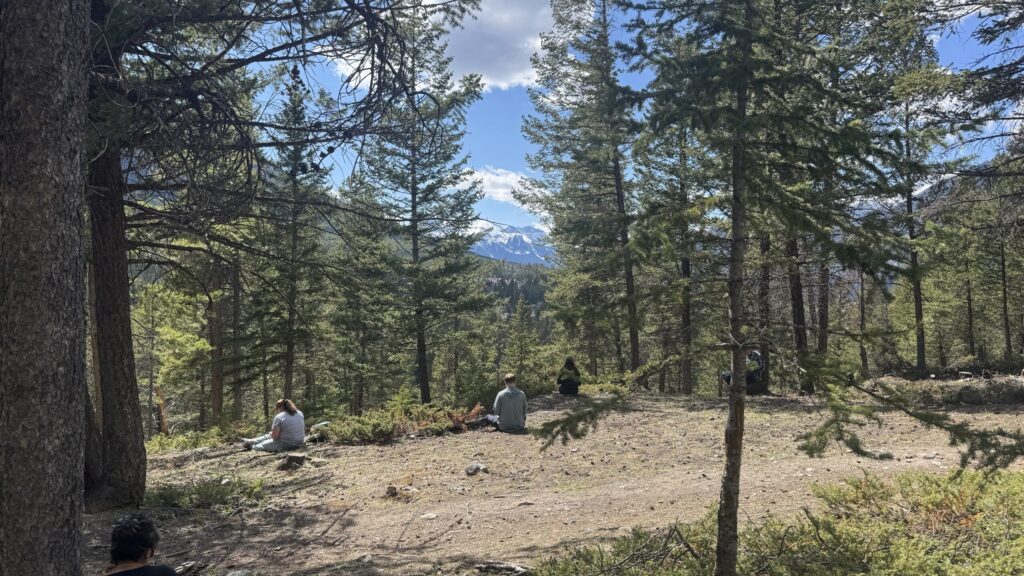
So much of the conversation around outdoor learning eventually leads back to adults. Adult fear. Adult systems. Adult discomfort. Adult expectations. Adult disconnection. During the panel, I found myself reflecting on how difficult it is to foster deep nature connection in children if we ourselves feel disconnected from the natural world. If adults are uncomfortable with uncertainty, silence, weather, risk, mud, slowness, or unstructured time, then children inevitably inherit some of those limitations too.
And I think this is one of the most important tensions we are facing in education right now. We are living in a time where many adults have become profoundly disconnected, not only from nature, but from spaciousness, reflection, embodiment, and relationship itself. The pace of modern life rarely allows us to sit still long enough to hear ourselves think. We move quickly between tasks, responsibilities, notifications, outcomes, and expectations, and children are growing up inside systems shaped by that same urgency.
The Importance of Trust
One of the recurring themes throughout the conference was trust. During the panel discussion, I shared a phrase I heard years ago that continues to stay with me:
“The world moves at the speed of trust.”
The more I work in schools, outdoor programmes, and educational spaces, the more true that feels. Meaningful learning, genuine belonging, creativity, collaboration, and play all emerge through relationships built over time. Yet so many of the systems surrounding children operate through urgency, compliance, efficiency, surveillance, and control. Outdoor learning interrupts that rhythm. Nature moves differently. Children move differently when given time and space outdoors. Adults often do too.
Several presenters reflected on research suggesting that children may need fifteen or twenty minutes simply to settle into a place outdoors before deeper forms of play, curiosity, and connection begin to emerge. That idea stayed with me because in many educational contexts we barely allow that amount of time before transitioning children onto the next task or outcome. We often expect immediate engagement while forgetting that relationship takes time. Deep attention takes time. Wonder takes time.
Play as an Act of Hope
One of the most powerful keynote presentations for me came from author and educator Elin Kelsey, whose work explores hope, climate emotions, and environmental communication. Her keynote challenged many of the dominant narratives surrounding environmental education and climate advocacy. Rather than framing hope as naïve optimism or denial, she spoke about hope as a deliberate stance, something we actively practise even in difficult times.
At one point she described hope as “a series of stances,” and that line settled deeply into me. So often hope is framed as something we feel only once circumstances improve. But Elin challenged that idea entirely. Hope, in her framing, was not about pretending everything is fine. It was about refusing to surrender agency. Refusing to let fear and fatalism become the dominant story.
Throughout the conference there were ongoing conversations about eco-anxiety, emotional labour, burnout, institutional betrayal, and collective wellbeing. There was no denial that many educators, children, and communities are carrying enormous emotional weight right now. Yet there was also a clear resistance to cynicism. Elin spoke about how fear-based environmental narratives can unintentionally create paralysis, particularly for young people. Children do not simply need endless stories about crisis and collapse. They also need experiences of agency, awe, relationship, and possibility.
As she spoke, I kept thinking about how deeply this connects with play.
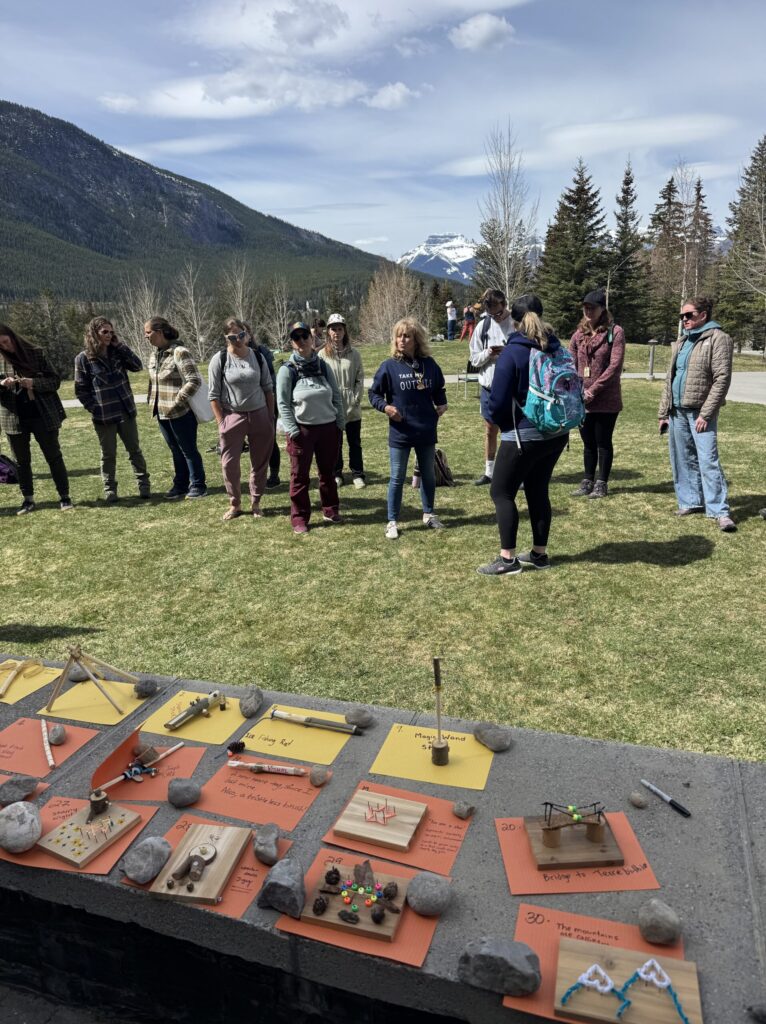
Play itself is an act of hope. Children constructing cubbies from sticks, inventing worlds in mud kitchens, balancing across logs, climbing trees, building with loose parts, creating stories and games together – none of this is trivial. Play is experimentation. Play is adaptation. Play is imagination. Play assumes that new possibilities can emerge. In many ways, it is one of the most powerful antidotes we have to hopelessness.
Silence is Information
Another keynote that stayed with me came from composer and cultural strategist Tika, whose presentation explored silence, nervous system literacy, emotional wellbeing, creativity, and identity. Her keynote moved the room in a very different way. Rather than focusing on pedagogy directly, she invited us into reflection around what silence actually means in our lives and who has access to it.
At one point she said:
“Silence isn’t empty. Silence is information.”
The room became completely still.
She spoke about growing up between different environments and realising that silence itself can be a form of privilege. Noise, stress, instability, overstimulation, and constant urgency all shape the nervous system. Throughout her presentation, she guided us through moments of stillness and body awareness, inviting us to notice our breathing, our shoulders, our jaw, our bellies, the tension we carry every day without even realising it.
What struck me most was how rarely education talks about the body. So much focus remains fixed on cognition, outcomes, achievement, and performance, while the physiological and emotional realities of both children and educators are often ignored. Yet nature-based learning continually brings us back into sensory and embodied experience. Sitting beside a river. Listening to birds. Watching frogs emerge after rain. Feeling wind against your skin. Sitting silently around a fire. These moments matter, not because they are trendy wellbeing activities, but because they reconnect us with forms of attention and presence that many people are starved of.
The keynote also made me think about silence within play itself. So often meaningful play contains pauses, wandering, observation, absorption, and moments where children are deeply immersed in their own inner worlds. Modern systems tend to fill every silence with instruction, stimulation, and productivity. But silence is often where imagination begins. It is where emotional processing happens. It is where children, and adults, begin to hear themselves again.
Nature as the Teacher
Another question that echoed throughout the conference was whether we are truly allowing nature to be the teacher, or whether we are still centring ourselves as the experts. That question challenged me deeply because it asks educators to reconsider our relationship with control. As adults, we often feel pressure to constantly direct, explain, manage, and provide answers. Yet some of the richest learning moments outdoors emerge precisely when we step back enough for curiosity and relationship to unfold naturally.
One panellist shared how children continually return to the same outdoor spaces and still discover entirely new worlds each time. Different insects. Different stories. Different textures. Different possibilities for play. The environment changes with weather, season, light, mood, and attention. Children notice things adults often overlook because children are not arriving in a place searching for productivity. They are arriving searching for relationship.
This idea surfaced again during a workshop exploring research into nature-based early childhood programmes and educator wellbeing. One of the most fascinating aspects of the research was that outdoor learning appeared to positively impact not only children, but educators as well. Researchers discussed lower levels of somatic stress, higher job satisfaction, and reduced physical symptoms associated with burnout among educators working in outdoor settings.
That conversation felt significant because outdoor learning is often justified almost entirely through children’s developmental outcomes. Yet many adults working within education systems are exhausted, overstimulated, emotionally overwhelmed, and deeply disconnected from their own sense of purpose and wellbeing. Perhaps outdoor learning is not simply beneficial for children. Perhaps it also offers forms of repair for adults.
Shifting the Paradigm
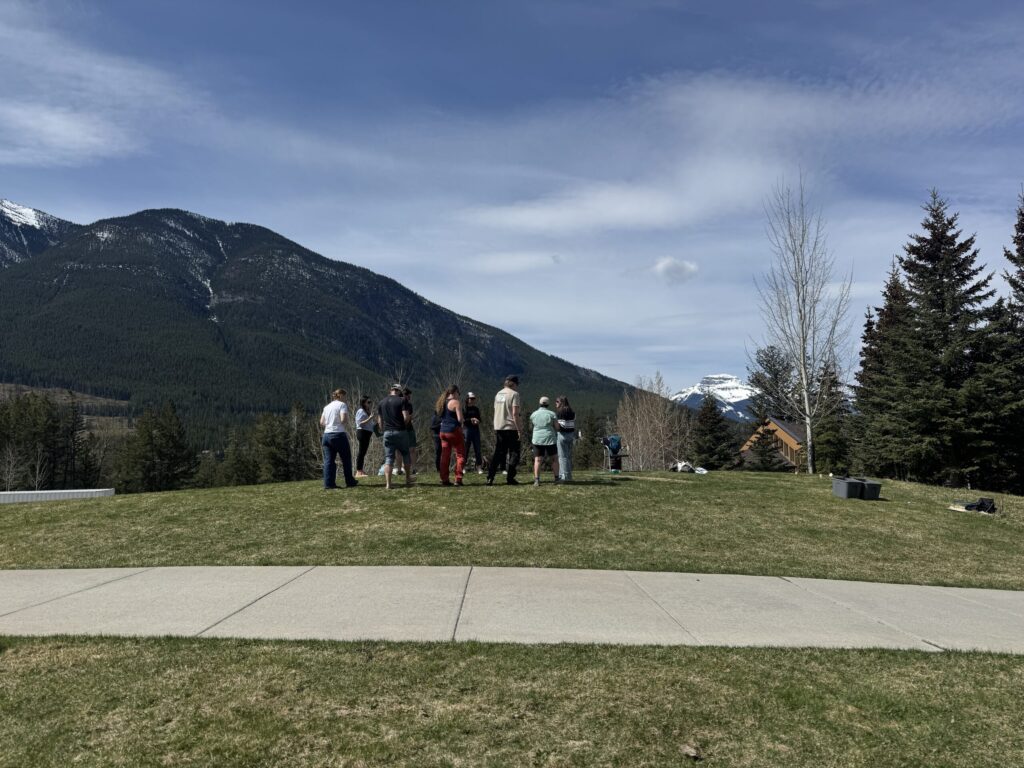
As the conference unfolded, I kept returning to the feeling that outdoor learning is not ultimately about “activities outdoors.” It is not simply about moving the classroom outside or adding nature-based experiences into an already overloaded system. At its deepest level, outdoor learning invites us to reconsider how we relate to one another, how we listen, how we move through the world, how we regulate, how we pay attention, and what kind of future we are shaping for children.
The conference repeatedly circled themes of justice, Indigenous ways of knowing, emotional literacy, nervous system awareness, systems change, rights-based practice, ecological identity, compassion, and collective wellbeing. Beneath all of it sat a quiet but powerful understanding that children do not simply need more information. They need connection. Connection to place. Connection to self. Connection to community. Connection to wonder, challenge, play, silence, and the living world.
And perhaps adults need those things too.
As I left Banff surrounded by mountains and forests, I realised I wasn’t leaving with neat answers or polished conclusions. Instead, I was leaving with deeper questions and a renewed sense of responsibility. Questions about what we are protecting children from, and what we are preparing them for. Questions about the systems we have normalised in education and whether they genuinely support human wellbeing. Questions about what becomes possible when we slow down enough to truly listen.
The conference reminded me that outdoor learning is not a niche educational movement. It is part of a much larger conversation about how we want to live together in a time of increasing disconnection. And perhaps that is why this experience stayed with me so deeply. Not because it offered certainty, but because it created space for more honest, relational, and hopeful conversations about what education, and humanity, could become.