

There is something deeply grounding about gathering with educators from around the world and realising that, despite our different contexts, cultures, climates, and systems, many of us are carrying remarkably similar questions about childhood.
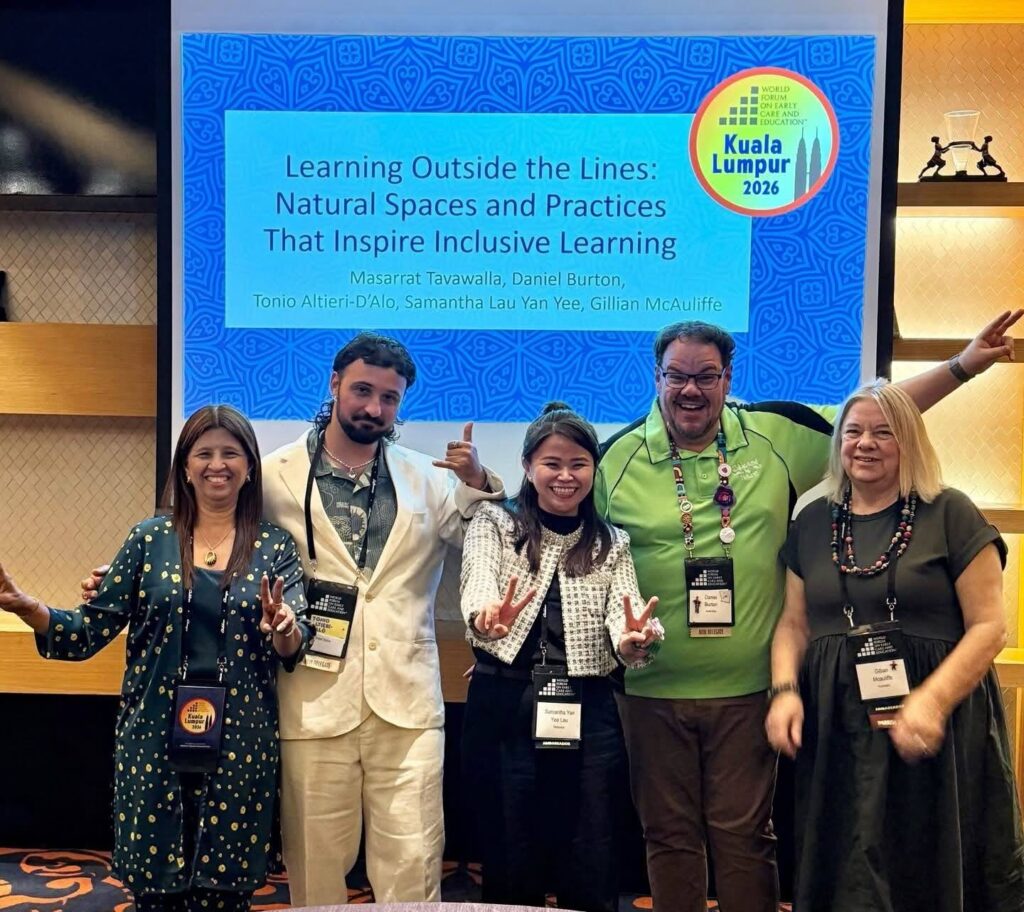
Over several days at the World Forum on Early Care and Education in Kuala Lumpur, I had the opportunity to engage in conversations with educators, researchers, advocates, and practitioners who made up delegation from more than fifty countries. Some worked in densely populated cities, others in rural villages or forest kindergartens. Some represented universities or government departments, while others spent their days directly alongside children in classrooms, childcare centres, schools, and community programs. Yet beneath all the diversity, there was a strong sense that the global early childhood sector is standing at a significant moment of reflection.
Supporting Children Holistically
Again and again, conversations returned to the same themes: rising anxiety in children, increasing behavioural complexity, educator burnout, disconnection from nature, hurried childhoods, excessive screen exposure, and the growing pressure being placed upon both children and educators within highly regulated systems. While the contexts varied, the underlying concern felt shared. Many educators around the world are beginning to ask whether modern childhood is becoming increasingly disconnected from the very things human beings most deeply need in order to flourish: relationship, play, belonging, autonomy, movement, community, rest, and connection to the natural world.
What struck me most throughout the conference was that these concerns were not being discussed only through philosophy or nostalgia. Increasingly, they are being explored through neuroscience, mental health research, trauma-informed practice, ecological psychology, and child development theory. The language may be evolving, but much of the message felt familiar to those of us who have spent years advocating for play-based and nature-connected approaches to childhood. Many of the conversations emerging globally are now validating what educators, playworkers, and families have intuitively understood for a very long time: children need more than academic preparation and behavioural compliance. They need environments and relationships that support them to feel safe, connected, capable, and alive.
The Significance of Play
One of the strongest threads woven throughout the conference was the growing global recognition of play as something far more significant than a curriculum strategy or recreational break. Play is increasingly being discussed as a biological and relational necessity. Across keynote presentations and breakout sessions, there were rich discussions around risky play, adventure playgrounds, loose parts, child agency, emotional regulation through play, social collaboration, sensory development, and the importance of uninterrupted time for deep engagement. There was also increasing acknowledgement that play cannot simply be inserted into overly hurried, outcome-driven systems as another educational tool. Genuine play requires time, trust, flexibility, and environments that allow children to follow curiosity, negotiate relationships, take risks, and construct meaning on their own terms.
At times, it felt as though the sector is beginning to rediscover something that industrial models of education have slowly pushed to the margins: that play is not separate from learning, but one of the primary ways human beings learn, process experience, develop resilience, and make sense of the world. Several presenters spoke about the dangers of accelerated childhoods and the growing tendency to over-structure children’s lives in ways that reduce opportunities for independence, experimentation, boredom, creativity, and problem-solving. There was a strong sense that many educators are beginning to push back against systems that prioritise efficiency and measurable outcomes at the expense of relational depth and human development.
Connection to Nature
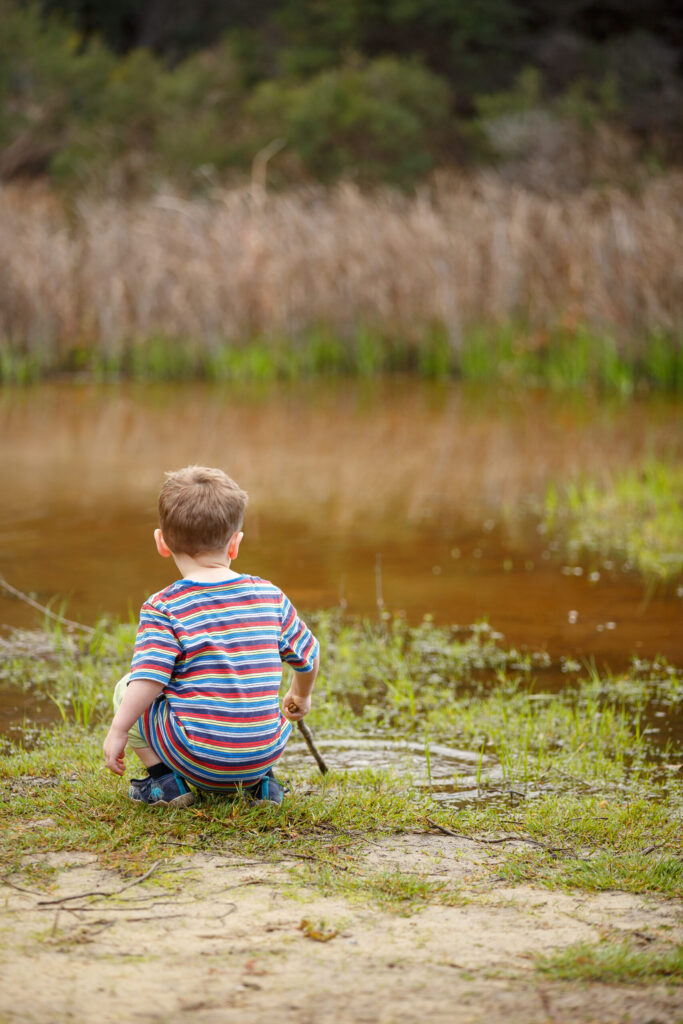
Alongside these conversations sat an equally powerful discussion around nature connection and outdoor pedagogy. Educators from around the world shared examples of forest schools, outdoor classrooms, cultural play traditions, ecological education, and nature-based learning environments. What interested me was that these conversations were not simply framed around sustainability or environmental awareness, although those themes were certainly present. Increasingly, nature is being understood as deeply connected to children’s emotional regulation, nervous system functioning, identity formation, resilience, wellbeing, and sense of belonging.
Again and again, speakers returned to the calming and restorative qualities of natural environments. There was discussion about how sensory-rich outdoor spaces support children differently from highly controlled indoor environments, and how relationship with place can foster not only environmental stewardship, but also empathy, moral reasoning, and emotional wellbeing. The phrase “environmental kinship” appeared several times throughout the conference and stayed with me long after the sessions had ended. It reflects an understanding that human beings are not separate from nature, but part of an interconnected ecological family. This framing feels increasingly important within education because it shifts nature connection away from being viewed as an optional enrichment activity and towards something much more foundational to human development.
Privilege and Access
At the same time, several presenters offered thoughtful critiques of outdoor education itself, particularly around issues of privilege and access. A presentation examining forest kindergartens in Norway explored how nature pedagogy can unintentionally become associated with particular cultural norms, socioeconomic status, or ideas about the “ideal child.” These were important conversations because they reminded us that access to nature, play, and freedom is not equally distributed. As advocates for outdoor learning and play-based approaches, we must continue reflecting on who feels welcomed into these spaces, whose cultural perspectives are represented, and what barriers may prevent some families from participating fully.
Educator Wellbeing
Another deeply significant conversation throughout the conference centred around educator wellbeing. In many ways, this felt like one of the emotional undercurrents of the entire event. Across multiple sessions, educators spoke openly about exhaustion, emotional labour, low pay, workforce shortages, increasing expectations, and the growing complexity of the work. One presenter asked a question that seemed to sit heavily in the room: how can burnt-out adults consistently create environments of wellbeing for children?
It is a question many educators already know intimately.
Early childhood educators are being asked to hold extraordinary emotional, relational, and administrative demands. They are expected to co-regulate children, manage documentation requirements, communicate with families, navigate policy and compliance systems, support increasingly diverse developmental needs, and remain emotionally available throughout it all. Yet despite the critical importance of this work, many educators continue to feel under-recognised, under-supported, and undervalued.
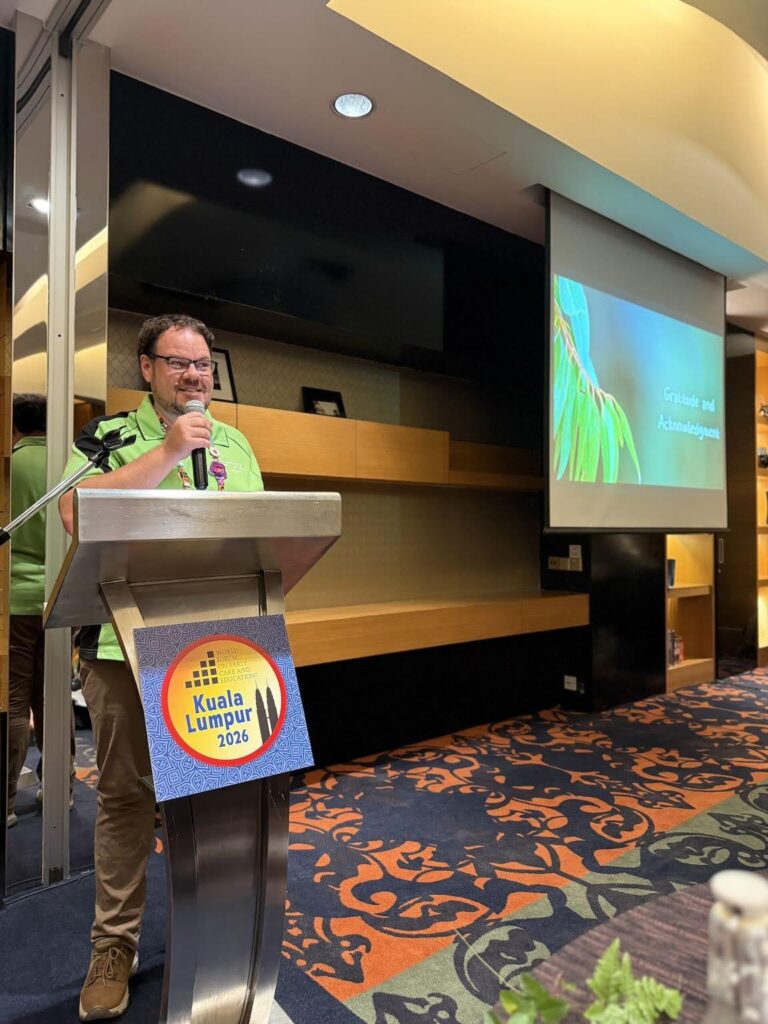
What encouraged me, however, was that these conversations were not rooted purely in deficit or despair. There was also a strong movement towards reimagining workplace cultures around relational wellbeing, emotional literacy, nervous system awareness, and sustainable leadership. One of the highlights of the breakout sessions, was hearing from our friends Sandi and Chris Phoenix, getting the opportunity to share their Phoenix Cups framework as a solution to some of the concerns being raised. This framework (which is also discussed in our join whole day workshop we run with Andia and Chris, Thriving in Nature) conceptualises wellbeing through 5 basic human needs: safety, connection, freedom, mastery, and fun. What resonated strongly for many educators was the reminder that behaviour is often an expression of unmet needs rather than something to simply manage or control. Delegates were inspired with the emphasis on creating “cup-filling environments” for both children and adults, recognising that regulated, connected educators are foundational to healthy learning communities.
Men in Early Childhood Education
Another significant, and at times vulnerable, conversation focused on the absence of men in early childhood education. The discussion moved far beyond workforce statistics and became a broader reflection on representation, masculinity, care, trust, and relational diversity. Speakers shared stories of male educators experiencing suspicion, exclusion, and hyper-surveillance, but they also spoke powerfully about what becomes possible for children when they encounter men who are gentle, emotionally available, nurturing, playful, and caring.
What stayed with me from this conversation was not the idea that children need men specifically, but rather that children benefit from experiencing a diversity of ways of being human. In a world where many boys and young men are increasingly seeking identity within unhealthy online spaces and rigid cultural narratives around masculinity, the presence of emotionally attuned male educators may carry profound significance. Children learn not only through what adults teach, but through the ways adults embody relationship, care, vulnerability, humour, creativity, and emotional expression.
Australia’s Contribution
Throughout the conference, I also found myself reflecting on Australia’s contribution to these global conversations. In many sessions, there was strong interest in Bush School approaches, risky play, sensory risk-taking, loose parts, adventure playground concepts, adolescent play, and nature pedagogy. I felt incredibly grateful for the many educators, schools, families, and communities across Australia who have contributed to this growing body of work over the years. While we certainly do not have all the answers, I do believe there is something valuable emerging within Australian play and nature pedagogy that resonates internationally. Perhaps it is our willingness to embrace outdoor environments more fully, or our growing understanding of risk-benefit thinking, relational practice, and child-led exploration. Perhaps it is our recognition that learning is not confined to classrooms, worksheets, or outcomes, but emerges through relationship with people, place, materials, and self.
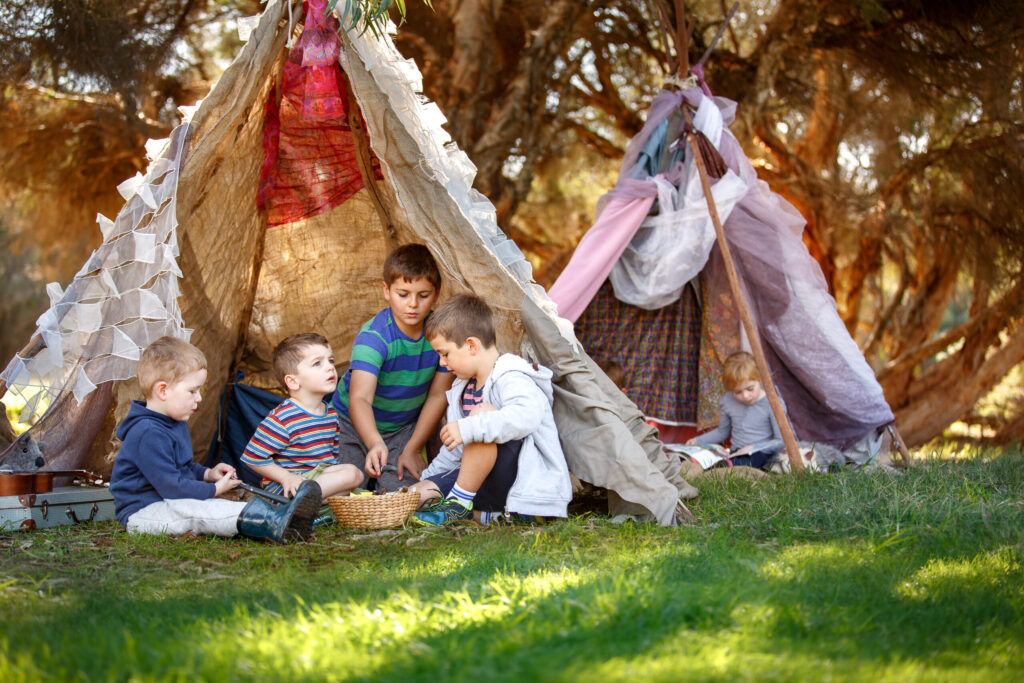
What became increasingly clear in Kuala Lumpur is that many educators around the world are searching for ways to protect childhood itself. Not through avoidance of challenge or discomfort, but through creating conditions where children can experience joy, agency, wonder, belonging, risk, creativity, movement, connection, and deep engagement with the world around them. There was a growing recognition that the future may demand resilient, adaptable, emotionally intelligent human beings, but that these capacities are not developed through pressure, acceleration, or over-control. They are cultivated through relationships, play, trust, meaningful challenge, and opportunities to participate fully in life.
As I flew home from Kuala Lumpur, I found myself carrying both concern and hope. Concern because many of the pressures impacting children and educators are real and intensifying. But hope because there are educators all around the world courageously asking difficult questions about what childhood should look like, and because there remains a growing global movement advocating for slower, more relational, more humane ways of being with children.
Perhaps that is the real invitation emerging from gatherings like this. Not simply to discuss children’s wellbeing in theory, but to actively shape environments, cultures, and communities that allow children, and the adults who care for them, to truly flourish.