

To truly see someone, we ourselves need to be fully present with all our senses. For another to feel truly seen by us, they need to know we understand and see that in our actions.
“I just wanted to reach out to you and let you know how wonderful it was to hear you speak at this week’s online conference around student wellbeing. Your insights were truly amazing, and you were able to voice and explain the physical and emotional reasons behind the things that some of us were trying to say in a way that we were unable to explain as well! I wish there were lots of people just like you, embedded in every Kindergarten and Pre-primary, as I think your knowledge would make a world of difference to the decision-making for our little people!”
– Lorna McCann-Pearson (Educator)
Over the years, people have asked us what we do and how we create the feeling of belonging in our programs. This is something that we have found hard to describe. Here at Educated by Nature, our intention is to become part of the community we are working with so that they feel seen and heard by us, and the rhythm of the group sinks in and settles as we weave our magic and attend to what we notice.
Over many years of working alongside children, educators, communities and natural environments, we have noticed ourselves moving through this process again and again. It has been present in Bush School programs, KIN Village school holiday programs, professional learning workshops and mentoring engagements through long-term school partnerships. Through observation, conversation and reflection, we began to recognise our recurring way of working: we notice what is happening, make meaning from what we sense, and respond with intention and care. More recently, we have begun describing this relational cycle as Attune, Align, Attend.
- Attune: awareness, sensory presence and openness
- Align: making meaning and walking alongside
- Attend: intentional action, proximity and care
A Basket that Holds the Work
When we first tried to imagine and draw the model, we found ourselves talking about nested baskets or the layers of bird nests as we tried to describe how we hold space for people. The first and largest basket is our philosophy and values: interdependent and reciprocal relationships with people and nature, trust in one another and, particularly when we are working with children, trust in children. When we value something, we give time to it. We make space for it. We offer acceptance of play, relationship, nature connection and people as they are. Through Playwork, we have often spoken about time, space and permission. We are now exploring the language of time, space and acceptance because permission can still signal control, as though one person has the right to grant an experience and can therefore take it away. Acceptance asks: how do we create connection with people as they are, with who they are?
This foundational basket is reflected in Educated by Nature’s values. We recognise interdependence: we exist in relationship with, not control over. We stay curious: our curiosity is the spark that fuels learning. We tend to presencing*: tending to what is both needed and possible in this moment.
Presencing is a blended word formed from sensing (feeling the future possibility) and presence (the state of being in the present moment).
Over the years, we have developed a practice: a deep way of listening and working with groups. We have found that to monitor, supervise and support a group of children playing outdoors in a natural space, we first have to be aware of where our own energy sits. Bodies are moving quickly, the volume is high, and people move in and out of different games and activities. When we are frustrated, anxious or ungrounded, we are likely to stop things more quickly. When we are grounded, we can pay attention to the children’s eyes, body language, proximity, speed and volume.
Attune: Awareness, Sensory Presence and Openess
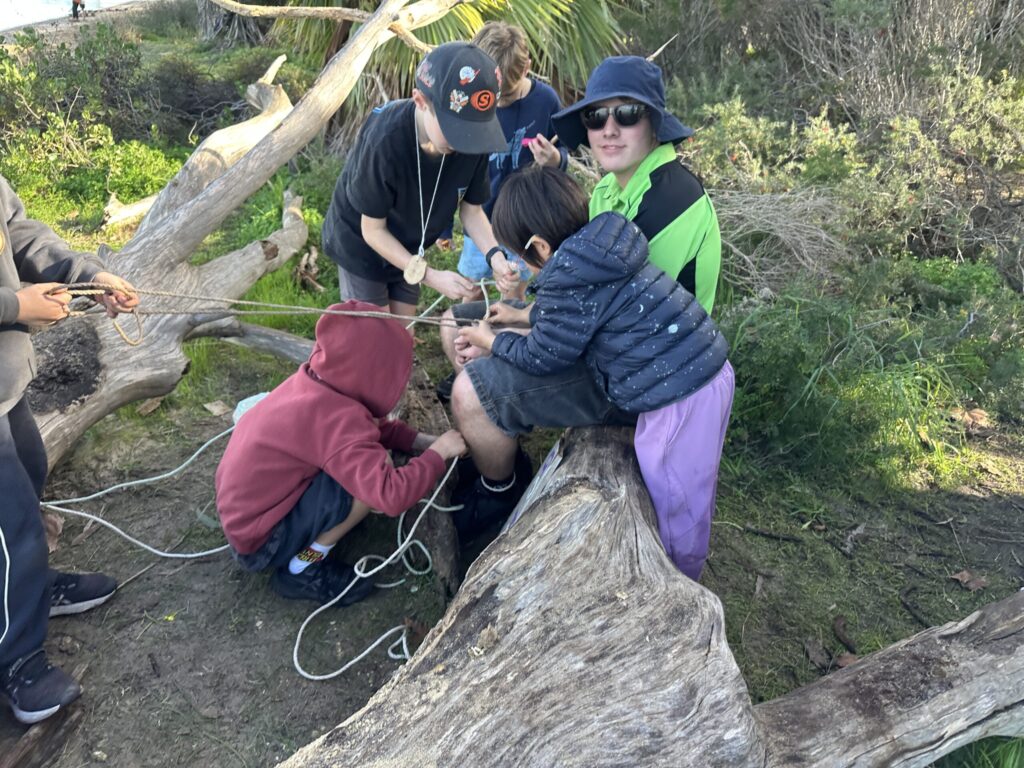
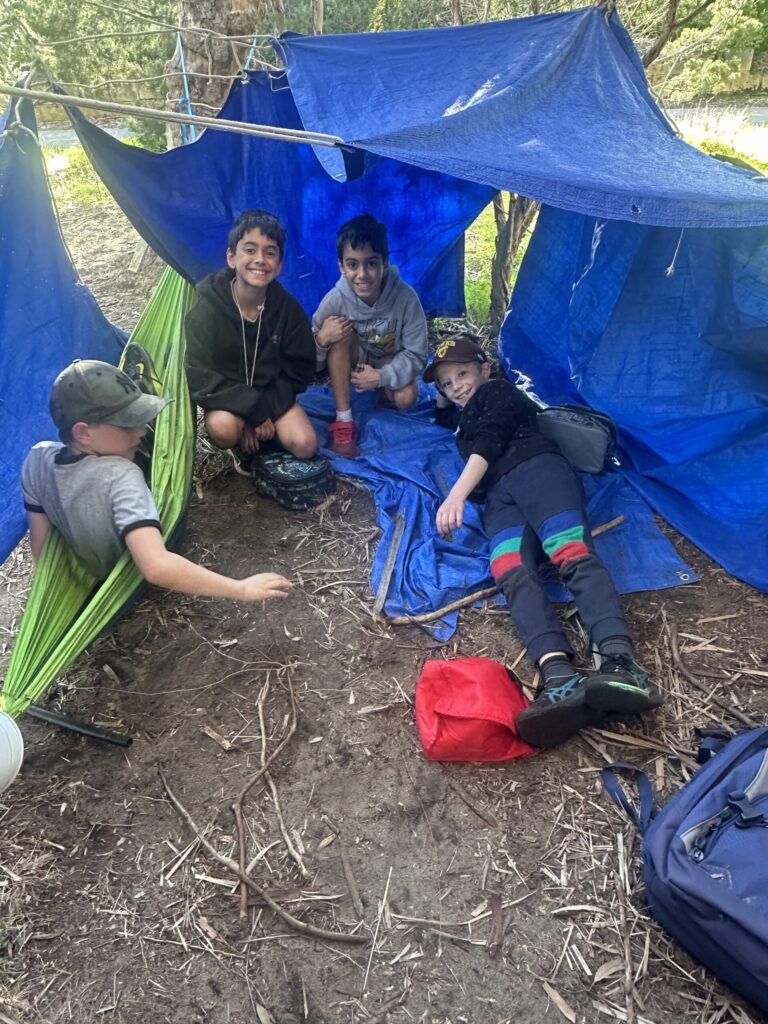
Attunement begins with stepping into a space with physical presence and a mindset of presence. We tune in with all our senses to what is going on around us. We notice mood, emotion, regulation, connection and energy within ourselves, the environment, the team and the group we are holding. At KIN Village, this often begins before children and families arrive. As a team, we may sit quietly together and connect with the environment before moving into logistics. We bring in quiet mind, notice our own energy and clarify who will hold different kinds of energy through the day. We attune to ourselves and the place, then to the team, before welcoming and holding a larger community.
We have often described ourselves as trackers of people, children and play. Tracking asks for a quiet mind and an activated sensory system. An animal tracker draws information from tracks, scent, bird language, soil, plants, memory and intuition. In our work, the tracks and signs may be body language, sound, movement, patterns of play, who is joining, who is moving away and how the group is responding to place. Jon Young describes tracking as pattern reading. Attunement is the awareness that allows us to perceive those patterns before deciding what they mean or what our role might be.
Through this tracking, we are paying attention not only to behaviour, but to relationships, energy, emotions, patterns and place. We notice who is engaged and who is standing at the edge. We notice when curiosity emerges, when discomfort appears, or when a group begins moving together in a shared rhythm. We notice how weather, materials, landscape and seasonal changes influence the experience.
Align: Making Meaning and Walking Alongside
Alignment sits at the intersection of observation, experience and theory. It is the process of drawing together what we know about child development, play, nature pedagogy, relationships and learning with what we are observing in the moment. It is where research meets practice.
From this intersection, alignment begins with the question: what is going on here? We bring past knowledge, understanding and experience into relationship with what we are sensing. Reading, listening, research and experience help us interpret what we see and identify an underlying need. This part of the model holds the people and bodies of work that have influenced our practice, including Playwork, nature pedagogy, Reggio Emilia and the Universal Map of Connection. It contains lenses we can look through, aligning what we observe with them to understand what is going on. Other models and understandings, such as David Sobel’s play motifs, Bob Hughes’s play types, the Playwork Principles, Ellen Sandseter’s Risk Types in Play, the Phoenix Cups and Piaget’s schemas, may all offer useful lenses. Sometimes everything is going well and the need is to let it continue (or protect it from ending). At other times, we may sense a need for a change in energy, more loose parts or resources, rest, food, space or connection. Curiosity is core to this process. We search for threads of information and allow several possibilities to remain present while we make sense of the situation.
Alignment is also the physical and relational act of coming alongside the participant, whether that person is a child in a program, an educator in a professional learning workshop or a team member in training. We are saying, I am going to journey and walk alongside you in this moment. Jon Young’s analogy of threads and ropes of connection helps us understand this. As we journey alongside another person, we build a rope of connection between us, with the possibility of co-regulation, trust and shared understanding. The amount of ‘holding’ required changes according to the relationship. An adult working with a child carries greater responsibility for holding the space, while among adults, who is holding whom may move between people.
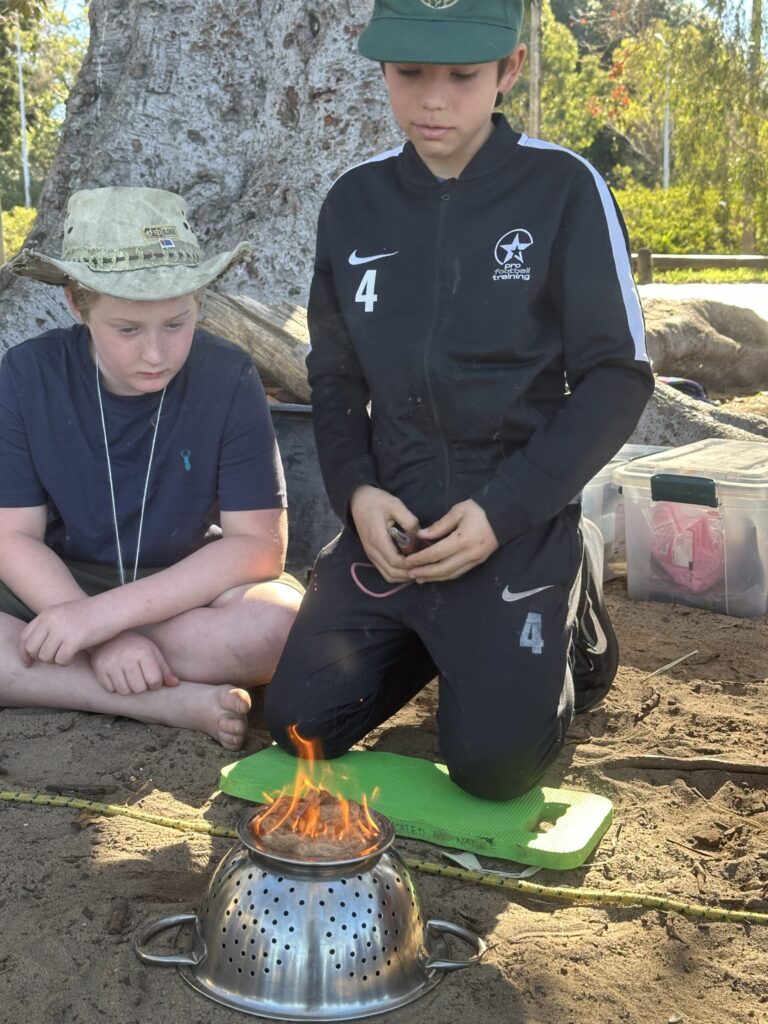
At KIN Village (our school holiday program), we have seen this through the role of the Firekeeper. We attune to the needs of the group and to the skills and confidence already present. We align by walking alongside a young person who has experience with fire and is ready to step into leadership. Attending may then mean stepping back and allowing that person to be the one with the expertise. It is almost like a dance: coming closer to offer mentoring or safety support, then moving back to create space for someone to own the responsibility.
Attend: Intentional Action, Proximity and Care
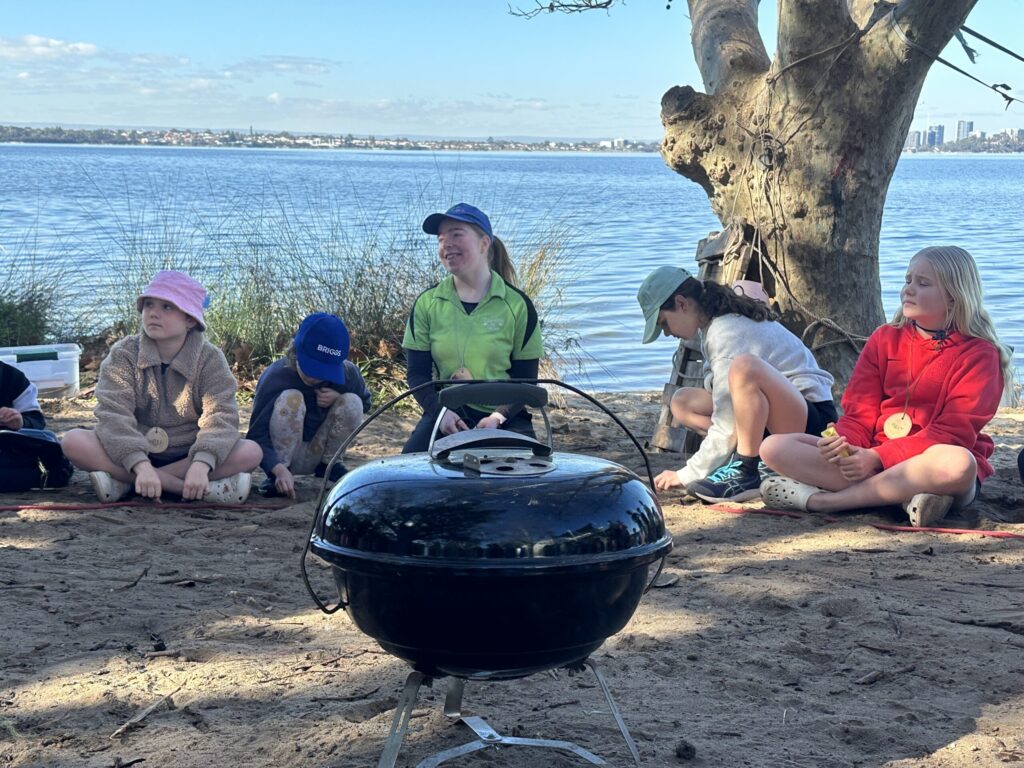
Attending is how we respond to the needs of the person or community, the environment, the situation and the experience. It may involve changing our energy, bringing a group together, offering materials, providing rest and food, entering the play, stepping back or continuing to hold the space.
We sometimes speak about energy wielding or energy sculpting. For us, this is connected to co-regulation and care: how do we hold space while remaining aware of our proximity and the effect our presence is having? Intentionality matters at every point. Nothing is there by accident.
The placement of materials and resources, the role an educator or facilitator takes, the choice to move closer or further away, and the decision to speak, celebrate, pause or wait all carry intention. The model brings this process into conscious awareness and helps us be intentional about connection.
Noticing, Wondering and Noticing Again
This can feel like common sense, and in many ways it is. We have built habits around it over time. In one of our early after-school programs, we wanted to teach carpentry skills and found ourselves pushing children towards what we had planned while they pushed back. We eventually stood back and asked, what do the children need here, and what can we provide as a resource for their play? As we changed our role, the program dropped into a flow state and grew into the Playwork space it became. We developed the practice by noticing, wondering, changing what we did and noticing again.
The cycle spirals through preparation, practice and reflection. When everyone leaves, we remember what happened through our senses, return to our intentions and ask again: what was going on here? We notice what we may repeat, shape differently or hold so the team can remember. We also return to ourselves through the day: how am I feeling, how am I interacting, and where did my response just come from? Sometimes attending means taking a breath, stepping out briefly and returning from a more grounded place.
For attunement to happen, for us to align and then authentically attend, certain qualities need to exist within the foundational basket. We return here to the Eight Attributes articulated by Jon Young of Living Connection First and inspired by deeply connected, authentic and fully alive elders of different cultures. The Eight Attributes are: quiet mind, happiness of a child, vitality and electricity in the body, deep listening, empathy for all creation, truly actually helpful, fully alive, and love and forgiveness. These give us language for what this way of being can feel like. Jon Young speaks about what a person is like when all eight lights are shining. We believe that the Attune, Align, Attend model offers a simple way to help people move towards that experience using frameworks they are already familiar with.
The model is seeking to express our organisational philosophy and our way of being present. We have often been told that we truly see and hear people, that we care and are intentional. We see this reflected in the bonds that form with children, who are wonderful indicators of success, as they are often very much in their bodies, hearts and senses. Our hope is to distil enough of this way of being to support others to find their own authentic expression of it.
Bringing Intention, Participants and Place into Relationship
“Everything that [Educated by Nature] does with the kids is for a reason. Of course, they just play, but every activity has a purpose: an educational purpose, an emotional intelligence purpose, a brain-stretching purpose. I knew that having this activity in his week would help him work his way through. I wasn’t wrong. Jack comes home stinking of bonfires and smiling from ear to ear. He’s usually carrying something he’s made, anything he likes. He gets time to be himself, with no judgement and a huge amount of love and encouragement.
I know that if we hadn’t found EBN, we would still be struggling to settle, and I would have some serious crazies on my hands 😉 What we have found is an extended family. The connections that my children have made go beyond nature; they extend to different schools, age groups and suburbs. It’s all very well reading about the benefits of giving children time to play in nature, but to see them blossom and grow right in front of your eyes is something to behold. I look at my eldest son’s eyes twinkling as he returns from his afternoon in the bush and my littlest people jumping up and down in their seats with anticipation as we arrive at the highlight of their week, and it makes my heart sing. [The] team have provided the outlet and the gentle guidance along the way so that they have the opportunity in their day to be children, be brave and be happy in their skins.”
Hattie Bennett (Parent)
Within a connective pedagogy, we are continually attending to three elements. We look at what is happening in the environment and what the environment is offering. We look at what the participants, children or adults, are bringing through their own unique and creative selves, including how those contributions intertwine as community and play off one another. We also hold the intention of the session, program or learning experience. When those three are brought into relationship, we feel something connective emerge. In our programs, we notice a deepening of connection, a harmony or flow state within the group. It feels good, and everyone drops in. The environment, the participants and the intention begin to move together.
We have seen this in a school setting when children noticed Quenda diggings and holes beneath shrubs. A child asked, “Who lives in this hole? Who has done this?” That question connected with a wider intention: who do we share this place with, what animals are living here, and how can we be in a sustainable relationship with nature? The children brought curiosity and a desire to explore and build animal ally bonds. We had first thought there were few animals around, yet closer looking revealed tracks and signs already present. We brought everyone together and celebrated the discovery with joy and excitement: “Look at what we have found, and here is some more information that might help us keep following it.” More children began looking for clues and carrying them back to the group, feeding the community with more energy.
This celebrating and uplifting is a way of Attending. We notice when the environment, the participants and the intention come into harmony, then bring the community’s attention to that connection so people can see it, feel it and gather around it. The community becomes curious and motivated around the same thing. A natural coming together of community ideas is sculpted through attention, celebration and shared discovery, without a fixed activity for everyone to follow.
Our hope is that this model, Attune, Align, Attend, helps people become more intentional about connection. It is an opportunity to highlight the importance of awareness, empathy and curiosity as key elements for deep connection and joy, and the potential of this model to bring realignment to the way we show up in our communities and return to connection: to self, to others and to the environment. It begins with being grounded enough to notice, curious enough to make meaning, and connected enough to come alongside. From there, we can attend with care to what is both needed and possible in this moment.