

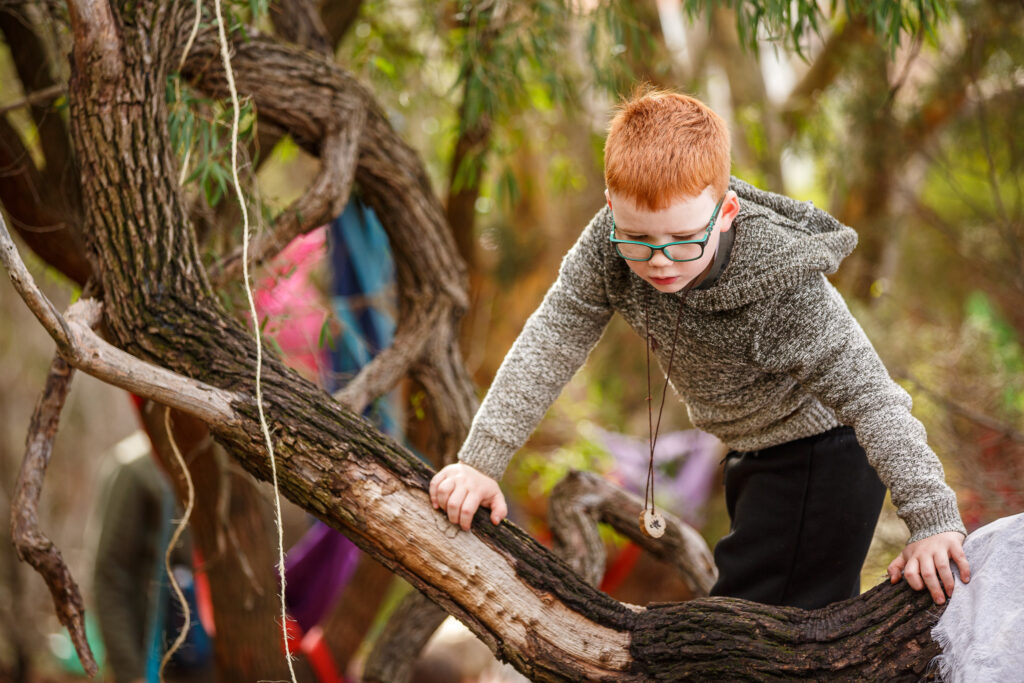
There is something quietly profound about watching a child at the edge of a decision. You see it often in natural spaces. A child stands at the base of a tree, looking up through its branches, taking in the shape of it, the height, the possibilities. There is a pause that might go unnoticed if you are not looking closely. A hand reaches out to touch the bark. A foot shifts slightly. There is a glance, perhaps toward a friend or an adult, perhaps inward. And then, without instruction, without a prompt, the child begins to climb.
We tend to think of risk management as something that belongs to adults. It sits in policies, procedures, forms and compliance documents. It is something we do on behalf of children, in the name of keeping them safe. Yet what becomes increasingly clear, both through research and through time spent alongside children in play, is that children are not passive recipients of safety. They are already engaged in a complex, responsive, and deeply intelligent process of managing risk themselves.
Recent work by Kleppe, Sandseter, Sando and Brussoni helps to articulate this. They suggest that when children encounter risk, they are engaging in “emotional, cognitive and physical processes” that together form a dynamic expression of risk management.
The Emotional Pull Toward Challenge
When we return to the child in the tree, we begin to see this more clearly. Before anything happens physically, there is a feeling. Sometimes it is excitement, sometimes hesitation, often a blend of both. Many children describe it as a kind of flutter, a “tickle in the tummy,” that sits somewhere between fear and anticipation.
The research names this risk willingness – an emotional drive toward (or away from) challenge. It reminds us that children are not blindly rushing into danger. Instead, they are navigating an internal landscape where fear and excitement sit side by side. As the authors note, children may be motivated by “positive, exciting, and playful emotions” when engaging with risk.
In our work, this is something we see constantly. Children return to the same challenge again and again, not because they are being told to, but because something in them is drawn to it. The edge holds meaning. It offers the possibility of growth, of mastery, of feeling fully alive.
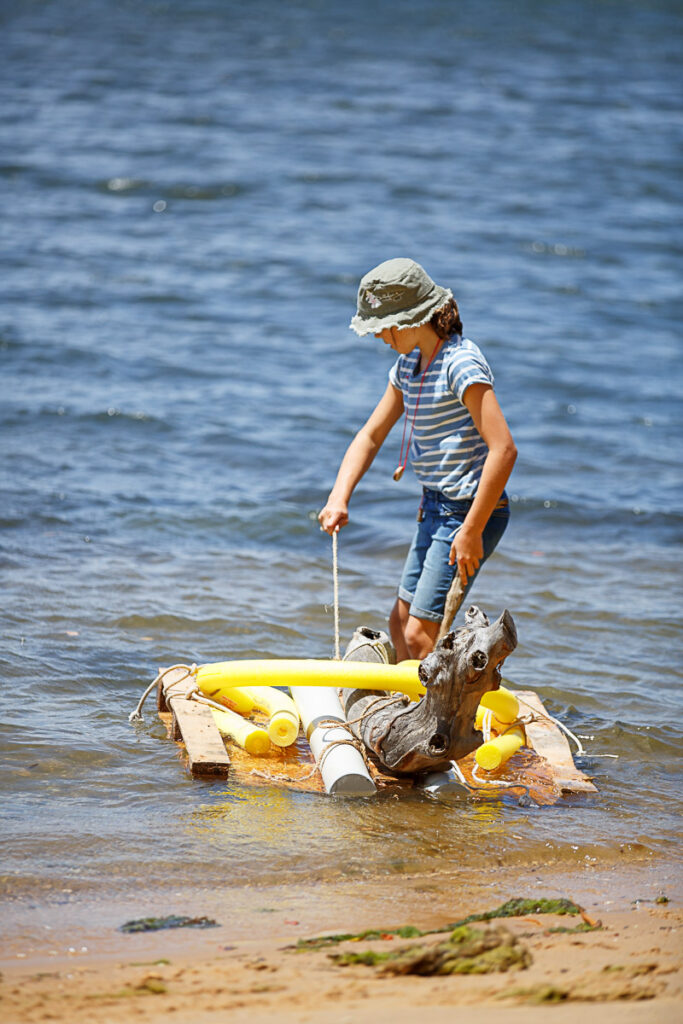
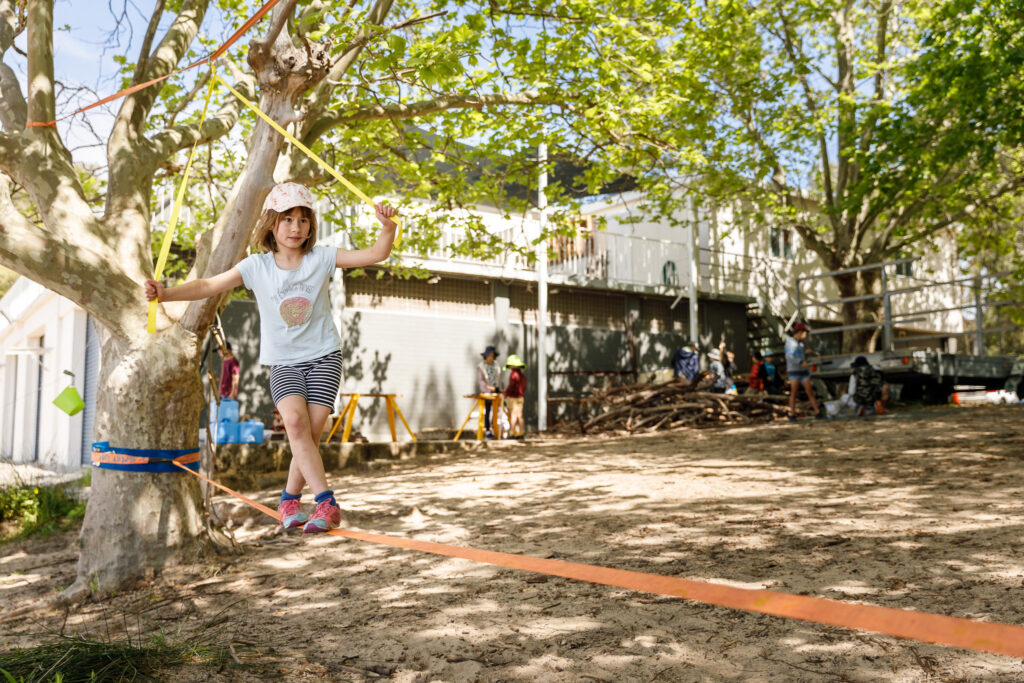
Thinking in Motion
As the child begins to move, their thinking becomes visible in subtle ways. They look for branches that might hold their weight. They test surfaces with their hands. They adjust their position as new information comes in.
The paper describes this as risk assessment, a process grounded not in abstract reasoning alone, but in perception and action. Children are continuously “orientating, identifying, and processing” information from their environment as they move.
This is where the idea of the perception–action loop becomes so powerful. Children do not stop to think and then act. They think through acting. They see, they try, they adapt, and then they try again. The assessment is ongoing, responsive, and deeply embodied.
In environments where this loop is allowed to unfold, children become increasingly skilful at reading the world. In environments where it is interrupted too quickly, that learning is diminished.
Learning Through Doing
And then, of course, there is the doing. The climbing itself is where everything comes together. Balance, coordination, grip strength, timing, confidence.
This is what the research describes as risk handling – the physical execution of the task. It is here that children’s capabilities are both tested and developed. As the authors suggest, risk handling “manifests as children’s observable actions while engaged in a risky task.”
There is no shortcut here. You cannot learn balance without wobbling. You cannot develop judgement without moments of misjudgement. You cannot build physical competence without engaging your body in real situations that matter.
What we witness in these moments is not just play, but development in motion.
A Dynamic, Living Process
What is striking is how fluidly these processes move together. A moment of instability might increase caution, which reshapes how the child assesses the next step, which then influences how they move. A sense of success might increase confidence, inviting the child to go further.
The authors describe this as a dynamic system, where these processes “overlap, interlink, and vary across individual and contextual factors.”
This idea of dynamism feels deeply aligned with what we see in practice. There is no fixed pathway through risk. Each child, each moment, each environment brings something different. The process is alive, shifting, and responsive.
The Role of Environment and Culture
Children’s ability to engage in this process does not exist in isolation. It is shaped by the environments we create and the cultural messages we carry about safety and risk.
The paper highlights how opportunities for risky play are influenced by “cultural, social, and environmental contexts.”
In many modern settings, these contexts have become increasingly risk-averse. Spaces are flattened. Possibilities are reduced. Adults intervene earlier and more often.
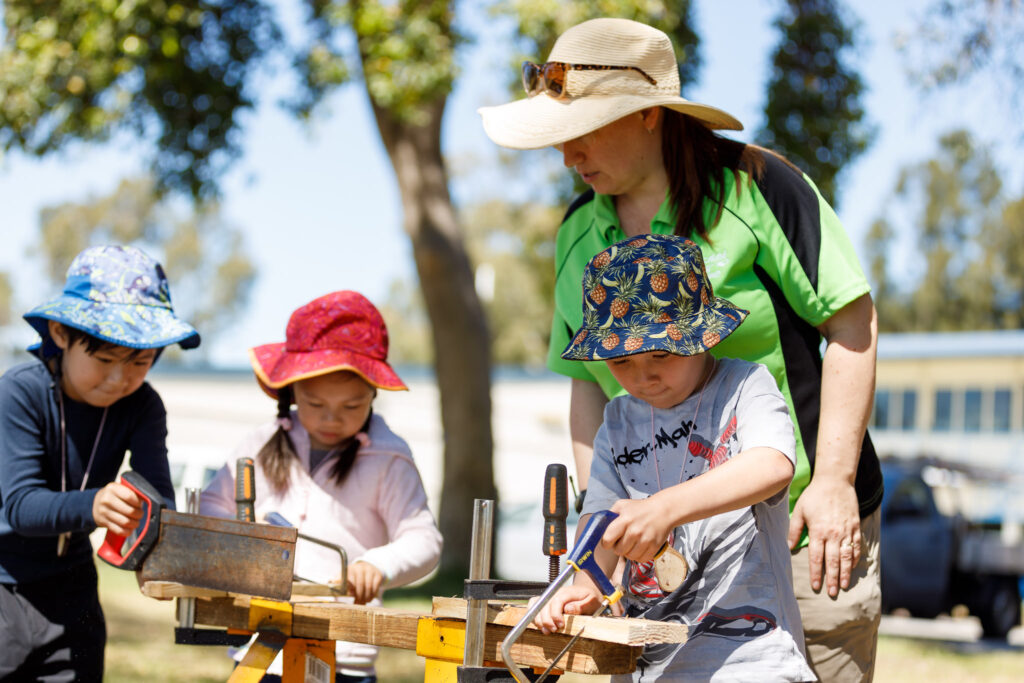
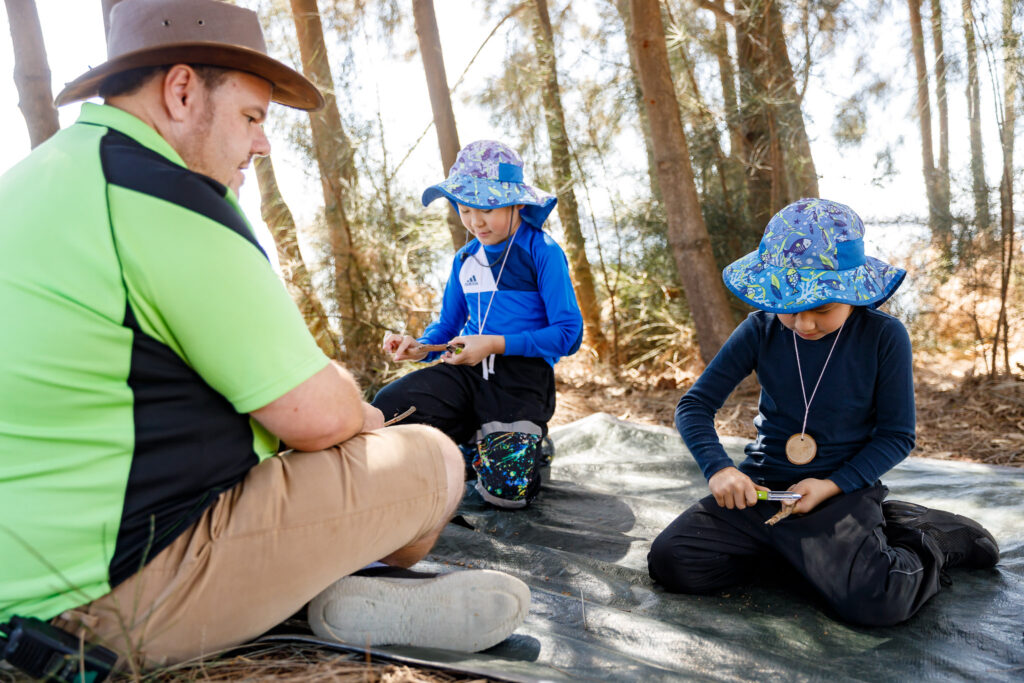
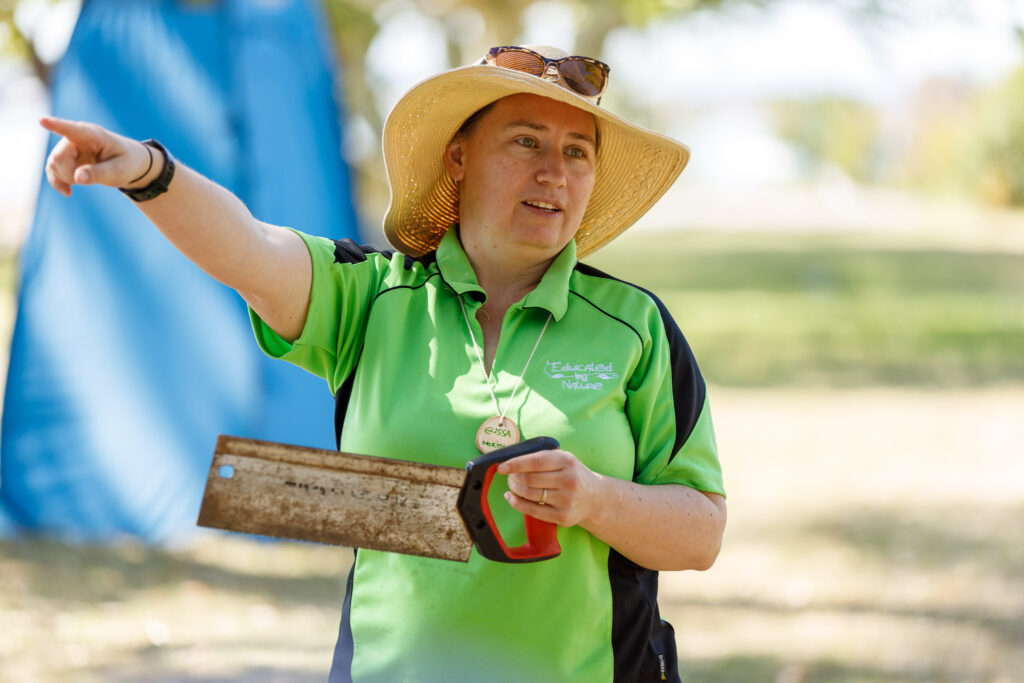
At Educated by Nature, we take a different approach. We aim to create what we often call “Yes Spaces” – environments where children can encounter challenge in meaningful ways. Not reckless spaces, but spaces rich in affordances. Spaces where children can test themselves, explore uncertainty, and develop capability through experience.
Rethinking the Adult’s Role
This invites a shift in how we see ourselves as adults.
Rather than asking, How do I eliminate risk? we begin to ask, How do I support children to manage risk themselves?
This requires a different kind of attentiveness. It asks us to observe more closely, to understand the child in front of us, and to recognise when intervention is needed and when it is not. It asks us to tolerate a degree of uncertainty and to trust the process that is unfolding.
The research reinforces this idea by showing that outcomes are shaped not just by the environment, but by the interaction between willingness, assessment, and handling within that environment. In other words, safety is not something we impose. It is something that emerges through relationship.
Trusting What Is Already There
What this research offers is not just a framework, but a reminder. Children are not waiting for us to teach them how to manage risk. They are already doing it in ways that are nuanced, embodied, and deeply connected to their development.
Our role is to create the conditions where this can happen well. To offer time, space, and possibility. To step back when needed. To step in when it matters. To hold the space without closing it down.
When we return once more to the image of the child in the tree, we begin to see more than just a moment of play. We see a child navigating emotion, making decisions, adapting their movements, and building a relationship with risk that will stay with them long after they climb down.
And perhaps that is the real work.
Not teaching children how to be safe.
But trusting them as they learn how to live.