

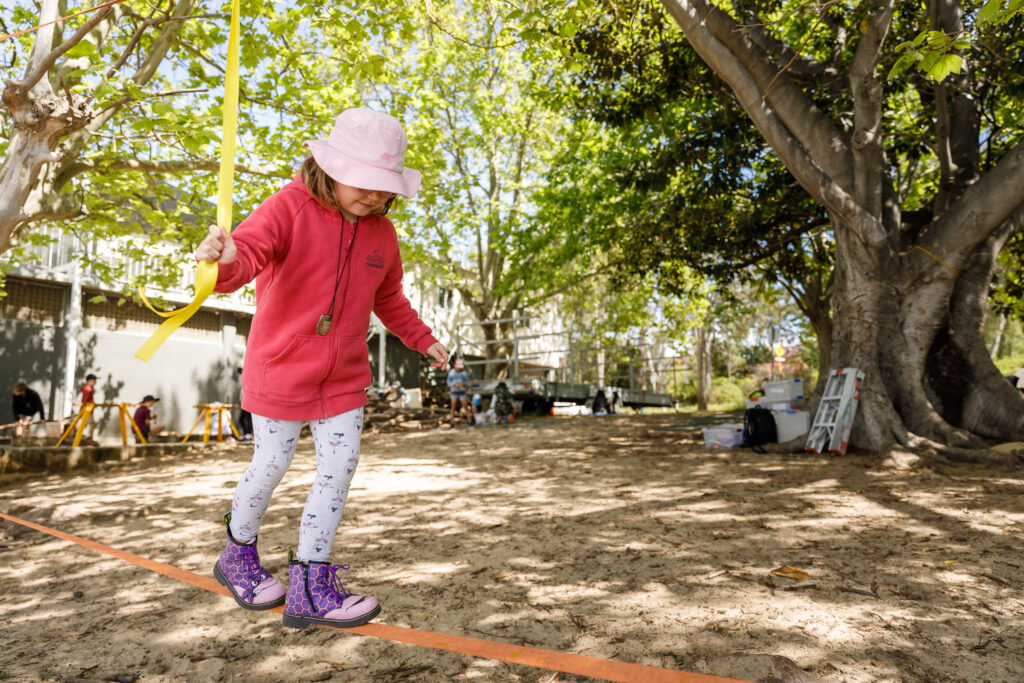
A child moves slowly along a fallen log above the creek. Their arms stretch wide as they feel for balance, placing one foot carefully in front of the other. The surface is wet and slippery. A foot slides, the child drops into the shallow water, and for a moment everything stops. They look towards the adult standing nearby. The adult pauses, meets their gaze and asks, “Are you okay?” Another child reaches out a hand. There are wet shoes, a surprised laugh and a few tears. After a moment, the child climbs back onto the log.
We notice moments like this often. A child takes a risk, something unexpected happens, and they look towards the people around them. They may be checking for danger. They may be seeking reassurance. Perhaps they are asking, without words, whether we still believe they can do this.
These moments have led us to return, again and again, to a question at the heart of our work: what does it truly mean to build resilience?
The word resilience appears everywhere. It sits within wellbeing plans, curriculum documents, parenting books and school strategies. In conversations with families and educators, we hear genuine concern about children navigating anxiety, strong emotions, uncertainty and an increasingly complex world. Alongside these concerns is a deep desire to help children feel capable when life becomes difficult. The instinctive response is often, “We need to teach resilience.”
We understand where this comes from. Over many years of walking alongside children in nature, play and community, we have found ourselves wondering how resilience is actually learned. Can it be delivered through a lesson or remembered as a list of strategies? Or does it grow through the relationships, places and experiences that surround a child?
The words beneath our name, Resilience Through Connection, describe what we keep seeing.
We have come to understand resilience as relational. It grows between a child and the people who know them, between the child and their own body, and between the child and the places that ask something real of them. It is strengthened through connection to self, connection to others and connection to the living world.
Learning to Adapt
The familiar idea of “bouncing back” can make resilience sound like returning quickly to who we were before something difficult happened. Our experience with children offers a richer picture. Children may return changed. They learn something about the situation, about the people around them and about themselves.
They discover that disappointment can be survived. A mistake can be repaired. Frustration can move through the body and pass. Plans can change. Help can be requested and accepted. Rest can be part of continuing. Another attempt may look different from the first. This is adaptability.
Adaptability allows a child to respond to what is happening now. It includes persistence, alongside the awareness to change direction. It includes independence, alongside the capacity to seek connection. It includes courage, alongside the wisdom to pause and nature offers countless opportunities to practise this.
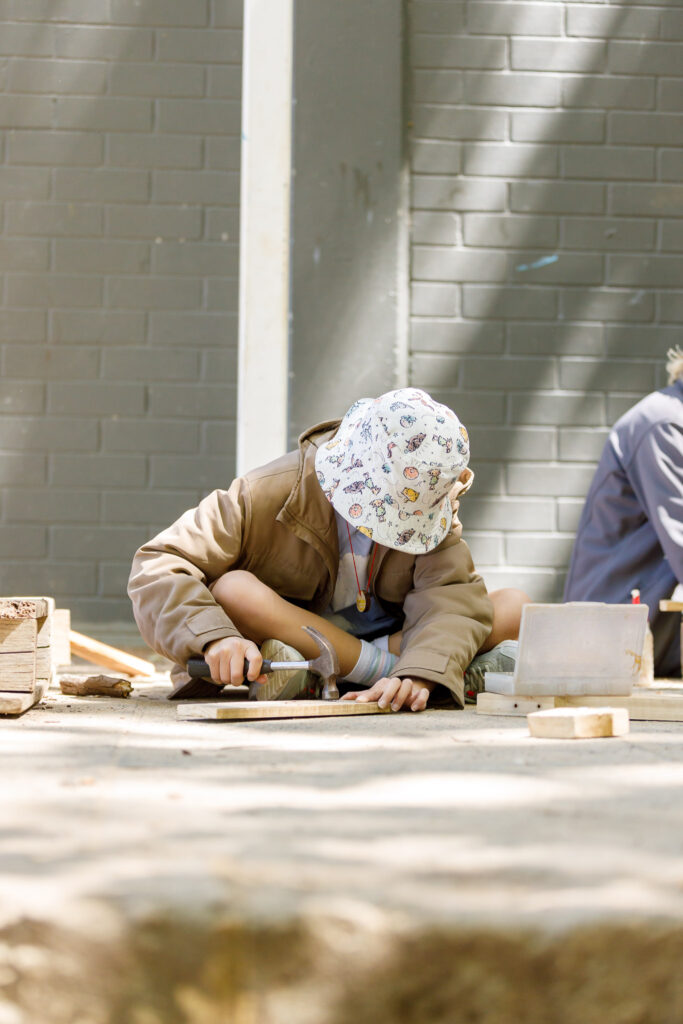
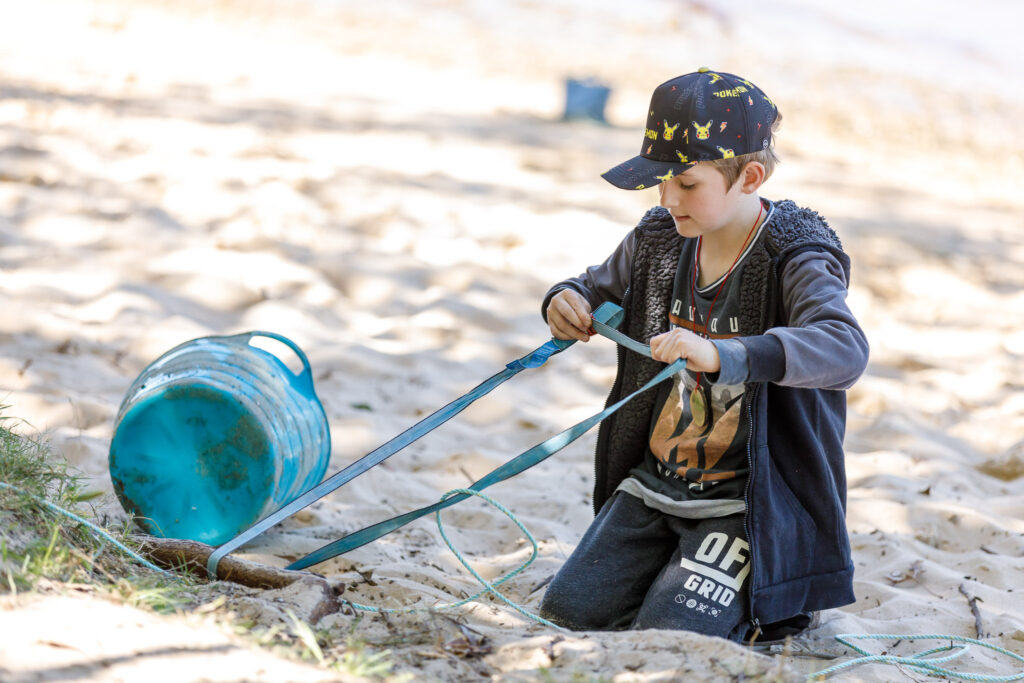
A child balances along a slippery log and lands in the creek. Another spends twenty minutes building a shelter, only to watch one side collapse in a gust of wind. A group begins an ambitious cubby project and discovers that working together is messier than anyone expected. A fire will not light. A rope slips. The tide changes. Two ideas compete for the same piece of wood. Emotions rise. Plans unravel. The experience asks for something new.
The feedback arrives directly through the place and the materials. The wind reveals where the shelter needs support. The heavy branch asks the group to communicate. The wet wood invites patience, experimentation or a change of plan. The more-than-human world becomes a mentor, offering complexity, uncertainty and discoverable risk. These are real experiences, and real feelings move through them.
The space between challenge and support
Challenge alone does not tell the whole story. We keep noticing the relationships that surround it.
Several members of our team have been fortunate to learn from Dr Arne Rubinstein, founder of the Rites of Passage Institute, and Mike Dyson, founder of Good Blokes Co. Their work has continued to shape how we understand mentorship, meaningful challenge and the role of community in growth.
Young people need experiences that ask something of them. They also need people who know them, see them and remain present while the experience unfolds. The challenge needs to be responsive to the child, held within clear boundaries and supported by a community of care. We understand that toughness for its own sake has no place here.
In an article shared through the Rites of Passage Institute, Jason Seeman described students as “feeling safe enough to feel unsafe” and that phrase has stayed with us.
A child can feel held within a relationship while moving towards the edge of what feels familiar. They can experience uncertainty while knowing where support lives. They can cry, become frustrated, make a mistake or admit that they are afraid, and still feel a sense of belonging. Connection gives challenge somewhere to land.
It may be the grounded adult standing close enough to notice. It may be the friend offering a hand. It may be the familiar gathering place a child can return to when they need rest. It may be the experience of knowing that failure will not change how the community sees them.
There is something deeply human, perhaps even sacred, within this process. A child meets something difficult, discovers that they are held, and begins to learn what they can carry.
Attuning before responding
At these moments, the role of the adult matters.
Our Attune, Align, Attend framework helps us describe this role. We begin by attuning to ourselves, the child, the community and the place. We notice our own breathing and energy. We pay attention to the child’s eyes, body language, movement, volume and proximity to others. We notice what has already happened and what may be emerging.
We then align what we are observing with what we know about this child, their development, the relationships around them and the experience itself. We ask, “What is going on here?” and “What might be needed in this moment?”
From there, we attend with intention and care.
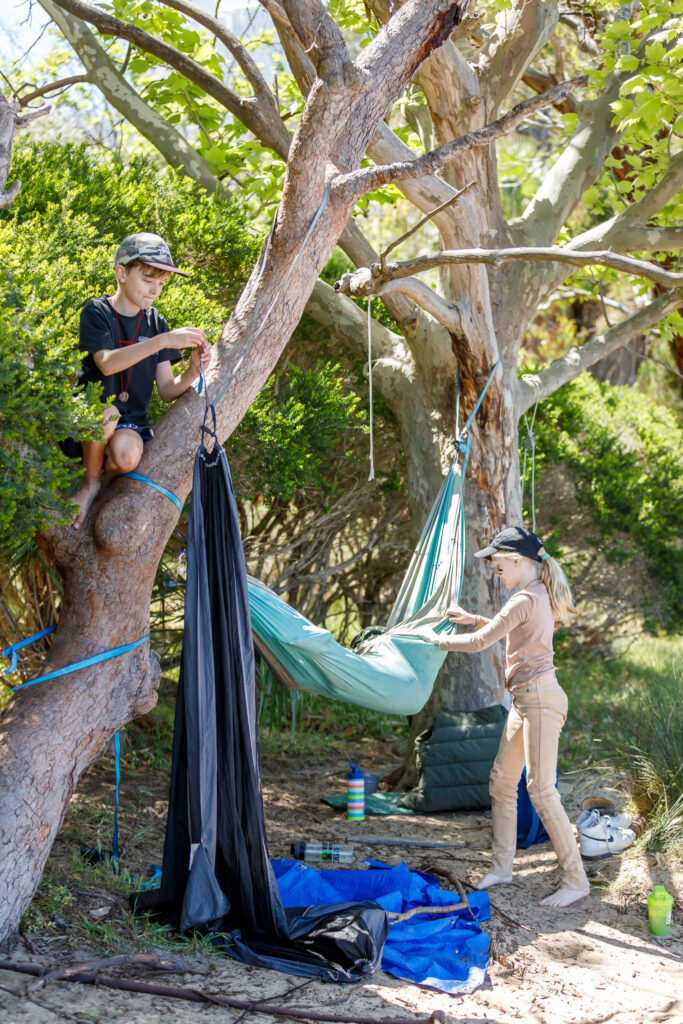
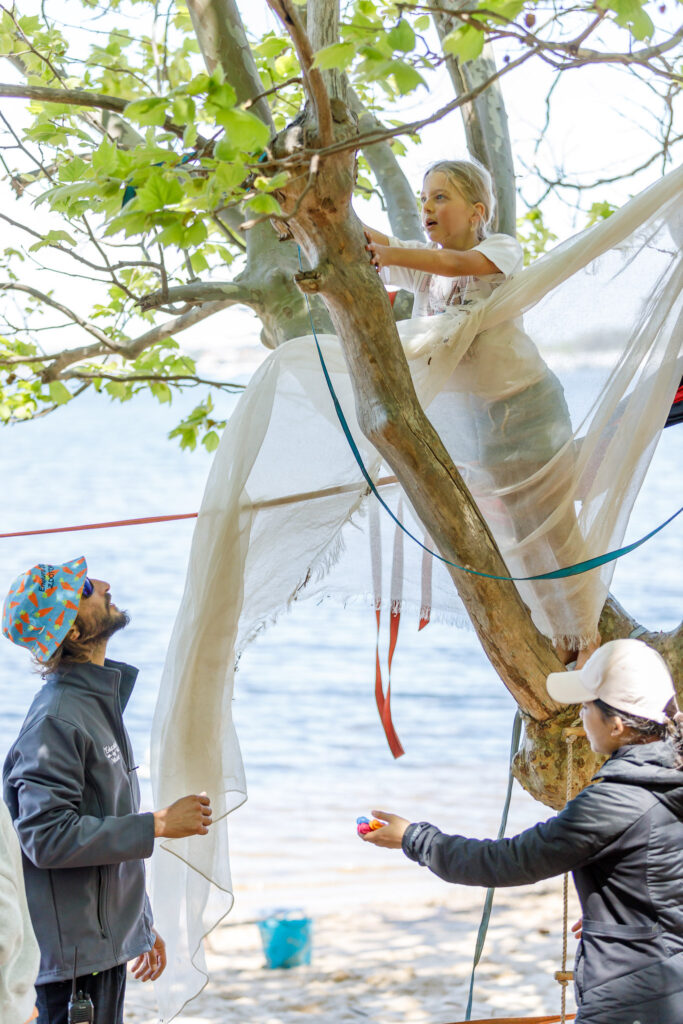
Attending may mean moving closer. It may mean checking that a child is physically safe, offering a skill, placing a steady hand on a piece of timber or helping a group slow down. It may also mean taking a breath, staying quiet, asking a question or allowing more time.
Our proximity becomes part of the experience. We move closer and further away, offering support while leaving room for the child to meet the challenge. All of this happens, with practice, within seconds!
This is the art of mentoring. It asks us to notice before responding and to remain curious about what the child may be learning.
When care includes trust
Many adults feel a strong urge to rescue children from failure, frustration or disappointment. This instinct grows from care. We know how painful these experiences can feel, and we want children to know that they are supported. We know care can include help, and care can include trust
Sometimes care means stepping in quickly. Sometimes it means standing nearby while a child attempts something difficult. It can mean offering a question before an answer, or allowing a group to experience the natural consequences of a plan that has not quite worked. It can mean helping children reflect once the emotion has settled, then making room for another attempt.
The pause before we act is active. Within that pause, we are tracking the child, the relationships, the environment and ourselves. We are considering what is both needed and possible.
We see this approach reflected in the work of educators such as Kobi Bloom, Head of Informal Education at Emanuel School in Sydney. Trained within the Rites of Passage framework, Kobi speaks about allowing student leaders to experience the consequences of a flawed project plan. They are given space to fail safely, reflect honestly, repair what needs repairing and try again. (Work referenced in the article shared by The Rites of Passage Institute)
Perfect success carries less weight in these moments. The learning lives within the process: planning, attempting, feeling, adjusting and returning.
Resilience is born of interdependence
When we watch children move through challenge, connection is working in several directions at once.
Connection to self helps a child notice what is happening within their body. They begin to recognise frustration, fear, excitement, tiredness and pride. Over time, they discover ways to regulate, communicate what they need and make choices that support their next step.
Connection to others provides co-regulation, trust and belonging. A child learns that they can ask for help, contribute to a group, repair a friendship and offer support to someone else. They experience themselves as both held by and helpful to their community.
Connection to nature places the child within a living system larger than themselves. Weather, water, plants, animals, fire, soil and changing landscapes invite awareness and response. Children discover that they can influence what happens, while remaining in relationship with forces they cannot control.
Interdependence allows personal capacity to become visible within relationship.
A child learns: I can act. I can ask. I can adjust. I can contribute. I can return.
In our river edges, muddy puddles, windswept bush spaces, carpentry zones, cubby projects and fire circles, children encounter uncertainty, frustration, joy, pride, belonging, courage and failure. They discover what it feels like to be trusted with something real. They experience the consequences of their choices and the care of a community that continues to see them.
Resilience grows within this web of relationships.

Creating spaces to grow from
Perhaps the invitation for educators, parents and leaders begins with noticing the spaces we create around children.
Do these spaces include real materials, meaningful responsibility and challenges that can respond to children’s ideas? Is there enough time for plans to unfold, fail and be remade? Do children know where they can return for comfort, connection and rest? Are the adults grounded enough to remain present when the experience becomes messy?
When a child is struggling, we might pause and wonder: What is happening within their body? What is the place offering? Who is nearby? Does this moment need a boundary, a hand, a question, more time or quiet presence?
Schools and communities can make room for process, trust, mentorship and lived experience. A wellbeing plan may name resilience, while the daily culture gives it roots. Those roots grow through the timetable, the landscape, the materials children can access, the responsibilities they are trusted to hold and the ways adults respond when things do not go according to plan.
Our hope is that more children have opportunities to experience challenge within relationships of trust and care. We hope they encounter places that invite curiosity and discoverable risk, communities that value their contribution, and adults who can walk alongside them without taking over their journey.
Resilience through connection grows in countless small moments.
A child stands in the creek with water filling their shoes. An adult remains calm. A friend reaches out. The child breathes, accepts the hand and climbs back onto the log.
The water is still cold and the log is still slippery. The child now carries an experience of falling, being seen, accepting support and choosing to try again.
That experience becomes part of their story.
The world needs young people who can connect, adapt, repair, reflect and respond to change. It needs people who know their own capacities and understand that they belong within communities and living systems.
Resilience, real resilience, begins in relationship.